Car Rental In Uvita Costa Rica: Do You Need One
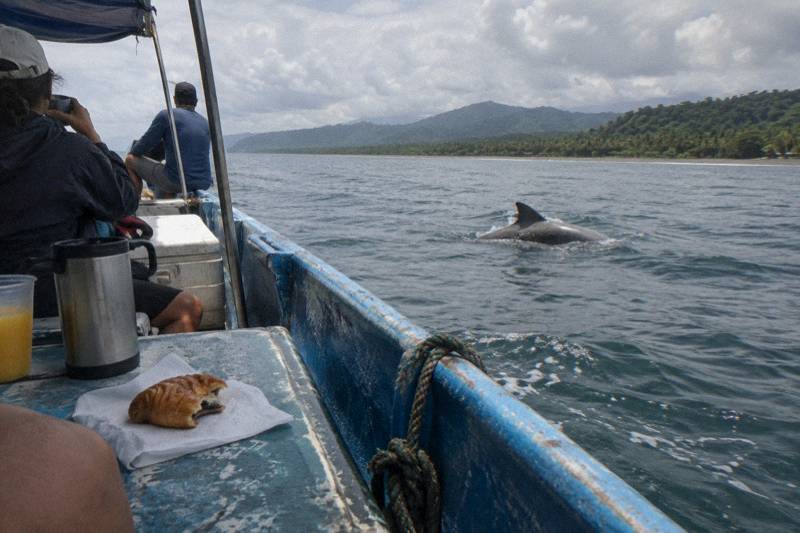
Whale watching trips leave from offices and beach points around Uvita and Bahía Ballena. Whether a car earns its keep depends on how many day trips you plan beyond the boat.
Short answer
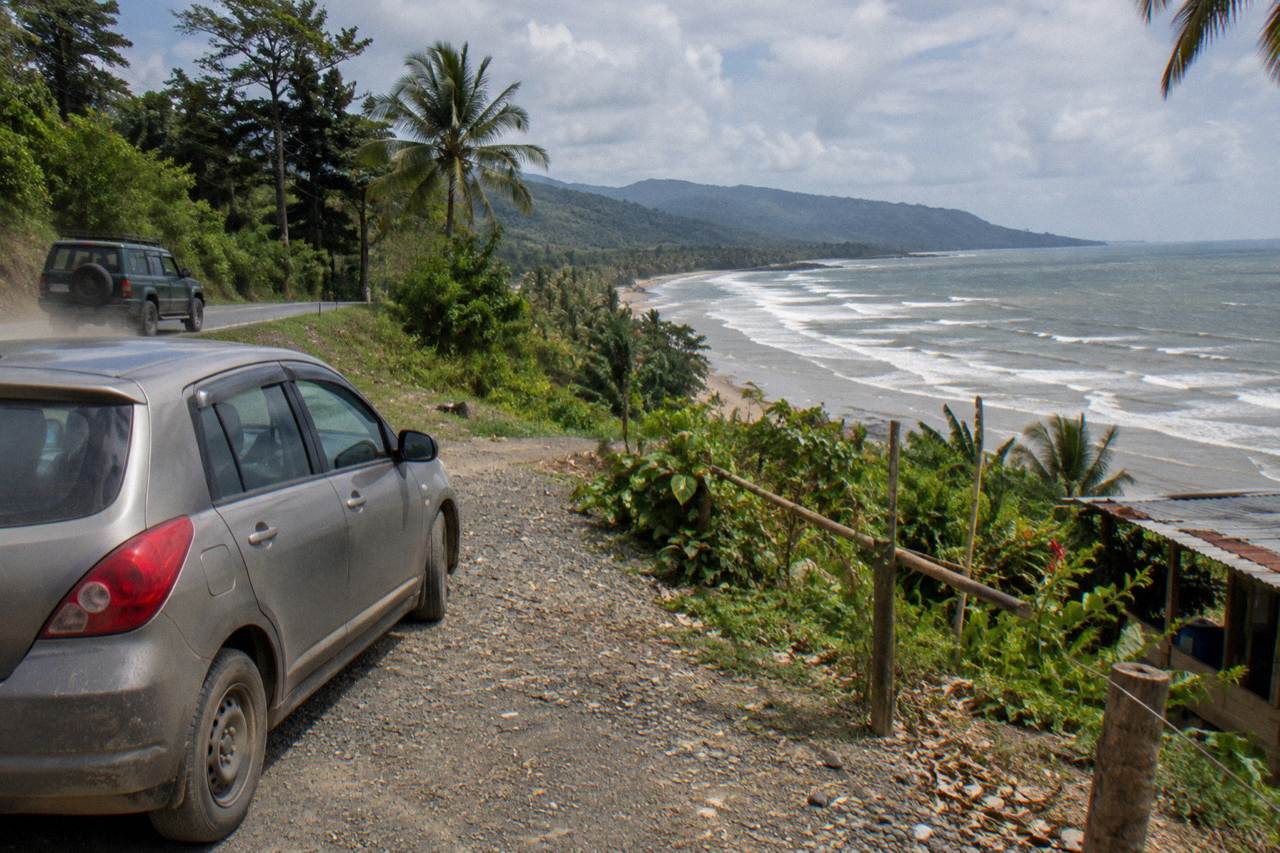
You do not need a car to go whale watching in Uvita: the boats leave from the Bahía Ballena beach area, tours list parking when they offer it, and taxis cover the short hop from most lodging. A rental helps if you plan day trips, such as Caño Island departures, Dominical, or the drive from San Jose, about 222 km via Route 34.
Uvita sits on Route 34, the Costanera Sur, roughly 222 km from San Jose by one map reading, and the town itself is small enough that the supermarkets and ATMs sit within a short taxi hop of the beach where the whale watching boats leave. That is the honest starting point for the rental question: the main activity here, a three hour boat trip in Marino Ballena National Park, does not require wheels. The most reviewed trip listed here, the drinks-and-snacks boat tour (4.5 from 775 reviews, from $95 per person), departs Uvita, lists parking among its inclusions, and tells guests to meet at the departure point rather than arranging hotel pickup. Whether a car earns its cost depends almost entirely on what you add around that boat trip. Before you build the rest of your trip around that boat, our answer to Is Whale Watching In Costa Rica Worth It? covers the season windows, real prices, and the rules that keep sightings ethical.
This guide works through the decision the way a trip planner actually faces it: the drive down, the alternatives to driving, what a car unlocks, and where you park once you are there. The short version, developed below, is that solo-boat-trip visitors can skip the rental, and anyone building a week of day trips around Uvita will probably want one.
Do You Need A Rental Car In Uvita?
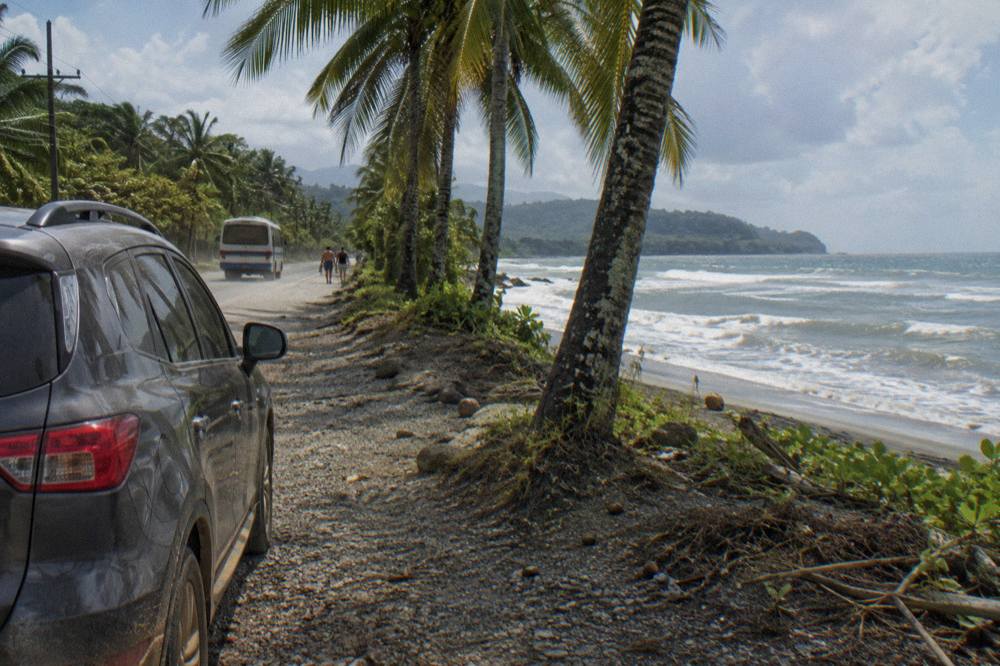
No, if your trip is two or three days built around a whale watching boat and the beach: the boats leave from the Bahía Ballena departure points, taxis cover the town, and several tours include parking anyway. Yes, if you are stringing together day trips: Caño Island, Dominical, waterfalls and the long drive from San Jose are all noticeably easier with your own car.
The deciding factor is itinerary density. Uvita is a compact town on the coastal highway, and the whale watching fleet operates from the beach and offices clustered around Bahía Ballena. The morning whale and dolphin tour (4.8 from 210 reviews, from $75 per person, the lowest-priced trip listed here) departs Bahía Ballena and lists free on-site parking by its main office among the inclusions. In other words, these two whale trips already solve the arrival question for both drivers and non-drivers.
Where a car starts to matter is distance. Dominical is about 18 km and 15 minutes up the road, Ojochal to Dominical via Uvita is 37 km, and Caño Island trips are full days of six to eight hours that start early from Uvita. Taxis exist but add cost and scheduling friction at dawn. If your list includes more than one of those, the rental pays for itself in convenience.
A rough decision table:
| Your trip shape | Car needed? | Why |
|---|---|---|
| One or two whale watching boats, beach days in Uvita | No | Boats depart Uvita or Bahía Ballena; taxis and walking cover the town; tours list parking |
| Whale boat plus Caño Island snorkel day | Helpful | Caño trips run 6 to 8 hours, depart Uvita, and full-day timing is easier without taxi negotiations |
| Multi-town trip, Dominical, Ojochal, waterfalls | Yes | Distances of 18 to 40 km between towns add up |
| Arriving from San Jose without a car | Workable | Tracopa buses run the Costanera route; see the bus section below |
| Staying outside Uvita without a car | Depends | Check where your tour departs and whether the operator states pickup; most listings do not |
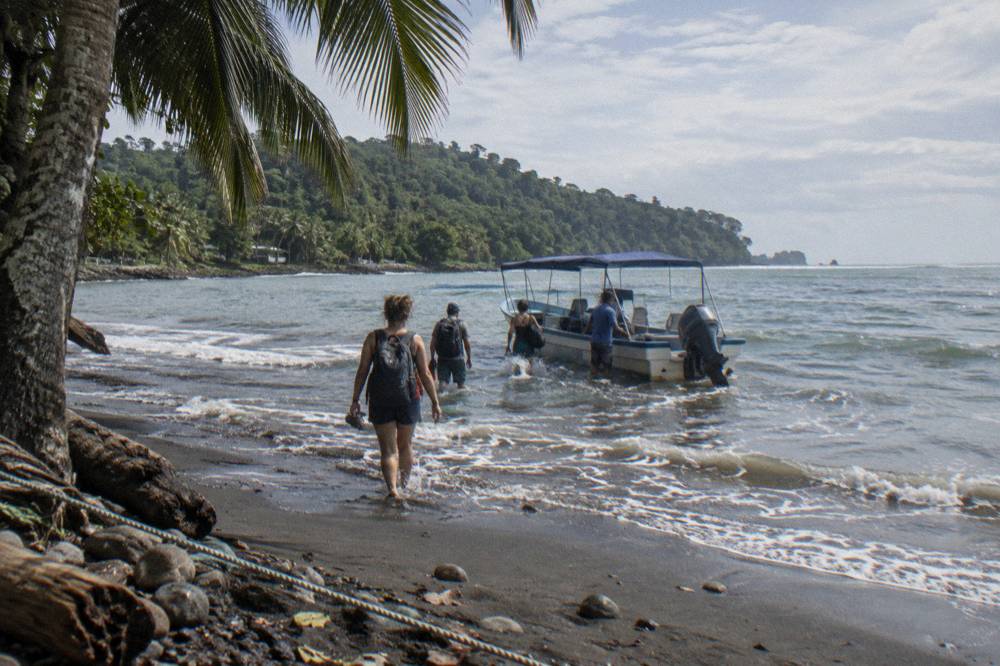
One planning note that surprises first-time visitors: several Uvita boats launch straight off the beach, with no dock, and guests wade to the boat. That is stated openly on one listing's exclusion list. No car changes that part of the experience; wear something you can get wet in from the knee down.
How Long Is The Drive To Uvita From San Jose, Dominical And Quepos?
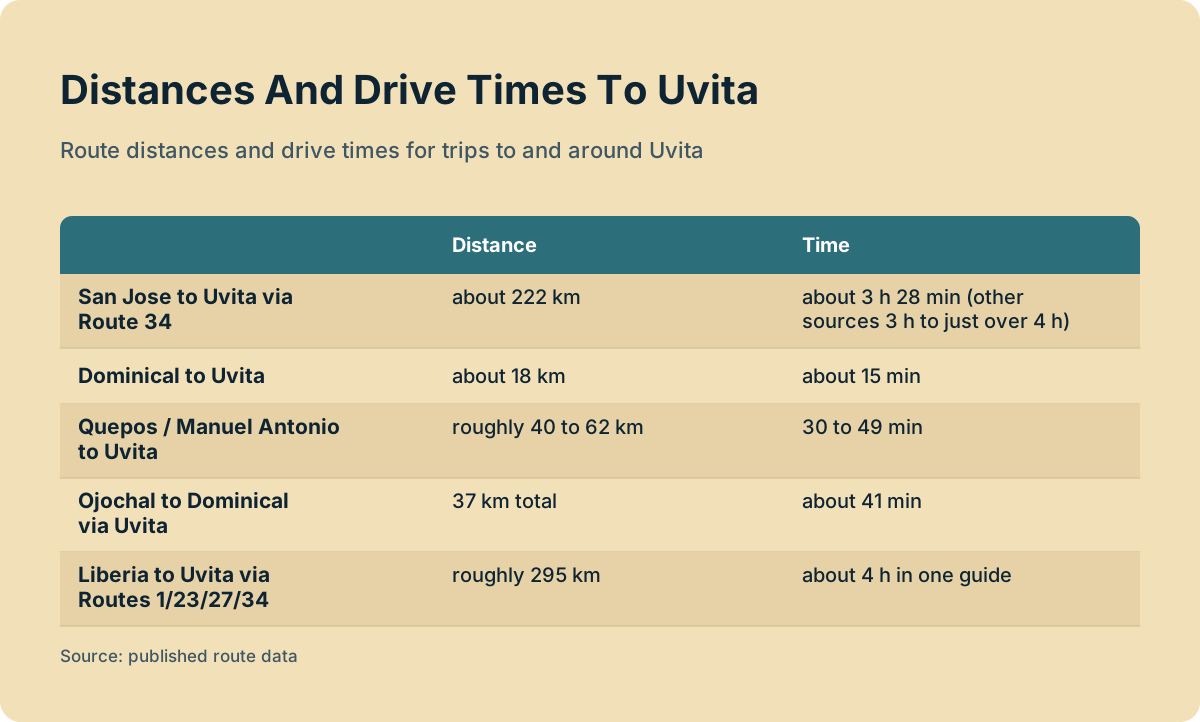
From San Jose to Uvita via Route 34, one Google Maps reading gives about 222 km and 3 hours 28 minutes, while other guides range from 3 hours to just over 4 hours for the same road. Dominical to Uvita is about 18 km and 15 minutes, and Quepos or Manuel Antonio to Uvita is roughly 40 to 62 km depending on the source, 30 to 49 minutes of driving.
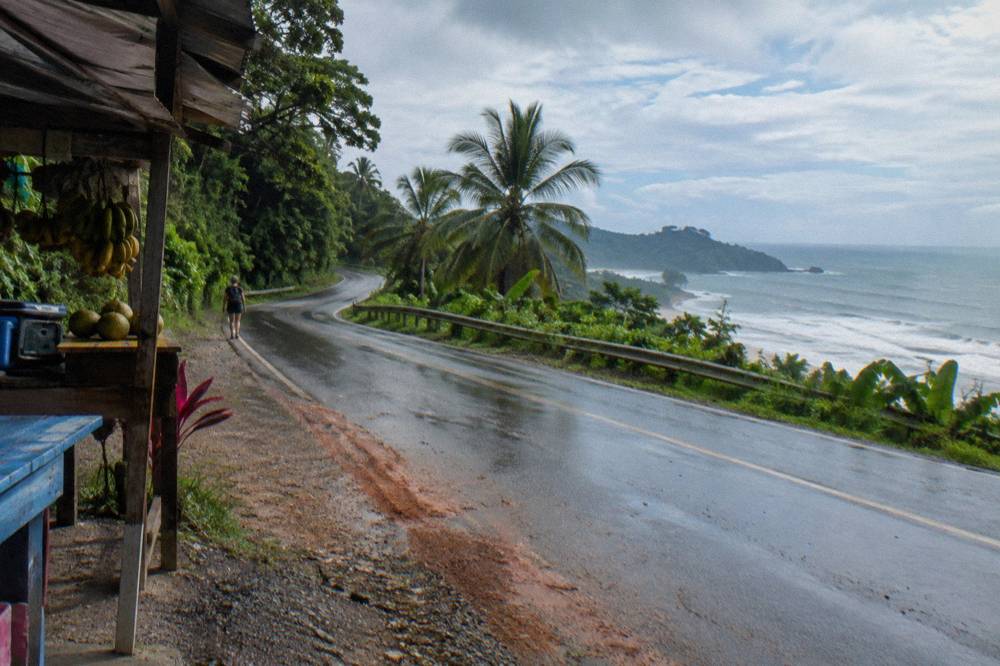
Route 34, the Costanera Sur, is the road almost everyone arrives on. It runs down the Pacific coast past Quepos, Dominical and Uvita toward the Osa area. A second route exists from San Jose via Route 2 and the Dominical road from San Isidro, which SINAC itself names as an alternative approach; it crosses mountains before dropping to the coast. For most renters the Costanera is the simpler choice, and the drive-time spread across sources is real, so budget four hours rather than three and a half and treat anything faster as a good day. If you're timing the whole trip and not just the drive, our answer to What Is The Best Time Of Year To See Whales In Costa Rica? explains which humpbacks arrive when and how calm the sea tends to be.
The distances that matter for day-trip planning, from published route estimates:
| Route | Distance | Time |
|---|---|---|
| San Jose to Uvita via Route 34 | about 222 km | about 3 h 28 min (other sources 3 h to just over 4 h) |
| Dominical to Uvita | about 18 km | about 15 min |
| Quepos / Manuel Antonio to Uvita | roughly 40 to 62 km | 30 to 49 min |
| Ojochal to Dominical via Uvita | 37 km total | about 41 min |
| Liberia to Uvita via Routes 1/23/27/34 | roughly 295 km | about 4 h in one guide |
Two road-condition notes worth knowing. The transport ministry opened provisional passage and started works on the bridge over the Rio Coronado in the Osa area on Route 34, so check current conditions before a southern leg. And if the drive-down feels long, the pairing is easy: most whale boats leave in the morning, so one option is to drive down the day before, boat the next morning, and drive on after lunch. Our guide to San Jose To Uvita: Getting There For A Whale Trip breaks the drive down in more detail.
If you are driving down anyway, book the boat into the schedule early.
Can You Get To Uvita Without Renting A Car?
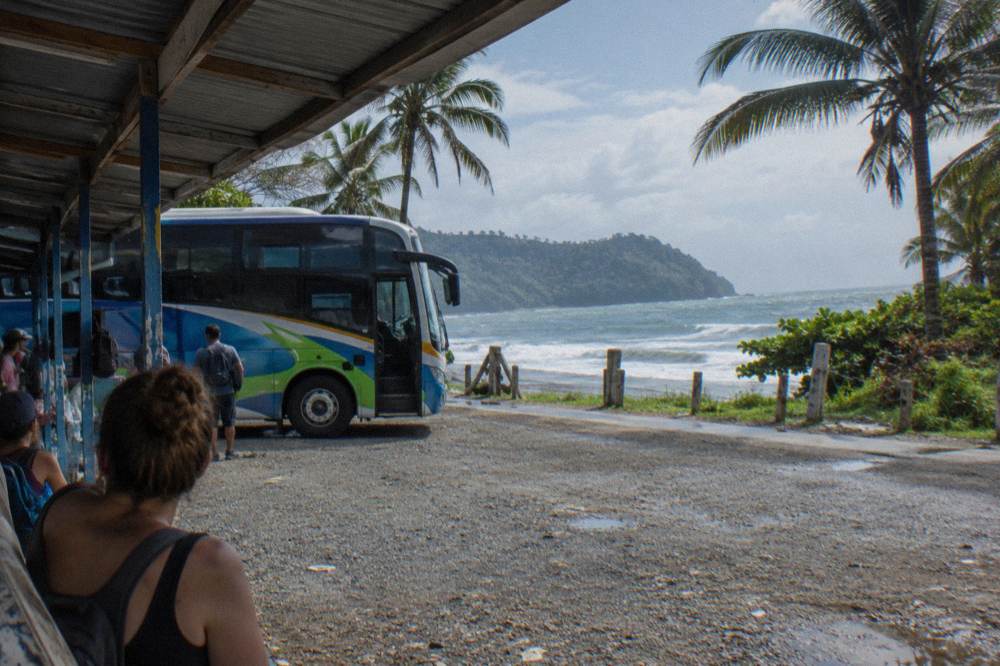
Yes. Tracopa runs buses from its San Jose terminal to Uvita on the Costanera route with several departures a day, journeys take roughly 3 hours 22 minutes to 4 hours 31 minutes, and the same company is the one SINAC names on the park's official getting-there page. Domestic flights serve Quepos, from which Uvita is a 30 to 49 minute transfer, and shared shuttles cover the corridor too.
The bus is the budget answer. Tracopa's Costanera-route buses stop in Uvita, and the key detail is the one SINAC highlights: make sure your bus is routed via the Costanera and stops in Uvita, because not every southern service does. Departures run through the day starting early in the morning. Treat the fare as something to confirm with Tracopa directly rather than a figure quoted here; published third-party estimates sit in a wide band and schedules shift. Our guide to San Jose To Uvita: Getting There For A Whale Trip collects the practical detail.
Flying is the time answer. Domestic operators connect San Jose's main airport with Quepos, and Palmar Sur is sometimes mentioned as a southern option; from either you still need a ground transfer of up to an hour to Uvita, so the time saving shrinks once you add the transfer.
For reference, the ground alternatives compared on the factors that actually decide it:
| Option | Best for | Watch out for |
|---|---|---|
| Tracopa bus via Costanera | Budget travelers with light bags | Confirm the route stops in Uvita; early departures; check Tracopa for fares |
| Domestic flight to Quepos plus transfer | Short trips where beach time beats cost | Transfer adds 30 to 49 min; schedules are limited |
| Shared shuttle | Door-to-door comfort without driving | Needs advance booking; per-seat pricing not published here |
| Rental car | Multi-stop itineraries and early departures | You handle parking, fuel and road conditions |
Once you are in Uvita without a car, the whale watching question barely changes. Taxis cover the few kilometers between lodging and the departure offices, and tours that include parking are simply telling drivers where to leave the car. What the carless version of the trip loses is the spontaneous day trip: the waterfall inland, the beaches north or south, the towns up and down the coast. Those are exactly the things our guide to Free Things To Do In Uvita And Marino Ballena On A Budget can help you weigh, with the honest caveat that the park's land sectors charge their own entry fee.
Which Trips From Uvita Are Easier With Your Own Car?
The whale watching boats themselves: barely, since they all depart Uvita or Bahía Ballena and several list parking. The full-day Caño Island snorkel trips: meaningfully, because they run 6 to 8 hours and leave early. Anything beyond Uvita, from Dominical to Ojochal: substantially, at 18 to 40 km per leg.
Start with what does not need a car. Every one of the 15 whale and dolphin listings here departs Uvita or Bahía Ballena. The whale and snorkel combos, such as the 3-hour combo (4.3 from 136 reviews, from $84.42 per person), include a parking lot in their inclusions. The Marino Ballena Tours whale watch (4.5 from 110 reviews, from $105 per person, up to 20 guests) lists private parking, entrance ticket, water and fruits. If boats are the whole trip, the car is optional.
The Ballena Infocenter whale and dolphin trip (4.6 from 107 reviews, from $92 per person, 3 to 4 hours) adds a wrinkle worth knowing: it includes a coffee station before departure and parking space, and its route can include Whale's Rock or Ventanas Cave. That is a trip that rewards arriving unhurried, which a car makes easy but a scheduled taxi handles too.
The Pacific Expeditions whale watch (4.8 from 183 reviews, from $80 per person, 3 hours) includes tropical fruit, lifejackets, the park entrance fee, parking, a guide and swimming time according to conditions, and its exclusion list notes there is no restroom on board and boarding happens directly from the beach. Drivers should read that last part twice: you park, then you wade.
Now the car-relevant tier. Caño Island changes the calculus. The full-day Caño snorkel from Uvita (4.7 from 98 reviews, from $160 per person, up to 21 guests) runs a full day, includes park tickets, guide, gear, safety equipment, lunch, water and fruit, and excludes transportation to the meeting point. That last exclusion is the whole story: with a car you control your early-morning arrival; without one you are coordinating a taxi for a dawn departure. Our guide to Caño Island Snorkeling From Uvita: Trip Options And Conditions covers what the day involves, including the roughly 50 to 80 minute boat ride out.
Where Do You Park For Whale Watching Departures In Bahía Ballena?
Check each tour's inclusions before assuming anything: 14 of the 18 shared whale and combo tours list Marino Ballena park entry in the price, and many explicitly list parking, either private lots or free on-site parking by the office. One listing instead excludes vehicle parking as a cash-only extra, so the parking answer is per-tour, not per-town.
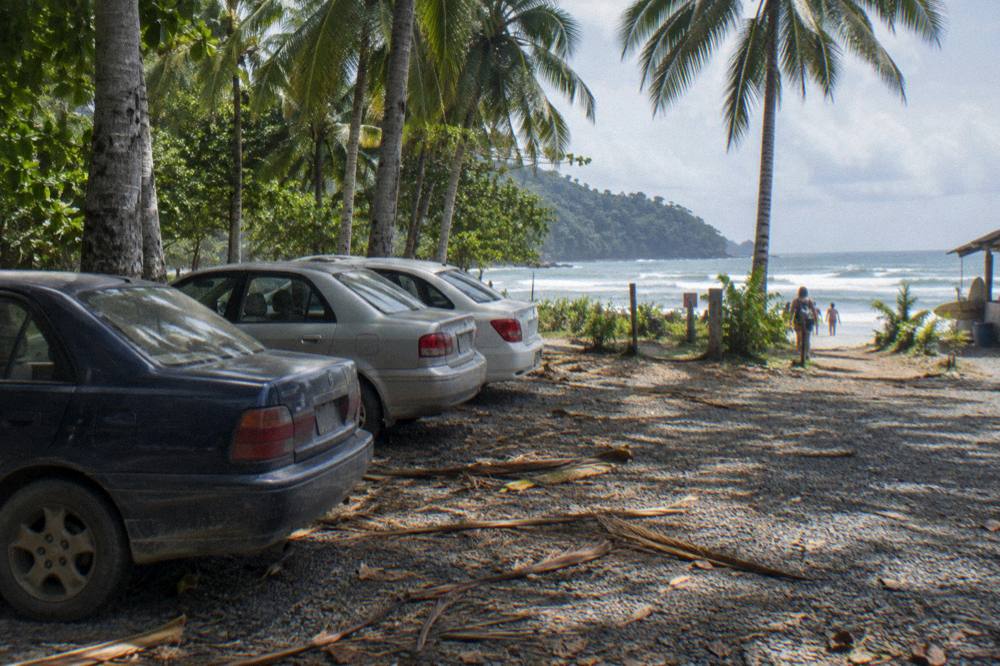
The pattern listed here is genuinely helpful. The morning whale and dolphin tour includes free on-site parking by the main office. The Marino Ballena Tours whale watch lists private parking. The drinks-and-snacks boat, the most reviewed trip at 4.5 from 775 reviews, includes parking and the park entry fee, while excluding pickup, alcoholic beverages and snorkel gear. On the other side, one Marino Ballena whale watch from $90 per person lists an $8, cash-only vehicle parking fee as an exclusion and excludes transport to the main office. Same town, same beach, opposite parking terms.
What drivers should confirm before departure day:
| Tour | Price from | Parking on the listing |
|---|---|---|
| Drinks and Snacks Included | $95 per person | Parking included; pickup not included |
| Morning Whale and Dolphin Tour | $75 per person | Free on-site parking by main office |
| Pacific Expeditions Whale Watch | $80 per person | Parking included; beach boarding, no dock |
| Marino Ballena Tours Whale Watch | $105 per person | Private parking included |
| Coral Expeditions Whale Watch | $90 per person | Parking excluded, $8 cash only; transport to the main office not included |
| Ballena Infocenter, 3 to 4 Hours | $92 per person | Parking space included |
Two practical notes round this out. Payment for the park's own land sectors is card-only, so if you drive to a sector entrance yourself for the Whale Tail sandbar, bring a card, not cash; parking at a tour office may be the opposite, as the cash-only note above shows. And remember the tide rule from SINAC: access to the Cola de Ballena, the whale tail sandbar, happens only around low tide, so a land visit before or after your boat needs tide-table planning, not just parking. Our guide to Whale Tail Beach At Marino Ballena National Park covers that walk in detail.
What Should You Check Before Renting A Car In Uvita?
Check the insurance terms, the road conditions on your exact dates, and where the car can be picked up and dropped off, because rates, cover and deposits vary by agency and season. Confirm with agencies directly, and check the transport ministry's notices before driving southern Route 34 legs where bridge works are active.
The checklist below covers the questions worth asking.
| Check before booking | Why it matters in Uvita specifically |
|---|---|
| Where pickup happens | San Jose airport pickups suit the drive down; Uvita pickups suit fly-and-rent plans |
| Insurance coverage and deductible | Know your excess before you drive |
| One-way fees | Dropping the car in a different town than pickup usually costs extra |
| Road works on Route 34 | Bridge works with provisional passage are active in the Osa area; verify your leg |
| Cash and card mix | Park entry is card-only; some parking and small vendors are cash-only |
| Driving at night | Plan arrivals in daylight on unfamiliar roads |
Fuel and supplies are easy in Uvita itself: the town center near the highway has supermarkets and ATMs, including major state banks, plus local clinics, though no hospital is listed in town. For a region-by-region sense of where Uvita fits in a wider Costa Rica loop, our guide to Whale Watching In Costa Rica: Where Uvita Fits is the companion read.
Is A Rental Worth It For A Week Based Around The Boat Season?
For a week that includes one whale boat, one Caño Island day and two or three coastal or inland excursions, yes: the drives are short (18 km to Dominical, 37 km Ojochal to Dominical via Uvita) and the departure-time freedom matters. For a long weekend of one boat and the beach, no: the buses, shuttles and taxis cover it, and the tours themselves list parking for drivers you meet there.
Season timing interacts with the car question in one specific way. The southern-hemisphere humpbacks run July to mid-November with an August-September peak for mother-calf pairs, and the northern population follows December to March or April, so Uvita has boat-worthy whales most of the year. Rain is the wildcard: SINAC's own climate note puts the dry season mid-December to mid-April and the rainy season mid-April to mid-December, and February and March sit at the bottom of the long-term rainfall averages. A dry-season week means less rain on both the drive and the day trips.
The month-by-month picture, including which boats suit which season, is laid out in our guide to Best Time For Whale Watching In Uvita By Month and our guide to Uvita Weather By Month For Boat Days.
For visitors basing in neighboring towns, the pickup geography matters more than the rental itself. Our guide to Whale Watching Pickup From Dominical, Ojochal And Uvita explains what the listings actually promise, and the short version is sobering: most listings either state that hotel pickup is not included or say nothing about pickup at all, so a car or a taxi is often the real answer to getting to the departure point.
Renting A Car Versus Shuttles: Which Fits Your Uvita Trip?
Rent when your itinerary has three or more moving parts spread across towns or early departures; use shuttles, buses and taxis when Uvita itself is the destination and the whale boat is the anchor. The whale watching fleet departs from one compact beach area, parking is listed on most tours, and the only trips that genuinely reward a car are the full-day Caño runs and multi-town excursions.
The final comparison:
| Factor | Rental car | No car (bus, shuttle, taxi) |
|---|---|---|
| Whale boat day | Park at lots most tours list; wade to the boat regardless | Taxi or walk to the departure point; several tours list parking anyway |
| Caño Island day | Full control of the early start; transportation to the meeting point is excluded on some listings | Pre-book a taxi for a dawn pickup; confirm the fare the day before |
| San Jose arrival | About 222 km, 3 h 28 min by one route estimate | Tracopa Costanera buses, 3 h 22 min to 4 h 31 min; check Tracopa for fares |
| Day trips to Dominical or Ojochal | 18 km and 15 min to Dominical; 37 km Ojochal-Dominical via Uvita | Possible by bus or taxi |
| Whale Tail sandbar at low tide | Go when the tide table says; card-only park entry | Same, by taxi; tide timing still rules the visit |
| Cost | Get agency quotes | Bus is cheapest; shuttles and taxis priced per ride |
Whichever way you get to the dock, it helps to know how Uvita stacks up against other Pacific bases, and our guide to Whale Watching Uvita Vs Manuel Antonio Vs Drake Bay covers season length, boat ride times, water conditions and tour prices.
Whichever way you land, the boat itself is the fixed point. The Uvita Whale Watching comparison on this site's homepage lines up the listed tours side by side.
Common Questions About Car Rental In Uvita
Do I Need A Car For Whale Watching In Uvita?
No. Every whale and dolphin tour listed here departs from Uvita or Bahía Ballena, and many tours list parking among their inclusions for those who do drive.
Where Do I Park For The Whale Watching Boats?
It depends on the tour. Several listings include free on-site parking or a private lot; one lists vehicle parking as an $8 cash-only extra. Check the inclusions and exclusions on the specific listing before departure day.
How Long Is The Drive From San Jose To Uvita?
About 222 km and 3 hours 28 minutes via Route 34 by one route estimate, with other published estimates ranging from 3 hours to just over 4 hours. Budget the upper end, and check road conditions if your route crosses active bridge works.
Is There A Bus To Uvita From San Jose?
Yes. Tracopa runs buses from its San Jose terminal to Uvita on the Costanera route with several departures a day, taking roughly 3 hours 22 minutes to 4 hours 31 minutes. Confirm the fare and schedule with Tracopa, and make sure the service is routed via the Costanera and stops in Uvita.
Is A Rental Car Worth It For Caño Island Trips?
It helps. Caño Island tours from Uvita run 6 to 8 hours, depart early, and several listings explicitly exclude transportation to the meeting point, so having your own car removes the dawn taxi coordination.
Can I Visit The Whale Tail Sandbar Without A Car?
Yes, by taxi or on foot depending on where you stay, but two rules apply: the park's land sectors charge entry (card payment only), and SINAC states access to the whale tail is possible only around low tide, so check the tide table first.