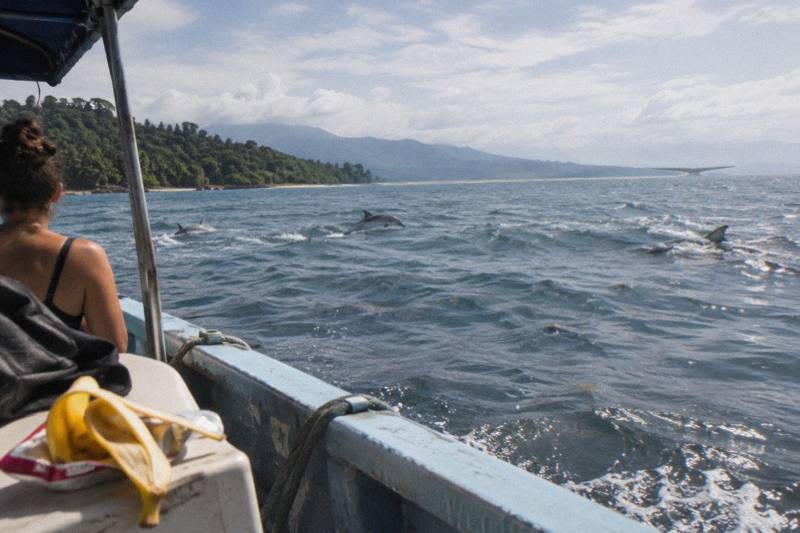
What Is The Best Time Of Year To See Whales In Costa Rica?
Two humpback seasons share the Uvita coast, so the best time to see whales in Costa Rica depends on which hemisphere's whales you want and whether you prefer the dry or the rainy season.
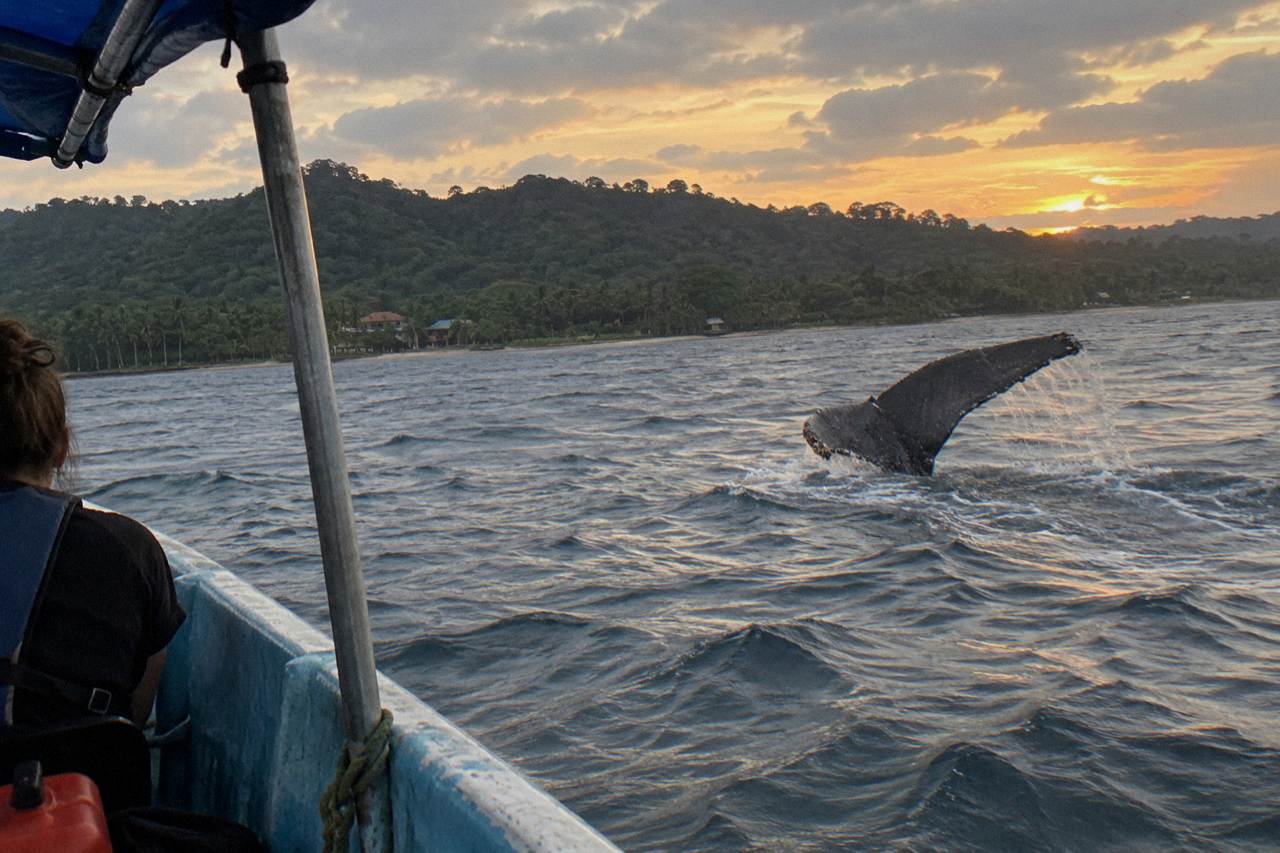
The best time is mid-August through late September, when southern-hemisphere humpbacks peak in Marino Ballena with the year's strongest concentration of mother and calf pairs. A second strong window runs late December through February for northern-hemisphere whales. Costa Rica's Pacific is unusual: two separate populations visit from opposite hemispheres, giving the Uvita coast whales for roughly eight to ten months of the year.
That two-season pattern is the fact most first-time visitors miss. The International Whaling Commission's country profile for Costa Rica notes that Pacific coastal waters host two humpback populations every year, one from the Northern Hemisphere and one from the Southern. The same profile records that whale watching in the country originally developed in the southern coastal communities, naming Dominical, Uvita, Drake Bay, Caño Island and Golfo Dulce. So when people ask about the best time for Costa Rica as a whole, the honest answer routes through one small stretch of coast around Uvita and Bahía Ballena, where both seasons arrive.
The southern visitors are the headline act. Humpbacks that feed around the Antarctic Peninsula and southern Chile make what the IWC handbook calls the longest recorded migration, arriving to breed in Costa Rican waters from July to mid-November. Operator pages in the area put the peak for mother-calf pairs in August and September, which is also when the local community schedules its whale festival. The northern visitors, humpbacks that feed off the northwest coast of the United States, arrive from December to March or April, with operator pages putting their peak in January and February.
Which season is "best" depends on what you want from the day. August and September offer the highest chance of mother-calf pairs and the warm water they nurse in, but that is the rainy season. January and February trade some of that mother-calf density for dry-season boat weather. February and March are the lowest-rainfall months on long-term averages for the area. There is no wrong answer, only a trade-off between whale density and weather, and this article walks through both sides of it.
The practical starting point for either season is a shared boat out of Uvita. The most reviewed trip listed here is the drinks-and-snacks boat, at 4.5 from 775 reviews, from $95 per person for 3.5 hours with the Marino Ballena park entry fee, pastries, bananas, fruit and juice included. Guests meet at the departure point, since pickup is not part of that listing. A cheaper route into the same water is the whale and snorkel combo from $84.42 per person, which adds a snorkel stop, and a longer option with full snorkel gear runs from $95 per person over 3 to 4 hours. For a fuller month-by-month breakdown across the calendar, our guide to Best Time For Whale Watching In Uvita By Month goes deeper than this piece.
When Do Southern Humpbacks Arrive At Marino Ballena?
Southern-hemisphere humpbacks reach Marino Ballena from July to mid-November, having migrated from feeding grounds off Antarctica and southern Chile, and the peak for mother and calf pairs falls in August and September. The community stages its whale festival in early September to match it.
The southern season is the longer and stronger of the two on this coast. The IWC handbook describes the July to mid-November arrival as the longest recorded migration, which is the detail worth repeating on the boat: the animal you are watching swam from the edge of Antarctica to get here. The females come to these protected waters to give birth and nurse, and the operator pages that track the season agree that August and September carry the highest numbers of mother-calf pairs. Guests on recent trips report exactly that pattern; one review of the 3 to 4 hour dolphin and whale trip describes observing a mother and baby humpback for at least 20 minutes, alongside sea turtles and a swim stop.
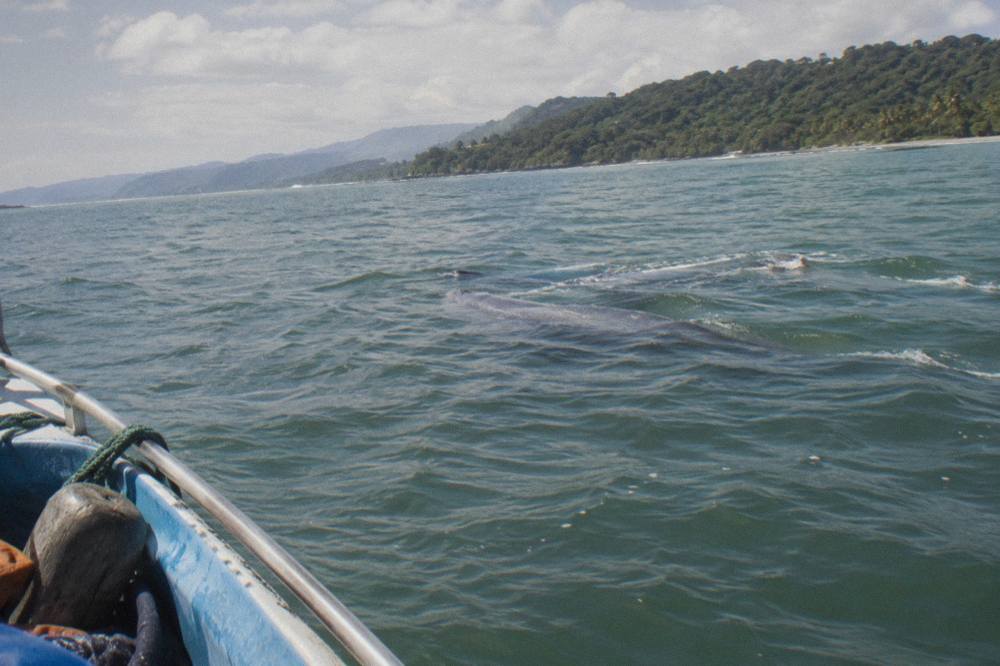
Marino Ballena was the first protected area in Costa Rica created exclusively for marine resources, with 5,160 marine hectares in a coastal strip 15 km long, per the SINAC park page. SINAC's own page names the humpback whale among the park's fauna, alongside spotted dolphins, bottlenose dolphins, manta rays and parrotfish.
What the southern season does not promise is calm weather. Mid-July through mid-November sits inside the rainy season on SINAC's climate description for the park, which runs mid-April to mid-December. Operators cancel or reroute for sea state, and no listing on this site guarantees a sighting. One operator's own listing states a 50 percent sighting chance from December to March and 90 percent from July to October; that is a single operator's claim about its own trips, not a measured rate for the coast, and it is quoted here only as what that listing says.
For travelers who want the biology alongside the boat ride, one trip stands apart: a humpback-focused expedition from $129 per person that includes a talk on whale watching, a donation to a humpback research project, and a biologist as expedition leader. It is a small-review listing, rated 4.2 from 10 reviews, but the format is different from every other shared boat listed here.
When Do Northern Humpbacks Visit The Uvita Coast?
Northern-hemisphere humpbacks, the population that feeds off the northwest coast of the United States, visit the Costa Rican Pacific from December to March or April, with the peak in January and February according to operator season pages. They come to mate, give birth and nurse, arriving as the coast swings into its dry season.
This is the season travelers from North America stumble into without planning to. A Christmas or February trip to the coast lines up with the northern whales' breeding window, in the dry season. SINAC's climate summary puts the dry season from mid-December to mid-April, and long-term rainfall averages for Uvita mark February and March as the driest months. For anyone torn between whale density and a comfortable boat, the northern season is the compromise pick: fewer mother-calf encounters than September, but drier weather and a beach day that works on either side of the trip.
The same boats run both seasons, so the choice of operator does not change with the calendar. The featured drinks-and-snacks trip departs Uvita at 3.5 hours and up to 80 guests, and the Uvita Whale Watching site compares it against every other listing on the water. In the northern season it is worth reading each listing's inclusions closely rather than assuming: that trip excludes snorkel gear, while the 3 to 4 hour accessible-boat trip from $95 includes snorkeling equipment and insurance, and the morning whale and dolphin tour from $75, rated 4.8 from 210 reviews, includes snorkel gear, snacks and bottled water but lists no restroom on board, like several other boats.
One honest caveat about the northern window: the same operator claim quoted above, 50 percent sighting odds from December to March, is the listing's own number for its own trips. Dolphins, by contrast, are a year-round presence: SINAC names both the spotted dolphin and the bottlenose dolphin among the park's fauna, and the IWC profile lists the common bottlenose and pan-tropical spotted dolphin as the species commonly viewed on Costa Rican tours. A January or February boat that finds no whale can still find dolphins.
Snorkelers get a bonus in this window. Visibility in Marino Ballena is at its best from January to April, according to one local operator that tracks conditions on the reef, with the water temperature running 78 to 84 degrees Fahrenheit year-round per the same operator's readings. That makes the northern season the better pick for the whale-and-snorkel combos, which pair whale watching with a stop on the reef and are covered in detail in our guide to Whale Watching And Snorkeling Combo From Uvita.
Which Months Give The Calmest Boat Weather In Bahía Ballena?
January through early April give Bahía Ballena its lowest rainfall, inside the dry season SINAC defines as mid-December to mid-April. February and March are the driest months on long-term averages. August and September, the whale-density peak, sit in the rainy season, so the trade-off is simple: whales versus weather.
This is the decision most visitors actually make, and it deserves a straight answer rather than a hedge. If your trip dates are fixed to school holidays or a February escape, book the boat and expect dry-season conditions with a solid chance of northern whales and dolphins. If your dates are flexible and the whales are the whole point of the journey, aim for late August or September, accept that it may rain, and schedule the boat for the first departure of the day. Boats do go out in the rainy season; operators decide on sea state.
The month-by-month picture looks like this.
| Window | Whales | Weather context | Notes |
|---|---|---|---|
| January to February | Northern humpbacks peak | Dry season, driest months on long-term averages | Best combined whale-and-weather window |
| March to mid-April | Northern whales taper | Dry season ending | Best snorkel visibility, January to April according to one local operator |
| May to mid-July | Quietest whale months | Rainy season begins | Dolphins still present year-round |
| August to September | Southern humpbacks peak, mother-calf pairs | Rainy season | Whale festival held each early September |
| October to mid-November | Southern whales taper | Rainy season | Operators still running; sea state decides |
| Mid-November to December | Transition | Dry season begins mid-December | Northern season opens in December |
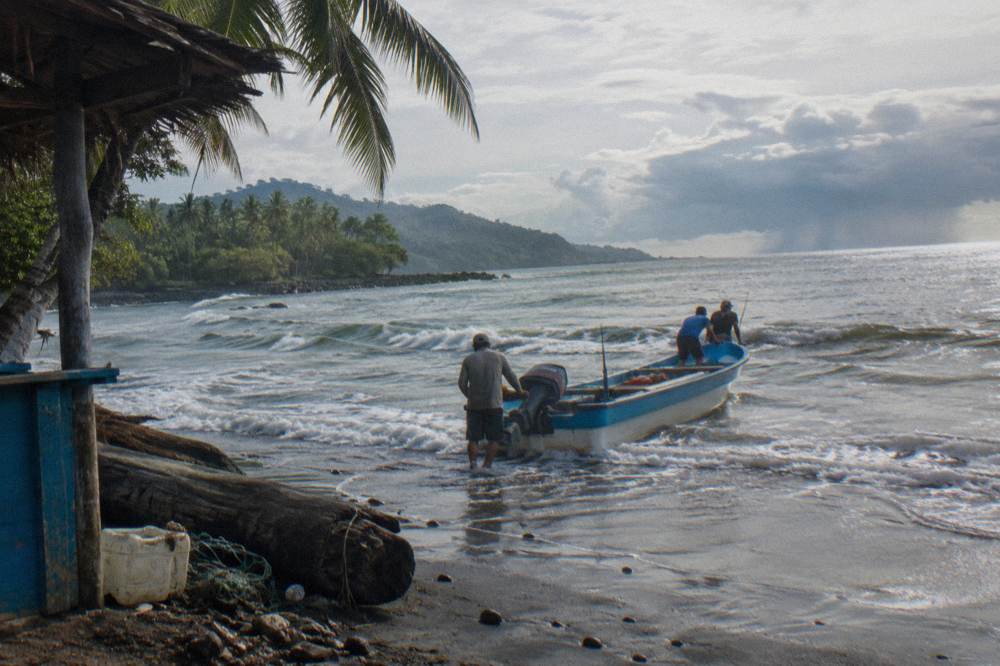
One thing the table cannot say is what any given day will do. Boats from Uvita launch from the beach in several cases, with no dock, and guests wade to the boat. Free cancellation is listed on nearly every trip listed here, which is worth having in the rainy season: if the operator calls the trip for sea state, a cancellable booking costs you nothing. Check the listing for its exact cancellation terms before you rely on that.
Does Time Of Day Change Your Chances?
Whales do not keep office hours. The practical pattern is that boats run morning departures and guides share sightings with other boats. Book the first departure of the day if the choice exists, mainly to keep the rest of the day free.
The honest version of this answer is that timing within a day matters far less than timing within the year. What you can control is the departure slot. A guest review of the morning whale and dolphin tour from Bahía Ballena describes a guide giving the boat a choice between more whale searching or snorkeling at the Whale Tail, which is the kind of flexibility that morning trip offered. That tour runs 2.5 to 3 hours from $75 per person, rated 4.8 from 210 reviews, the strongest rating-to-review pool on the whale trips.
The rules the boats work under also shape the day. Costa Rica regulates cetacean watching under Decreto Ejecutivo 32495, which sets a 100 metre minimum distance from whales longer than 5 metres, 50 metres from dolphins with the engine on and 30 metres with it off, at most two boats around the same group, a 4 knot speed limit in observation areas, and a 30 minute maximum with any group. Under the two-boat limit, any further boat has to keep 200 metres back from the first two. Our guide to Whale Watching Boat Rules And Ethics In Costa Rica covers the full decree in plain language.
What Does The September Whale Festival Change?
The Festival de Ballenas y Delfines runs each early September in Bahía Ballena and Uvita, timed to the southern-season peak, with whale and dolphin tours at special prices for nationals, concerts, sports events, food and an artisan fair. The 16th edition was held 4 to 6 September 2026. It is a genuine reason to visit that weekend.
The festival is a dated, recurring event. The IWC's handbook mentions it directly, noting that during the festival the price of tours is reduced and many boat owners who do not normally run commercial trips take visitors out. Local reports from the 2026 edition describe free surf classes, a running race, ceviche for all comers, kite workshops and a large whale sculpture built from recycled material, with support from the national tourism institute. For a traveler deciding when to come, the festival weekend stacks the southern-season peak on top of a small-town party, which is either the best possible timing or a crowded one depending on your temperament.
Two honest cautions come with it. First, festival pricing applies to nationals per the local reports; festival tour prices are not published on these listings. Second, more boats on the water does not mean more whales, and the decree's two-boat limit around any group still applies. The wider question, Is Whale Watching In Costa Rica Worth It?, has a longer answer, but in early September the town has already voted yes.
Which Trip Should You Book For The Month You Chose?
Book by season: in August and September, the most reviewed drinks-and-snacks boat, rated 4.5 from 775 reviews and priced from $95 per person, is the benchmark. For dry-season months, the 3 to 4 hour accessible boat from $95 with snorkel gear or the 4.8-rated morning tour from $75 makes better use of calm water, while budget travelers can enter the same bay from $84.42 on the whale and snorkel combo.
The lowest price on the whale trips is the $75 morning tour, and the cheapest way to combine whales with a snorkel stop is the combo from $84.42 per person, rated 4.3 from 136 reviews. At the other end of the scale, a private cruise runs from $1,120 per group for 3.5 hours with lunch, drinks and the park fee included, and a separate private whales-and-dolphins charter starts at $95 per person with a note that the price varies by group size, so confirm on the booking page. Between those poles sit a dozen shared boats that differ mainly in duration, group size and inclusions, which our guide to Whale Watching Tours From Uvita Compared: Group, Private And Combo lays out line by line.
| Trip | Price from | Season fit |
|---|---|---|
| Morning Whale and Dolphin Tour, 4.8 from 210 reviews | $75 per person, 2.5 to 3 hours | Dry season; shortest trip listed here |
| Whale and snorkel combo, 4.3 from 136 reviews | $84.42 per person, 3 hours | Best January to April, when visibility peaks |
| Drinks and snacks boat, 4.5 from 775 reviews | $95 per person, 3.5 hours | Either season; most reviewed trip listed here |
| Accessible boat with snorkel gear, 4.4 from 153 reviews | $95 per person, 3 to 4 hours | Dry season, when the snorkel stop is most usable |
| Humpback research expedition, 4.2 from 10 reviews | $129 per person, 3 hours | August to September, for the mother-calf season |
Whichever slot you pick, the same honest limits apply. No operator on this coast guarantees a sighting, boats cancel for sea state, and the whales follow their own calendar, one that has, so far, kept two populations arriving on this small stretch of Pacific for most of the year. Choose the month for the whales, choose the day for the weather, and book the boat that fits both.
Common Questions About The Best Time To See Whales In Costa Rica
What Is The Best Time Of Year To See Whales In Costa Rica?
Late August through September, when southern-hemisphere humpbacks peak in Marino Ballena with the year's strongest mother-calf presence. A second window runs December through February for northern-hemisphere whales, paired with the dry season.
Can You See Whales In Costa Rica In January?
Yes. Northern-hemisphere humpbacks visit from December to March or April, with operator pages putting the peak in January and February. January also falls inside the dry season, so rainfall is low.
Are There Whales In Marino Ballena All Year?
Roughly eight to ten months of the year, because two humpback populations from opposite hemispheres visit this coast in separate windows. The quietest stretch is roughly May to mid-July, when dolphins, present year-round, are the main draw.
What Is The Whale Festival In Uvita?
The Festival de Ballenas y Delfines is held each early September in Bahía Ballena and Uvita, timed to the southern-humpback peak. The 16th edition ran 4 to 6 September 2026, with tours at special prices for nationals, concerts, food and community events.
Which Month Has The Best Boat Weather In Bahía Ballena?
February and March, the lowest-rainfall months on long-term averages, inside the dry season SINAC defines as mid-December to mid-April.
Do Any Tours Guarantee Whale Sightings?
No. No listing here guarantees a sighting, and boats cancel or reroute for sea state. One operator states sighting chances of 50 percent from December to March and 90 percent from July to October, but that is a single operator's claim about its own trips, not a coast-wide rate.