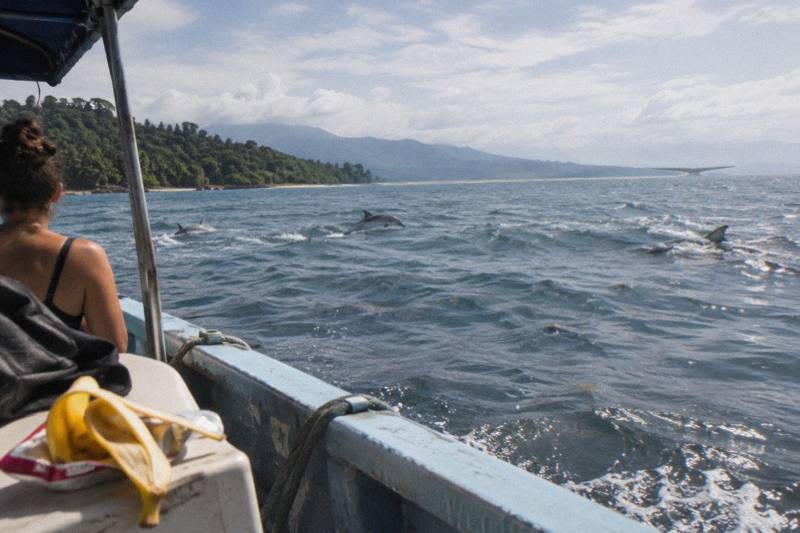
Free Things To Do In Uvita And Marino Ballena On A Budget
Uvita rewards budget travelers, because the headline attractions here, the Whale Tail sandbar, the long beaches and the ocean views, are either free to look at or cost only the park's entry fee to walk on. This guide separates what genuinely costs nothing from what does not, and names the one cheap boat trip worth the splurge.
Short answer
The free things in Uvita are the beaches outside the park sectors, the highway and hilltop ocean viewpoints, the town itself and the whale festival's free events, such as surf classes, in early September. Every boat trip listed here is paid, and the lowest-priced listing is the Morning Whale and Dolphin Tour at from $75 per person.
Uvita sits on a stretch of Pacific coast where the best views cost nothing. The Whale Tail sandbar, the tombolo that makes Uvita Whale Watching famous as a destination, can be seen from the shore, and the town's beaches run for kilometers in both directions. The honest picture is this: almost everything on land here is free or nearly free, and every single boat trip listed here of 28 bookable tours is paid. No free walking tour is listed in Uvita or Dominical, so a budget plan means beaches and viewpoints on foot and, if the budget allows exactly one splurge, the lowest-priced boat trip at from $75 per person.
What Can You Actually Do For Free In Uvita?
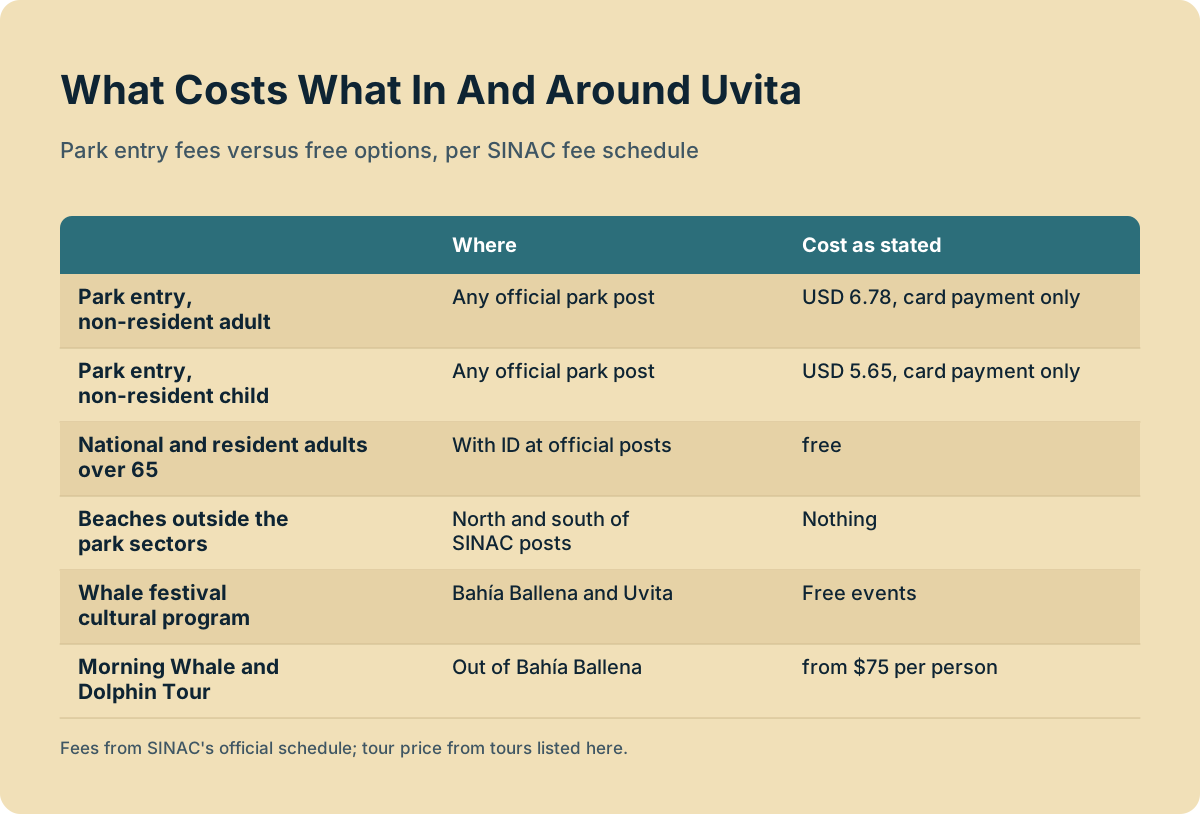
The genuinely free things in Uvita are the beaches outside the national park sectors, the roadside and hilltop ocean viewpoints, the river mouths and town walks, and the free events of the early-September whale festival, such as surf classes. Inside Marino Ballena National Park nothing is free: the cheapest entry is USD 5.65 for a non-resident child, and adults pay USD 6.78, per SINAC's official fee schedule.
Start with what costs nothing. The sandbar known as the Whale Tail, the Cola de Ballena, is the region's signature sight, and while walking on it requires the park's paid entry, seeing it from the public beach approach and from the coastal road costs nothing at all. The shape is best appreciated from a slight height, and several roadside pullouts along the Costanera give a clear view across Bahía Ballena without anyone collecting a fee. Low tide is when the tail emerges, and the park's own page tells visitors to consult the tide table, since access to the tombolo happens only during the roughly six hours of low tide.
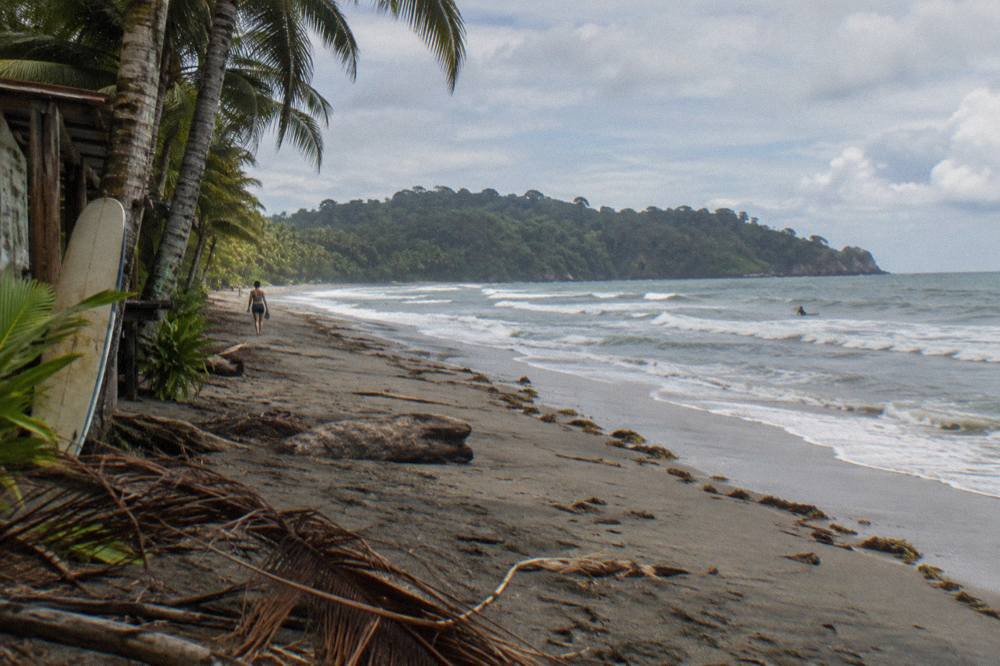
The town itself is a low-key, walkable place. Uvita has supermarkets, ATMs from BCR and Banco Nacional, and local clinics clustered near the highway, per recent traveler-oriented guides, so a slow morning of coffee, fruit stands and a walk down to the water is a genuine half-day activity at zero cost. South of town, the coast toward Pinuela and the beaches past the park's southern boundary offer open sand with no gate, no post and no ticket. Our guide to Uvita Weather By Month For Boat Days helps pick which months give the driest walking weather, since February and March are the lowest-rainfall months on long-term averages.
The one calendar item with free events every year is the Festival de Ballenas y Delfines. Local reports confirm the 16th edition ran 4 to 6 September 2026 in Bahía Ballena and Uvita, with concerts, an artisan fair, kite workshops, free surf classes and a recycled-material whale sculpture, though the whale-watching boat tours during the festival remain paid, at special prices for nationals. The IWC's Costa Rica profile notes the same tradition: each September the community of Bahía Ballena organizes the festival, during which tour prices drop and many boat owners who do not normally run commercial tours join in.
| Free activity | Where | What it costs | Any catch |
|---|---|---|---|
| Whale Tail viewpoint from the coastal road | Costanera pullouts above Bahía Ballena | Nothing | Best at low tide, no beach access from the road |
| Beaches outside the park sectors | North and south of the SINAC entrance posts | Nothing | Check conditions on the day |
| Town walk, ATMs, fruit stands | Uvita center near the highway | Nothing | Food and water are the only spend |
| Whale festival cultural program | Bahía Ballena and Uvita, early September | Some free events, such as surf classes | Boat tours during the festival are still paid |
| Rio Uvita river mouth walk | Playa Uvita area | Nothing | Tide dependent, currents at the mouth |
Is Marino Ballena National Park Ever Free To Enter?
No. SINAC's official fee schedule, tax included, prices non-resident adult entry at USD 6.78 and non-resident child entry at USD 5.65, card payment only at the official posts, with tickets valid for the whole day of the visit. Only national and resident adults over 65 with ID enter free, so the park is cheap, but never free.
The fee buys more than the sandbar. SINAC's page describes 5,160 marine hectares and 171 land hectares along a 15 km coastal strip from the mouth of the Rio Morete to Punta Pinuela, with four entrance sectors: Uvita open 7:00 to 17:00, Colonia 7:00 to 18:00, Ballena 8:00 to 16:00 and Pinuela 8:00 to 16:00, every day of the year. The ticket bought at an official post is valid for the entire day of the visit. Our guide to Marino Ballena National Park Entrance Fee And Tours breaks down exactly what the fee covers and how it interacts with tour prices.
The honest answer for a strict budget is that the park's land side is cheap rather than free. What is free is everything around it: the views, the public beaches and the road. Many whale-boat tours listed here bundle the park's marine entry into the ticket, fourteen of the eighteen shared whale and combo listings name a Marino Ballena entry fee among their inclusions. The full picture of that choice is in our guide to Whale Watching Tours From Uvita Compared: Group, Private And Combo.
For travelers weighing a full budget day, the question Is Uvita Costa Rica Expensive? gets a longer treatment on the blog, but the short version is that lodging and food set the budget far more than the park fee does.
For context, Marino Ballena was the first protected area in Costa Rica created exclusively for marine resources, and the fee schedule treats residents differently from foreign visitors: national and resident adults pay CRC 1,130 and children CRC 565, tax included, still card only at the posts.
Timing shapes what the fee buys. SINAC notes that access to the Whale Tail sandbar happens only at low tide, a window of about six hours, so check a tide table before planning the day. The left side of the tombolo and Isla Ballena hold coral reef, which makes snorkeling a genuine option, and Playa Arco, reached through Sector Ballena, can be entered and left only at low tide.
The park's activity list covers snorkeling, surfing, kayaking, diving and mangrove and coast walks, with humpback whales, spotted dolphins, bottlenose dolphins, manta rays, hammerhead sharks and parrotfish among the named fauna. Rules to plan around: no pets, alcohol, drugs, smoking, single-use plastic, weapons, vehicles on the beach or commerce inside the park, no leaving the trails, and no touching, feeding or harassing animals.
Which Beaches Around Bahía Ballena Cost Nothing?
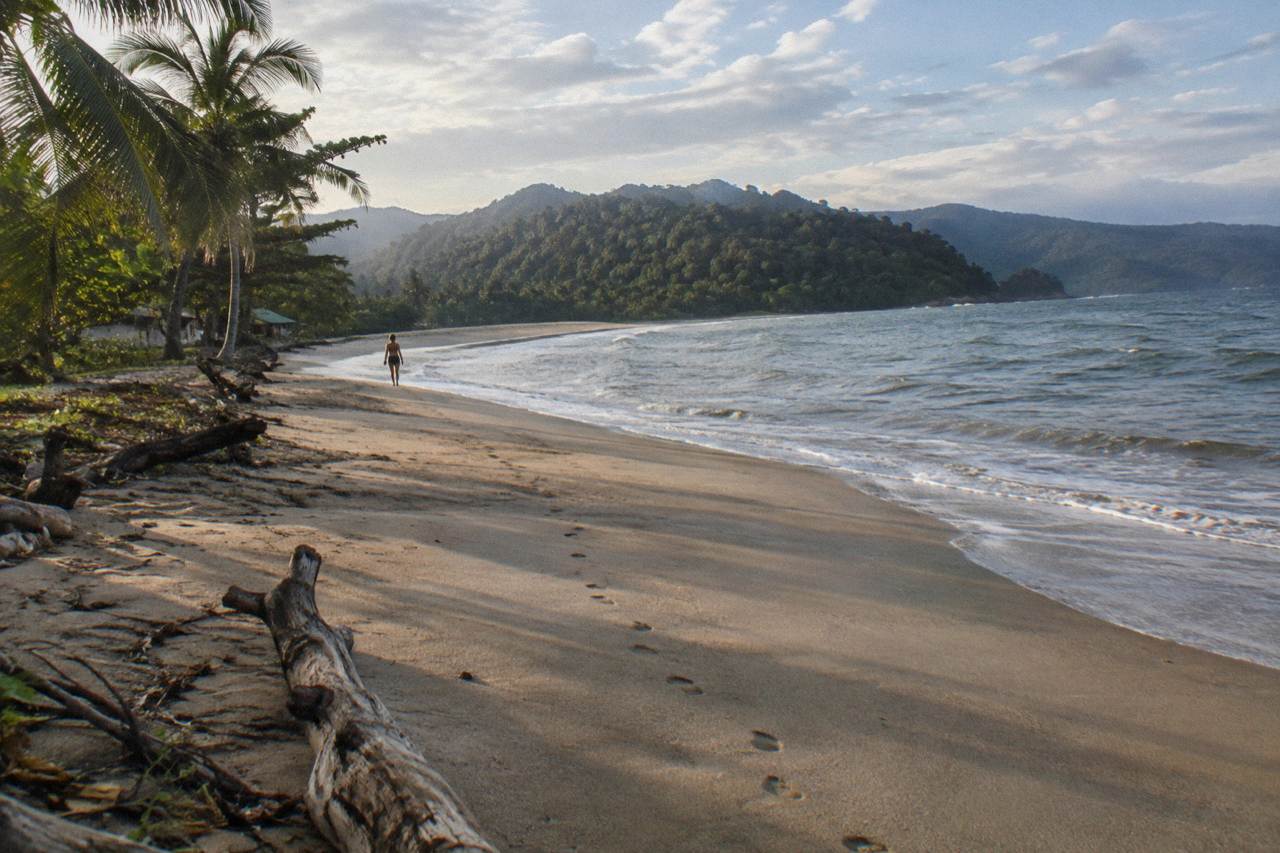
The public stretches north and south of the park's entrance posts cost nothing to walk and swim at your own risk. The park's four sectors sit behind the paid posts. Check conditions on the day before swimming.
Playa Uvita's northern stretch and the beaches running toward Dominical sit outside the park boundary, and the coastal road gives informal access at several points. These are long sands backed by palms, with nothing to pay. Dominical itself is about 18 km and 15 minutes north via Highway 34, per one long-standing route table, so a free beach day can combine both towns by bus or taxi. The free things angle extends to Dominical on the blog, which covers what that town is known for.
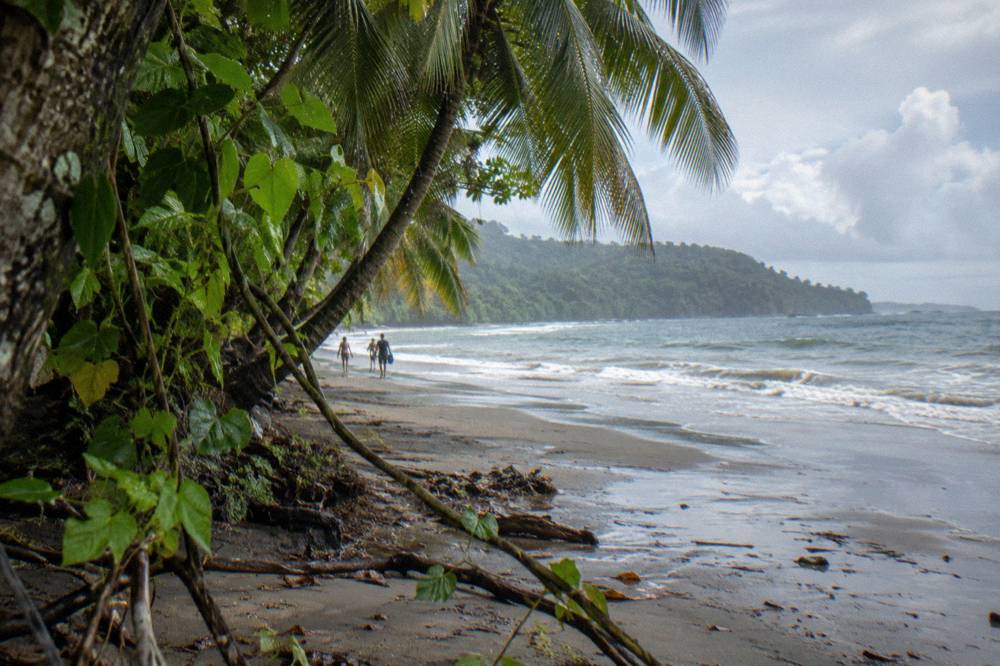
Swimming deserves a straight caveat. Our answer to Is It Safe To Swim In Uvita? covers the details, but the short version for a budget plan is to ask at your lodging or a surf shop about the day's conditions before a long swim, and to treat river mouths with particular respect.
| Beach or stretch | Inside the paid park? | Free access | Notes for budget walkers |
|---|---|---|---|
| Playa Uvita, park sector | Yes, Sector Uvita | No, entry fee applies | Tombolo access only at low tide |
| Beaches north of the Uvita post | No | Yes | Check conditions on the day |
| Beaches toward Dominical | No | Yes | Check conditions on the day |
| Playa Pinuela area | Sector Pinuela is paid | Outside posts only | Hours 8:00 to 16:00 inside |
A practical budget day looks like this: morning walk on a free stretch while the tide drops, a picnic from a Uvita supermarket, then either the paid park entry for the tombolo at low tide, or the viewpoints from the road for nothing. That is a full day in Uvita where the only unavoidable cost is lunch.
Can You See Whales From Shore Without Paying For A Boat?
Possibly. Humpbacks use Bahía Ballena in both seasons, with the August to September peak of the southern-hemisphere season the strongest, but nothing about shore watching is reliable, timed or guaranteed. The honest framing is that shore watching is a free bonus at best, while the boat trips offer better odds and a closer, regulated view.
The season windows are the reason this coast works for shore watching at all. Southern-hemisphere humpbacks visit from July to mid-November, with an August to September peak for mother-calf pairs per operator pages, and northern-hemisphere humpbacks visit December to March or April, peaking January to February. The IWC's handbook describes Costa Rica's Pacific as hosting both populations each year, which is why Uvita has whale presence for much of the calendar rather than a single short window. More detail sits in our guide to Best Time For Whale Watching In Uvita By Month.
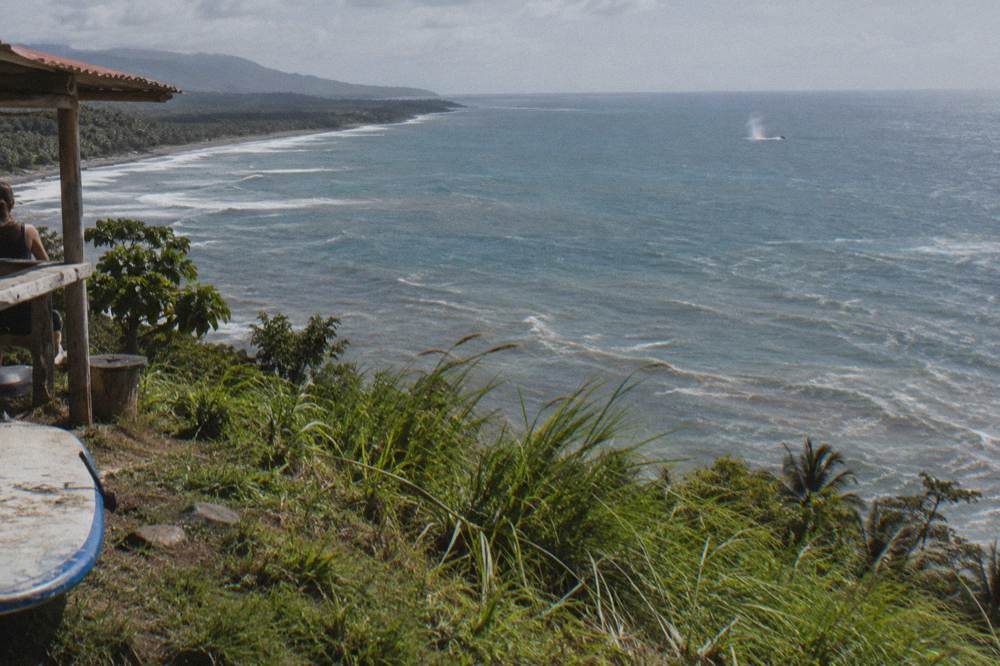
What shore watching cannot give you is proximity, and the law protects that gap on purpose. Under Decreto Ejecutivo 32495, boats must keep at least 100 metres from whales over 5 metres long and 50 metres from dolphins with the engine on, 30 metres with it off, spend at most 30 minutes with any group, and never allow swimming near cetaceans, as the decree's own text states. A whale viewed from the regulated distance of a slow boat is a spectacle; the same whale glimpsed from distant sand is a splash and a spout. Both are real, and only one is the thing people travel here for.
If the budget stretches to exactly one boat trip, the lowest-priced listing here is the Morning Whale and Dolphin Tour, from $75 per person for a 2.5 to 3 hour shared boat out of Bahía Ballena, rated 4.8 from 210 reviews, with snacks, bottled water, snorkel equipment and free on-site parking listed among the inclusions. It is the budget pick on price, and one guest review describes it as "an excellent small tour. We saw whales and dolphins. We were given the choice of finding more whales or snorkeling at the Whale’s Tail. The boat voted for snorkeling."
Are There Free Viewpoints Or Walks Around Uvita?
Yes, and they are the town's most underrated budget asset. The coastal road south of Uvita runs along elevated ground with clear views across Bahía Ballena and the Whale Tail, there are informal footpaths to headlands and river walks around town, and the Whale Tail itself, seen from the road at low tide, is the single best free view on this coast.
The Costanera between Uvita and Ojochal is the scenic stretch. The road climbs and dips along the headlands, and several pullouts look straight down the bay, with the tombolo visible when the tide is out. Ojochal to Dominical via Uvita is about 37 km and 41 minutes end to end per one route listing, but the budget version is to walk short segments and stop at whatever viewpoint is nearest. Near Ojochal, the Playa Ventanas sea caves are a known sight from the sand, with the honest caveat that the caves themselves are tide-dependent, safe to explore only at low tide, with a rising tide able to trap visitors, so treat them as a look-don't-enter feature unless the tide is clearly out.
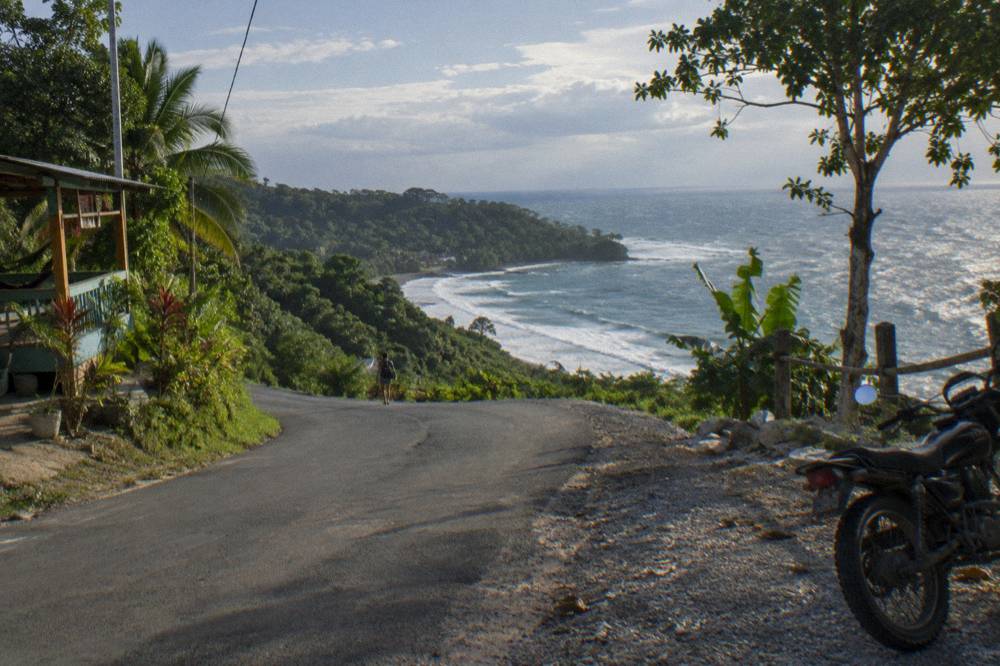
Walks closer to town include the river mouth on Playa Uvita and the lanes behind the main street. None of this is trail infrastructure. Bring water, avoid the midday heat, and keep in mind that SINAC's park rules apply the moment you pass a sector post, including the bans on pets, single-use plastic and extracting stones or plants. The park's official page lists those prohibitions plainly, and they apply to paid visitors and boundary-straying walkers alike.
| Walk or viewpoint | Cost | Best time | Honest caveat |
|---|---|---|---|
| Costanera pullouts above Bahía Ballena | Free | Low tide, morning light | Roadside, no facilities |
| Whale Tail seen from the road | Free | Low tide only | Viewing only, walking it needs park entry |
| River mouth walk, Playa Uvita | Free | Morning | Tide dependent, currents at the mouth |
| Playa Ventanas caves, from the sand | Check on arrival | Low tide | Entering caves is unsafe on a rising tide |
| Lanes behind Uvita center | Free | Early or late | Unmarked |
What Does A Full Budget Day In Uvita Look Like?
A realistic zero-ticket day is: mid-morning on a free beach stretch, a supermarket picnic, an afternoon at the coastal-road viewpoints timed to the dropping tide, and the Whale Tail from the pullout as the finale, with total spend of a few dollars for food and water. Adding the park's land entry lifts the day to under USD 7 per adult; adding the cheapest boat trip, from $75, turns it into the full Uvita experience.
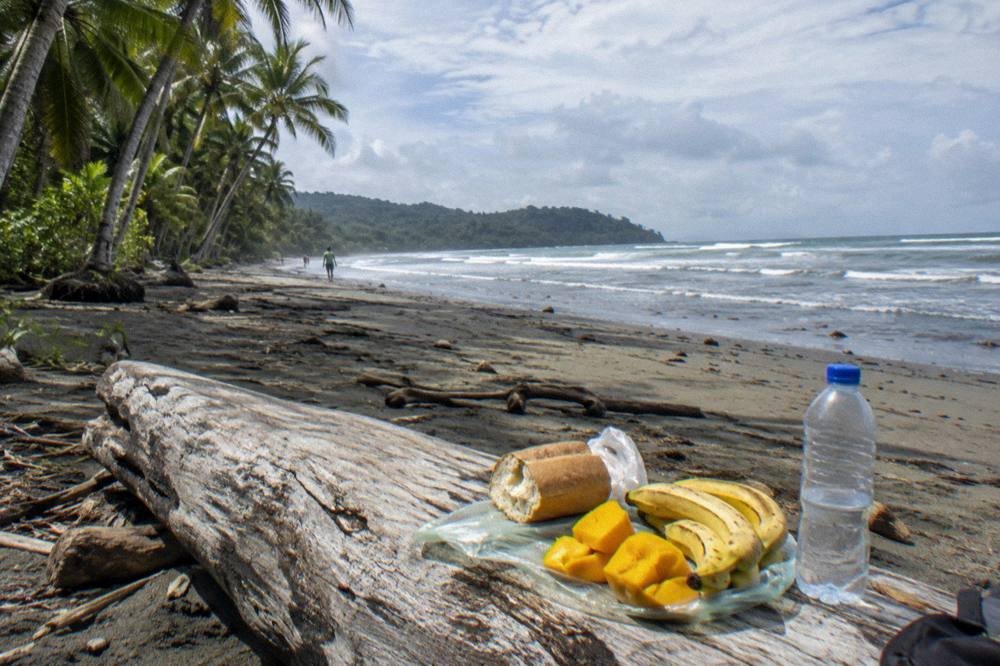
The sequence matters because of the tide. The tombolo emerges only during the roughly six hours of low tide, per SINAC's own page, so a budget traveler checks the tide table first and builds the day backwards from it. High tide in the morning means beach walking and the town; low tide in the afternoon means the viewpoints and, if paid, the sandbar. Budget travelers staying several days can pick the best tide day for the park entry and spend the others on the free stretches, a rhythm our guide to Things To Do In Uvita Costa Rica Beyond The Boat lays out over a longer stay.
For the splurge decision, the honest comparison is between the cheapest boat trip and the ones just above it. The Morning Whale and Dolphin Tour at from $75 is the floor. The most reviewed listing here, the drinks-and-snacks boat trip with 775 reviews and a 4.5 rating, is from $95 per person for 3.5 hours, up to 80 guests, with pastries, fruit, juice, coffee, the park entry fee and parking included, but no hotel pickup, no snorkel gear and no alcoholic drinks. The Pacific Expeditions whale watch, 4.8 from 183 reviews, sits between them at from $80 per person for 3 hours, with tropical fruit, lifejackets, the park entry fee and a guide, but no restroom on board, no snorkeling, and boarding straight off the beach, which means wading to the boat.
| Budget level | What the day includes | Cost basis |
|---|---|---|
| Zero ticket | Free beaches, town, road viewpoints, shore watching | Nothing but food |
| Park land day | All of the above plus tombolo access at low tide | USD 6.78 adult, USD 5.65 child, SINAC, card only |
| One boat splurge | Shared whale and dolphin boat, cheapest listing | From $75 per person |
One more budget note: tipping. Budget a modest cash tip for the crew if the day earns it, and check what the operator's own page suggests.
Common Questions About Free Things To Do In Uvita
Is The Whale Tail Beach Free?
Walking on the Whale Tail requires paid entry to Marino Ballena National Park, USD 6.78 for a non-resident adult and USD 5.65 for a non-resident child per SINAC, card only, valid for the day. Seeing the tail from the coastal road viewpoints is free.
Can You Watch Whales From The Beach In Uvita For Free?
Possibly, especially in the August to September peak, but shore sightings are not scheduled or reliable. Boats offer closer, regulated views under the 100 metre approach rule.
What Is The Cheapest Whale Watching Tour From Uvita?
The lowest-priced listing here is the Morning Whale and Dolphin Tour at from $75 per person, a 2.5 to 3 hour shared boat rated 4.8 from 210 reviews, with free cancellation listed.
Is There A Free Walking Tour In Uvita?
No. No free walking tour is listed for Uvita or Dominical. The free alternatives are the beaches, the coastal-road viewpoints and the town itself.
Does The Whale Festival Cost Anything?
The Festival de Ballenas y Delfines in early September includes concerts, workshops, free surf classes and an artisan fair. The whale-watching boat trips during the festival remain paid, with special prices for nationals.