Is Marino Ballena National Park Worth Visiting?
An honest assessment of Marino Ballena National Park from Uvita: entry fees, whale seasons, boat tours, the Whale Tail sandbar and who the park suits best.
Most visitors arrive in Uvita with a single plan: see the whale tail sandbar and get on a boat. Marino Ballena National Park is where both happen. It was the first protected area in Costa Rica created exclusively for marine resources, a point SINAC, the national conservation system, makes on its own page for the park, and its 5,160 marine hectares hold coral reef, dolphin pods and two separate humpback whale migrations each year. Since so much of the park's appeal is in the water, our answer to Is It Safe To Swim In Uvita? covers the tides, the different beach sectors, and what the rules actually say about swimming near whales and dolphins.
For most travelers based on the southern Pacific coast, yes: Marino Ballena earns its place on the itinerary, because it combines a walkable tidal sandbar, a bay for swimming and snorkeling, and the departure beach for every whale boat listed here, all for a non-resident adult entry fee of USD 6.78 per day. The park rewards a full day. It underwhelms if you only pass through for thirty minutes at high tide. If you're weighing whether to push on farther south, our answer to Is The Osa Peninsula Worth It? compares it against staying put in Uvita.
The honest case starts with what the park is. SINAC describes a coastal strip 15 km long from the mouth of the Rio Morete to Punta Pinuela, with 171 land hectares and 5,160 marine hectares around it. That marine emphasis matters. This is not a rainforest park with a beach attached; it is an ocean park with a thin ribbon of sand, and the experiences that justify the entry fee mostly happen on or under the water.
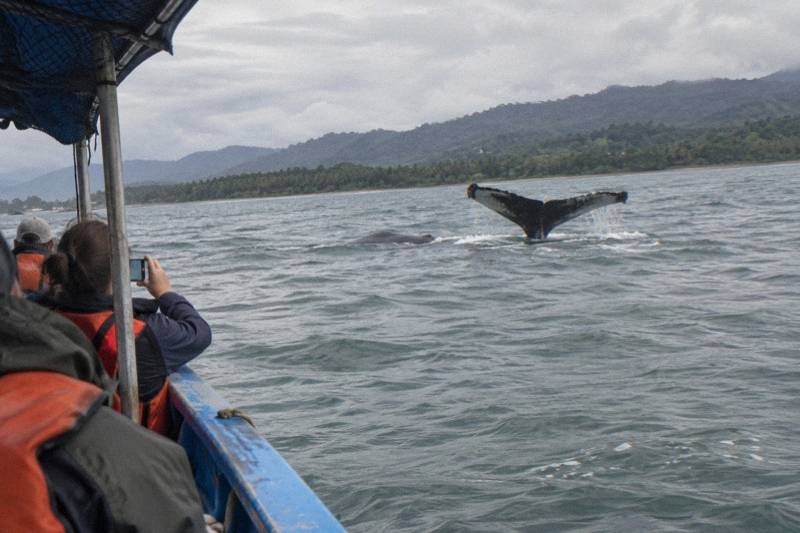
The value depends on pairing the park with a boat trip. The most reviewed whale watching product listed here, the Drinks and Snacks Included boat trip from $95 per person, runs 3.5 hours, carries a 4.5 rating from 775 reviews, and lists the Marino Ballena entry fee, fruit, pastries, juice, coffee, a guide, lifejackets and parking among its inclusions. Up to 80 guests share the boat, and the listing states guests meet at the departure point rather than being picked up. A cheaper alternative, the Morning Whale and Dolphin Tour from $75 per person, runs 2.5 to 3 hours from Bahía Ballena with a 4.8 rating from 210 reviews, which makes it the lowest price listed here.
There is a second, quieter answer for budget travelers: the park works as a beach day even without a boat. The sandbar, the surf and the reef snorkeling from shore cost nothing beyond the entry ticket, and the cheapest listing overall is still $75, so the shore-only visit is genuinely the free-ish option once you are inside. Our guide to Free Things To Do In Uvita And Marino Ballena On A Budget covers that side in detail.
Worth also depends on expectations. Anyone who arrives at high tide expecting the famous whale tail shape will find the tombolo underwater, because SINAC's page states plainly that access to the Cola de Ballena happens only during low tide. Check the tide table first, plan the sandbar walk for low tide, and put a boat or a snorkel in the middle of the day.
What Does The Marino Ballena Entry Fee Actually Cover?
A non-resident adult pays USD 6.78, tax included, and a non-resident child USD 5.65, per SINAC, paid by credit or debit card only at the official posts. The ticket is valid for the entire day of the visit. It covers beach access, the Whale Tail sandbar at low tide, shore snorkeling and the trails, but not boats, food or guided tours.
The park has four entrance sectors, each with its own hours per SINAC: Uvita from 7:00 to 17:00, Colonia from 7:00 to 18:00, and Ballena and Pinuela from 8:00 to 16:00, every day of the year. Residents pay in colones, CRC 1,130 per adult, and national or resident adults over 65 with ID enter free. There is no cash option at the posts, so bring a card even for a day at the beach.
One point that trips up boat passengers: whether park entry is inside your tour price depends entirely on the listing. The featured Drinks and Snacks Included trip includes the entry fee; the Fast Boat, Park Tickets Included trip from $122 also includes national park tickets; but the private Whales and Dolphins Watching charter from $95 per person lists only water, parking and snorkel equipment, and its price varies by group size, so confirm on the booking page. Our guide to Marino Ballena National Park Entrance Fee And Tours breaks down every listing on this point.
| Sector | Hours (daily, per SINAC) | What you find there |
|---|---|---|
| Uvita | 7:00 to 17:00 | Main entrance and park post |
| Colonia | 7:00 to 18:00 | Longest hours of the four sectors |
| Ballena | 8:00 to 16:00 | Access point for Playa Arco, which itself is only passable at low tide |
| Pinuela | 8:00 to 16:00 | Southern sector near Punta Pinuela |
SINAC also lists what is not allowed, and the list matters for planning: no pets, no single-use plastic, no alcohol, no extracting stones or plants, no touching or feeding animals, and no vehicles on the beach. Smoking is prohibited. None of this is unusual for Costa Rican parks, but the plastic rule catches visitors who bring water bottles and packaged snacks; carry a refillable bottle.
Wondering which trip pairs with the entry fee you just paid?
Which Boat Trip Fits Your Day In The Park?
Most listings bundle entry, so the fee question disappears once you book. The Pacific Expeditions Whale Watch from $80 per person, rated 4.8 from 183 reviews, includes the entrance fee, parking, a guide, tropical fruit and swimming time when conditions allow, though its listing notes there is no restroom on board, no snorkeling, and boarding happens directly from the beach with no dock, so guests wade to the boat. The Ballena Infocenter, 3 to 4 Hours trip from $92, rated 4.6 from 107 reviews, adds a coffee station before departure, up to 20 guests, a visit to Whale's Rock or Ventanas Cave, and swimming or snorkel time only in the dry season from late December through April.
The most reviewed trip deserves its own sentence here because it answers the worth question for most first-time visitors: the Drinks and Snacks Included boat, from $95, 4.5 from 775 reviews, 3.5 hours, park entry and parking included, free cancellation listed, and snorkel gear explicitly excluded. Between that one, the 4.8-rated morning tour from $75 and the whale and snorkel combos from $84.42, a traveler can match almost any budget and still stay inside the park's rules.
When Can You See Whales In Marino Ballena National Park?
Two humpback populations visit: southern-hemisphere whales from July to mid-November, peaking August to September for mother-calf pairs, and northern-hemisphere whales from December to March or April, peaking January to February, per the IWC handbook and operator pages. Together the two windows give the coast roughly eight to nine months of whale presence a year.
The International Whaling Commission's whale watching handbook notes that Costa Rica's Pacific waters host both populations and that whale watching in the country originally developed in the southern coastal communities, naming Dominical, Uvita, Drake Bay, Caño Island and Golfo Dulce. Marino Ballena sits at the center of that zone. The same handbook profile records the southern migration from the Antarctic Peninsula and southern Chile as the longest recorded migration of any humpback population, which is the detail that makes this bay biologically unusual rather than just scenic.
Dolphins do not follow the same calendar. The IWC profile lists bottlenose and pan-tropical spotted dolphins as commonly seen on Costa Rican tours, so a boat trip outside the whale windows is not an empty boat trip. One operator's own statement on the featured listing puts sighting chances at 50 percent from December to March and 90 percent from July to October; that is one operator's claim on one listing, not a rate for the coast.
| Window | Who is in the water | Notes |
|---|---|---|
| July to mid-November | Southern-hemisphere humpbacks | Peak August to September for mother-calf pairs, per operator pages |
| August to September | Peak calf season | Mother-calf pairs, per operator pages |
| December to March or April | Northern-hemisphere humpbacks | Peak January to February per operator pages |
September carries a bonus beyond the whales. The community of Bahía Ballena organizes a whale festival each early September, as the IWC handbook itself notes, with reduced tour prices during the festival. The 16th edition ran 4 to 6 September 2026 with concerts, an artisan fair and special tour pricing for nationals, per local reports. For month-by-month planning, our guide to Best Time For Whale Watching In Uvita By Month carries the full calendar.
Which Boat Tours Actually Run Inside The Park?
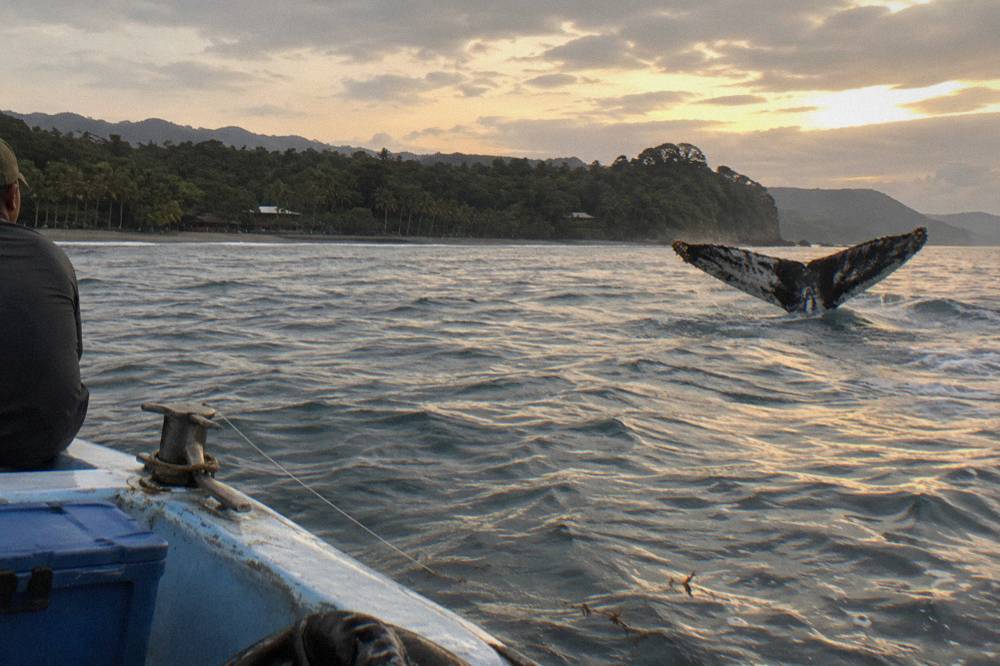
Every shared whale watching listing here departs from Uvita or Bahía Ballena and operates in the park's marine waters, from $75 to $129 per person for roughly three hours, with 11 of the 15 whale and dolphin listings naming park entry among their inclusions. The differences are duration, group size, food and whether snorkel gear is aboard. None is a private trip unless the line says so. If you're still weighing whether the area itself justifies the trip, our answer to Is Bahía Ballena Worth Visiting? covers the whale seasons, park fees, and what the bay offers once the boat is back on the sand.
The spread is wider than the prices suggest. The Expert Guides Whale Watch from $96, rated 4.7 from 26 reviews, includes the park ticket, hydration, fruit and a bilingual guide for three hours. The Marino Ballena Tours Whale Watch from $105, rated 4.5 from 110 reviews, caps the boat at 20 guests and lists insurance and private parking among its inclusions, with towels, photos, snorkeling and lunch excluded. The Humpback and Wildlife Focus trip from $129 is the research-flavored option: its inclusions name a biologist expedition leader, a donation to a humpback whale research project, an informative talk and travel insurance, rated 4.2 from 10 reviews.
A guest review on the Marino Ballena Tours listing captures what a good day looks like: "We thoroughly enjoyed the activity; Joana was incredibly kind and told us a lot about the whales. We were lucky enough to see a mother whale and her calf, and at another spot, we also saw a bull with some dolphins." A review on the Ballena Infocenter, 3 to 4 Hours listing tells a similar story: "We observed a mother and baby humpback whale for at least 20 minutes. In addition we saw some sea turtles and had the chance to swim in the sea."
Boarding is worth a paragraph of its own because it surprises people. Several Uvita boats launch straight off the beach with no dock, and guests wade to the boat; one listing states this in its exclusions directly. Wear shorts, use the waterproof bag, and check the listing for transport details since pickup policies differ product to product. Our guide to Whale Watching Boat Rules And Ethics In Costa Rica explains the approach distances boats must keep under national regulation.
Can You Swim And Snorkel In Marino Ballena?
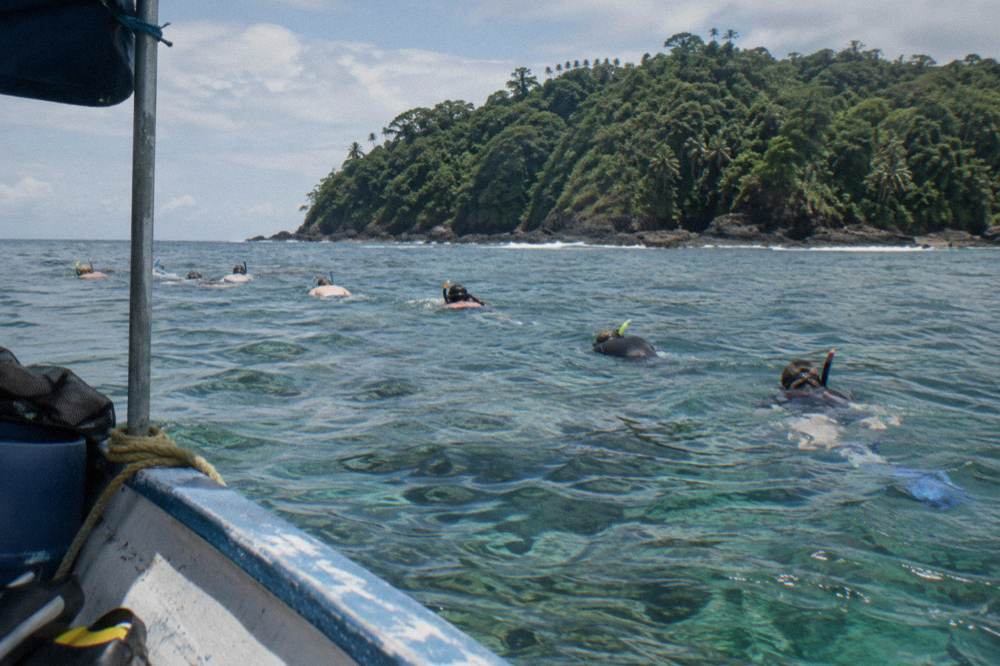
Yes, in defined places: SINAC names snorkeling on the left side of the Whale Tail tombolo and around Isla Ballena, where coral reef sits in shallow water. Water temperature runs 78 to 84 F year-round per one operator reading. Visibility is best January to April, per the same source, and one listing withdraws snorkel gear from May through December because the water is not clear enough. Swimming in the bay is normal beach swimming.
The reef is real: SINAC's own fauna list for the park includes parrotfish and manta rays alongside humpback whales, spotted dolphins and hammerhead sharks. If the in-park reef leaves you wanting more, our guide to Uvita Snorkeling Tours And Reefs covers the options, and the 3-hour whale and snorkel combos from $84.42 pair whale watching with a snorkel stop in one ticket, with the Combo Tour listing including gear, fruit, snacks, water, the park ticket and parking.
The bigger water day is Caño Island, which is a different product entirely: 6 to 8 hours, from $150 to $185 per person across the listed tours, lunch included on every Caño listing, and a boat ride of roughly 50 to 80 minutes from Uvita according to one local operator. The Wonders of Caño Island Snorkeling Tour, 8 hours from $150, rated 4.9 from 92 reviews, includes lunch, gear, safety equipment, a licensed guide and free on-site parking, with no onboard bathroom. SINAC's Caño Island page sets the reserve's rules: visiting hours 8:00 to 15:00, prior reservation required, a foreign adult fee of USD 16.95 and no landing on the island, the marine part only.
Do not merge the two in your head: the 3-hour Marino Ballena combos are bay trips with a snorkel stop; the Caño trips are full days on open water. The Caño Island versus Marino Ballena comparison lays out which day suits which traveler.
Is The Whale Tail Sandbar Worth The Walk?
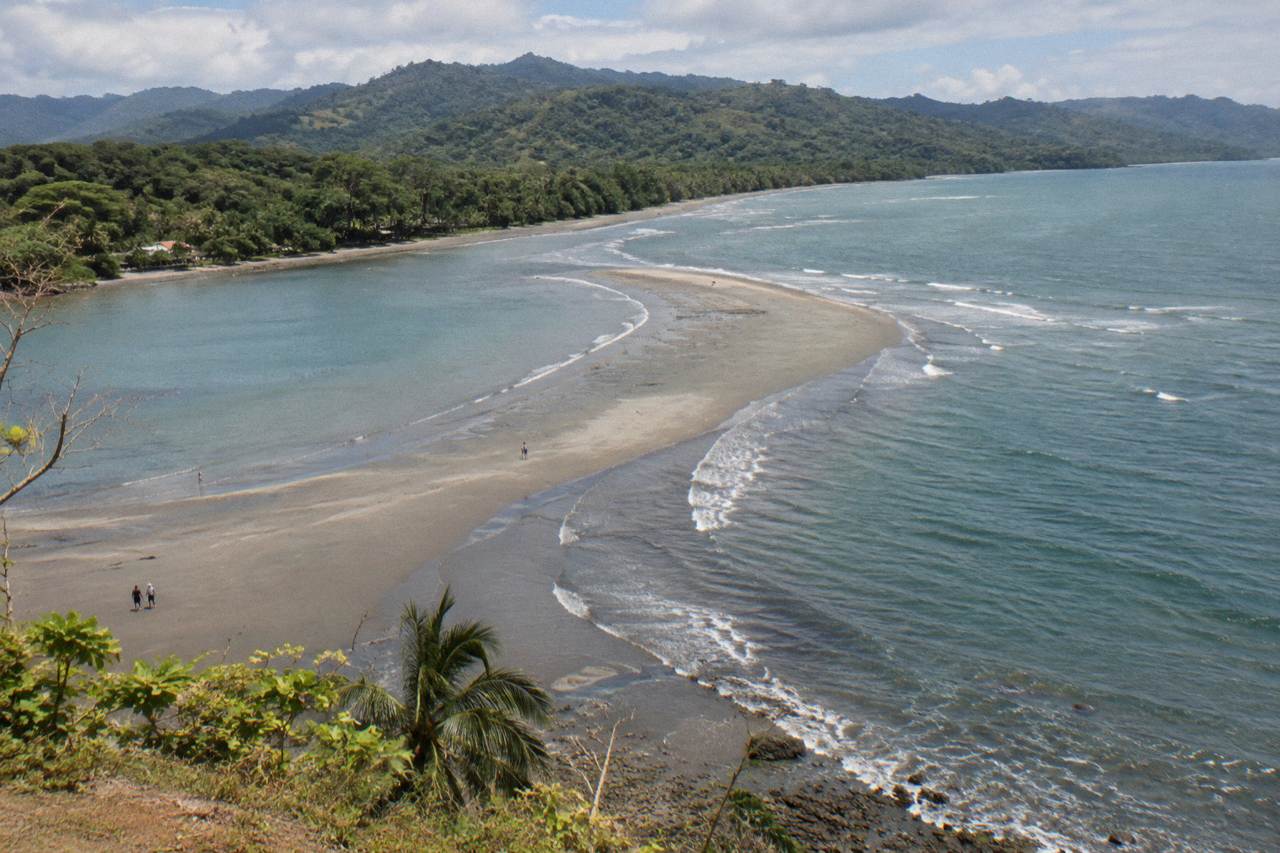
Yes, at low tide and only at low tide. SINAC states that access to the Cola de Ballena is possible only during low tide, during the six hours of low tide. At high tide the tombolo disappears and the walk is a swim. Time it wrong and you have bought a beach.
The tail is a tombolo, a sand spit that links the shore to a small rocky island, and from the air or the ridge above it genuinely reads as a whale's tail. From ground level it is a long, flat walk with water on both sides, best in the morning before the sun is high. The practical rules: check a tide table and keep an eye on the water level on the way back.
Our guide to Whale Tail Beach At Marino Ballena National Park covers tides, sectors and timing in full.
Who Should Skip Marino Ballena National Park?
Travelers with no interest in the ocean, one day in Costa Rica split with inland parks, or anyone visiting purely at high tide with no boat booked will get less from this park than its reputation suggests. It is not a wildlife-dense rainforest, it has no canopy tour, and its land area is a fraction of its marine area. It is a beach-and-boat park. Judge it as one.
Visitors chasing sloths, monkeys and cloud forest should know that SINAC's own activities list for the park is almost entirely marine: snorkel, surf, kayak, flora and fauna watching, mangrove and coast walks, diving. That is the honest inventory. The town of Uvita around it supplies supermarkets, ATMs and clinics but no hospital, per local listings, and everything worthwhile within the park itself faces the water.
For everyone else the math is simple. A $6.78 day ticket, a low-tide walk, and either the $75 morning boat or the $95 most-reviewed trip, in a bay where two humpback populations come to breed. More planning guides are on Uvita Whale Watching.
Common Questions About Marino Ballena National Park
Is Marino Ballena National Park Worth Visiting?
Yes for most southern-coast travelers. For USD 6.78 per adult per day you get the Whale Tail sandbar at low tide, reef snorkeling from shore and the departure beach for the whale boats listed here, in a bay visited by two humpback migrations each year. Pair it with a boat trip from $75.
How Much Does It Cost To Enter Marino Ballena National Park?
Per SINAC, a non-resident adult pays USD 6.78 tax included and a non-resident child USD 5.65, by card only, valid for the day of the visit. Many boat tours list the park entry fee inside the tour price, so check your listing before paying twice.
When Is The Best Time Of Year To Visit For Whales?
Southern-hemisphere humpbacks run July to mid-November with an August to September peak for mother-calf pairs; northern-hemisphere whales run December to March or April, peaking January to February. The southern peak coincides with the yearly early-September whale festival in Bahía Ballena.
Can You Walk The Whale Tail At Any Time Of Day?
No. SINAC states access to the Cola de Ballena is only during low tide, so check a tide table before you go. At high tide the sandbar is submerged and the famous shape is visible only from above.
Do Whale Watching Tours From Uvita Include The Park Entry Fee?
Many do, including the most reviewed Drinks and Snacks Included trip from $95, the Pacific Expeditions Whale Watch from $80 and the whale and snorkel combos from $84.42. Each listing states its own inclusions, so confirm on the booking page for the trip you choose.