Is The Osa Peninsula Worth It?
An honest look at whether the Osa Peninsula justifies its travel time, how it compares with a Uvita and Marino Ballena base, and which boat days from Uvita fit an Osa itinerary.
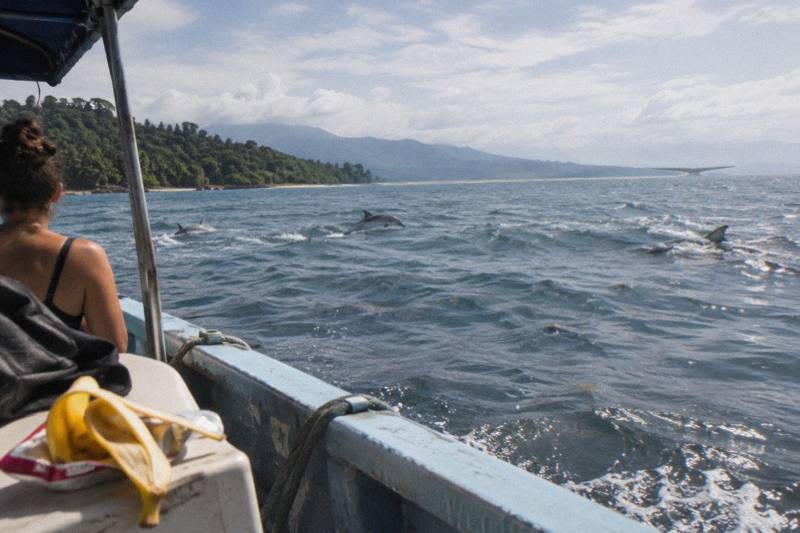
For travellers whose main goal is whales, dolphins and reef fish with the least logistics, a base in Uvita or Bahía Ballena delivers most of the same Pacific wildlife at lower cost and shorter travel times, and the Osa Peninsula is worth it as an add-on for a longer trip rather than a substitute. Uvita alone offers a 3.5-hour whale and dolphin boat trip from $95 per person, rated 4.5 from 775 reviews. The honest framing is that the two places solve different problems. Uvita is a compact town on the coastal highway with a national park beach at its front door and a fleet of whale boats. The Osa is remoter, greener and slower to reach.
Start with what the question usually means in practice. Most people asking it are already planning the southern Pacific coast, weighing Uvita or Dominical against pushing farther south toward Puerto Jimenez and Drake Bay. The IWC Whale Watching Handbook notes that whale watching in Costa Rica originally developed across exactly this stretch: Dominical, Uvita, Drake Bay, Caño Island and Golfo Dulce. That is a useful anchor. The whale product is not unique to the Osa; it is a regional one, and the booking scene this site covers sits in Uvita, where its listing shows 28 bookable trips.
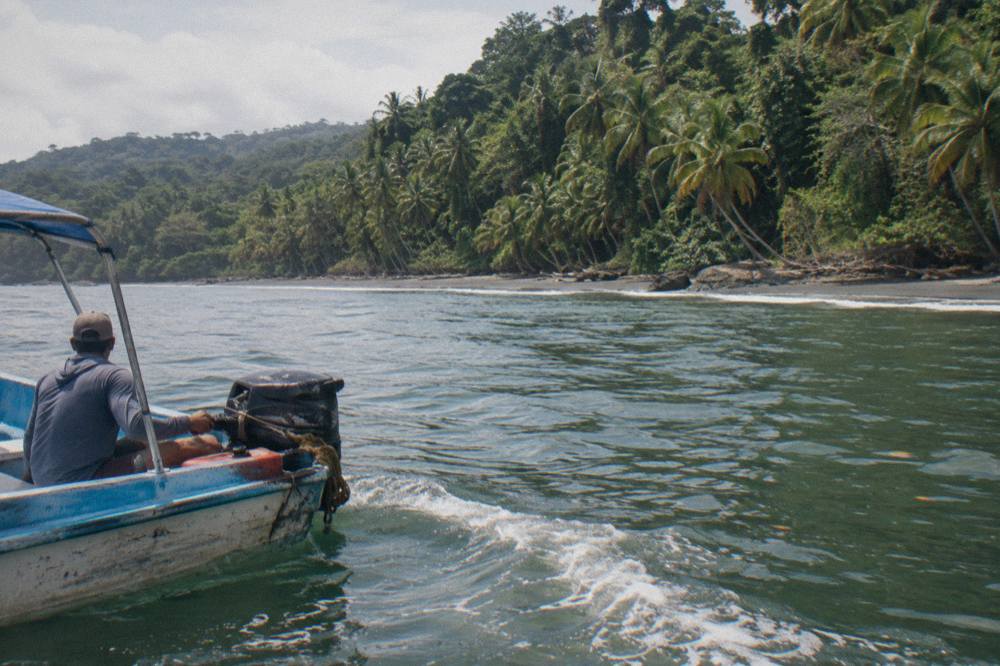
The featured trip on this site, the drinks and snacks boat trip from Uvita, runs 3.5 hours from $95 per person, carries up to 80 guests, and includes the Marino Ballena National Park entry fee, pastries, bananas, juice, coffee and tropical fruit. Free cancellation is listed. It is the most reviewed whale product here at 4.5 from 775 reviews, and it launches about three and a half hours south of San Jose by road, not from the end of a long peninsula transfer.
If your plan already includes the Osa, one sensible pattern is a Uvita boat day on the way down or back.
What Does The Osa Peninsula Actually Add Over Uvita?
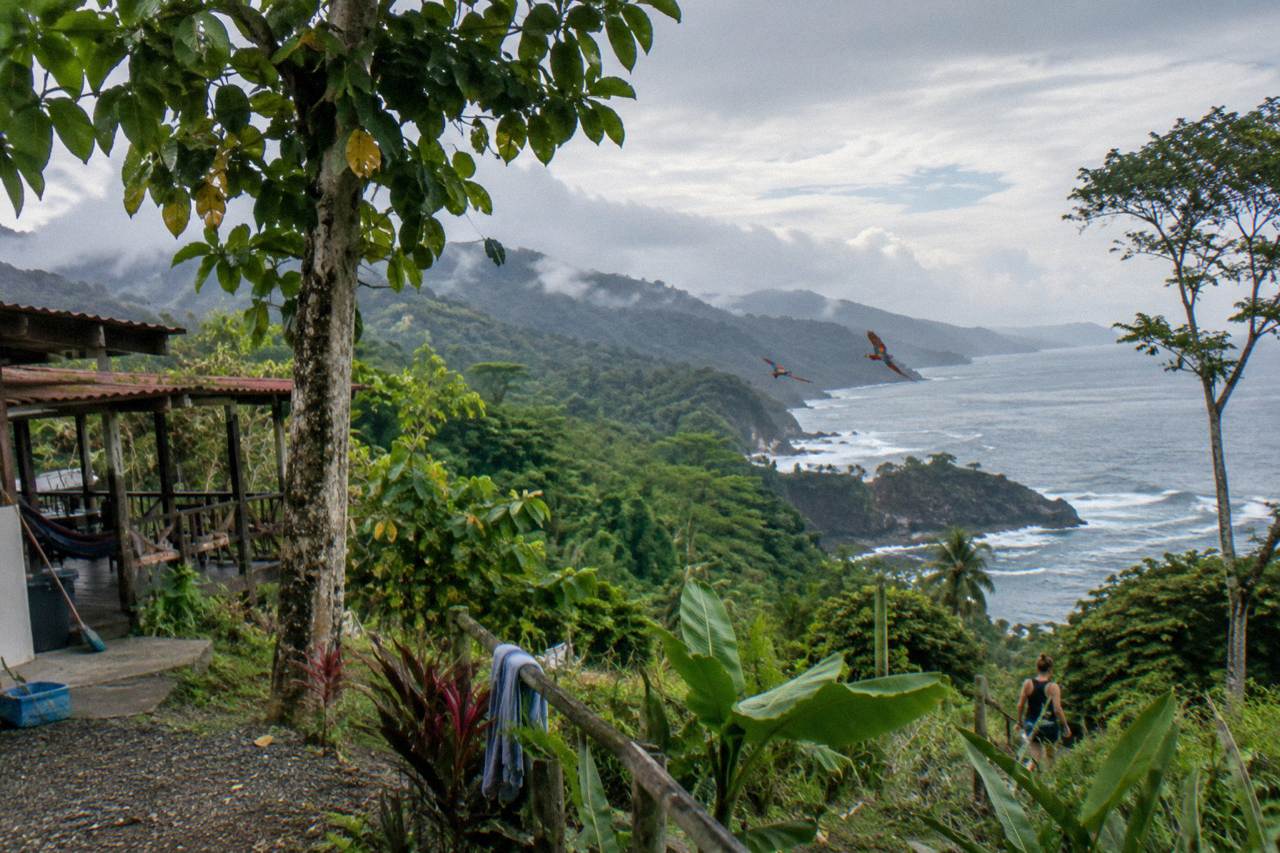
The Osa adds remoteness and low-visitor rainforest rather than a different marine show: its whales, dolphins and snorkel sites belong to the same southern Pacific system as Uvita's, while Uvita adds the developed tour fleet, the Marino Ballena whale-tail beach and day trips to Caño Island, all reachable without the peninsula's longer transfers. Think of the choice as wilderness density versus trip availability. The Osa's reputation rests on being one of the least developed coastal regions in the country, and that reputation is fair in general terms.
Uvita's side of the ledger is well documented. Marino Ballena National Park was the first protected area in Costa Rica created exclusively for marine resources, with 5,160 marine hectares along a 15 km coastal strip, according to its SINAC park page. The park holds coral reef on the left side of the tombolo and around Isla Ballena, and its named fauna includes humpback whales, spotted dolphins, bottlenose dolphins, manta rays and parrotfish. Entry for a non-resident adult is USD 6.78, card payment only, and the ticket is valid for the whole day.
For the marine half of an Osa-versus-Uvita decision, the practical difference is fleet depth. Uvita's booking scene covers 15 shared whale and dolphin tours, 8 Caño Island snorkel days, 3 whale-and-snorkel combos and 2 private charters, all departing from Uvita or Bahía Ballena. The lowest-priced listing is the morning whale and dolphin tour from $75 per person, rated 4.8 from 210 reviews, at 2.5 to 3 hours. A guest review on that listing describes it plainly: "This was an excellent small tour. We saw whales and dolphins. We were given the choice of finding more whales or snorkeling at the Whale’s Tail."
| What you want | Uvita / Bahía Ballena | The Osa Peninsula |
|---|---|---|
| Whale and dolphin boats | 15 shared listings plus 2 private charters, from $75 per person | Whale watching developed in Drake Bay too, per the IWC handbook; not listed on this site |
| Reef snorkel day trip | Caño Island, 6 to 8 hours, from $150 to $185 per person across 8 listings | Marine part of Caño is the same reserve; access also runs from Drake Bay and Sierpe per SINAC |
| National park beach | Marino Ballena, four sectors, USD 6.78 non-resident adult | Rainforest parks inland; not covered on this site |
| Travel time from San Jose | About 222 km, roughly 3.5 hours by Route 34 | Farther south; not covered on this site |
One more honest note: the whales that draw people south are the same two humpback populations that pass Uvita. The deeper comparison of how Uvita fits the national whale-watching picture is laid out in our guide to Whale Watching In Costa Rica: Where Uvita Fits.
How Do You Get To The Osa Peninsula From Uvita?
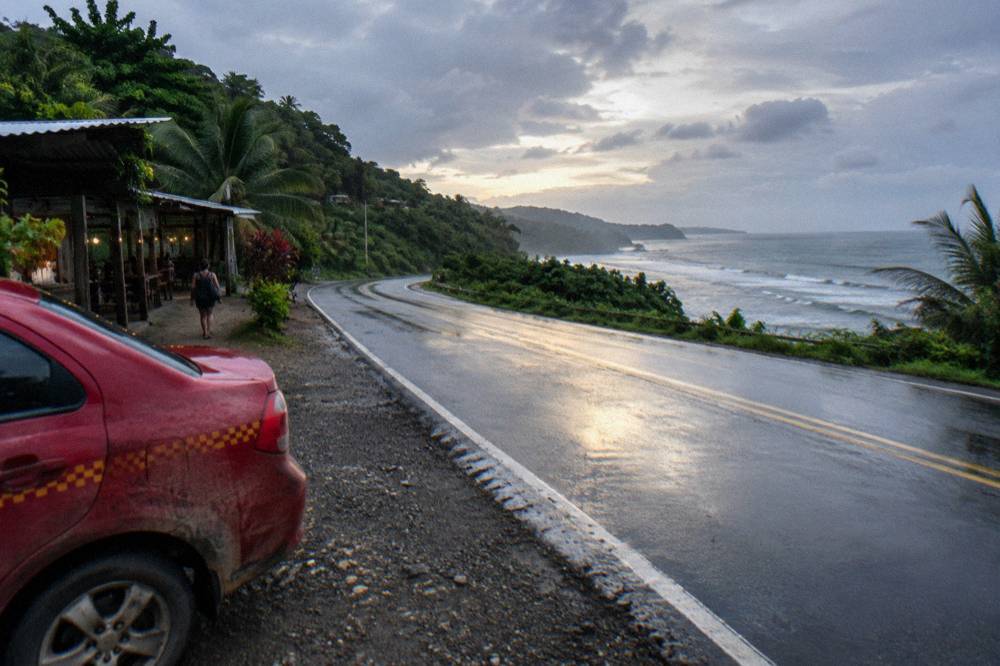
Uvita to the Osa means continuing south on Route 34, the same coastal highway that brings you from San Jose. You can drive, take the bus south or fly, and Uvita works well as the last full-service stop before the peninsula. San Jose to Uvita via Route 34 is about 222 km and about 3 hours 28 minutes by one route estimate, with other sources ranging from 3 to just over 4 hours. Dominical sits about 18 km north of Uvita, a 15-minute hop.
Buses run from San Jose's Tracopa terminal on the Costanera route and stop in Uvita; check Tracopa for fares and schedules. Domestic flights are another angle: SANSA serves Quepos from San Jose, with Palmar Sur noted as a southern option. Uvita itself has supermarkets, bank ATMs and clinics, with no hospital in town, which matters if you are stocking up before heading into a remoter stretch of coast.
Road works are a live consideration on this highway. A June 2026 public-works notice reported provisional passage and bridge works on the Rio Coronado crossing in the Osa area of Route 34. Expect occasional delays on long southern drives and to build slack into any departure-day plan that connects to a boat.
Here is where the Uvita stop earns its keep. If you overnight in Uvita on the way to or from the Osa, a morning whale trip fits before you drive on. The 3 to 4 hour whale and dolphin tour, rated 4.6 from 107 reviews and from $92 per person, includes a coffee station before departure, park entry, tropical fruits and water, plus swimming or snorkel time in the dry season. One guest review from that listing reads: "We observed a mother and baby humpback whale for at least 20 minutes. In addition we saw some sea turtles and had the chance to swim in the sea."
Is The Whale Watching Better From The Osa Or From Uvita?
Neither place owns the whales: two humpback populations, one from each hemisphere, pass through the whole southern Pacific, and Uvita's boats work the same migration windows an Osa boat does, with bookable tours, listed prices from $75 per person, and national-park waters whose whale-watching rules are the same nationwide decree. The season logic is documented on this site elsewhere, but the short version belongs here. Southern-hemisphere humpbacks, which feed around Antarctica and southern Chile, are present July to mid-November, with operator pages describing August and September as the peak for mother-calf pairs. Northern-hemisphere humpbacks arrive December to March or April, peaking January to February per the same operator sources. The IWC handbook calls the Antarctic-to-Costa Rica migration the longest recorded whale migration.
What Uvita adds is bookable certainty at known prices. The Pacific Expeditions whale watch, rated 4.8 from 183 reviews, runs 3 hours from $80 per person and includes the park entry fee, tropical fruit, a guide and swimming time when conditions allow; its listing notes there is no restroom on board and boarding is directly from the beach, with no dock, so guests wade to the boat. The expert-guides trip, 4.7 from 26 reviews from $96 per person, keeps things to three hours with a bilingual guide, fruit and park ticket included. No Osa whale product is listed here.
Sighting odds deserve careful wording. One operator's own listing states "December to March there is a 50% chance of sightings and the season from July to October 90%": that is one operator's claim on one listing, not a rate for the coast. Nobody can promise you a whale anywhere. What the record does show is conduct rules: under Decreto Ejecutivo 32495, boats keep at least 100 m from whales over 5 m, at least 50 m from dolphins with the engine on, spend at most 30 minutes with any group, and at most two boats may watch the same group, per the official decree text. Those rules apply in Osa waters too, so ethics do not differentiate the two destinations.
| Uvita-area whale listing | Rating and reviews | Price | Duration |
|---|---|---|---|
| Morning Whale and Dolphin Tour | ★ 4.8 · 210 reviews | from $75 per person | 2.5 to 3 hours |
| Pacific Expeditions Whale Watch | ★ 4.8 · 183 reviews | from $80 per person | 3 hours |
| Watching Whales and Dolphins (Infocenter) | ★ 4.6 · 107 reviews | from $92 per person | 3 to 4 hours |
| Marino Ballena Tours Whale Watch | ★ 4.5 · 110 reviews | from $105 per person | 3 hours |
| Drinks and Snacks Included (featured) | ★ 4.5 · 775 reviews | from $95 per person | 3.5 hours |
The two-hemisphere season story, and how it shapes month-by-month planning, is covered in full in our guide to Best Time For Whale Watching In Uvita By Month.
What Does A Caño Island Day Add To An Osa Trip?
Caño Island is the strongest marine day trip you can book from Uvita, a 6 to 8 hour boat day at a reserve where landing is not permitted, and it pairs naturally with an Osa plan because the island is reached by sea from Bahia Uvita, Drake Bay and Sierpe alike; from Uvita it costs from $150 per person. The reserve's own SINAC page sets the framework: foreign adults pay USD 16.95 entry, children 2 to 12 pay USD 5.65, visiting hours run 8:00 a.m. to 3:00 p.m., prior reservation is required, and only the marine part is open, for diving and snorkelling. There is no drinking water on the island. Boat time from Uvita is about 50 to 80 minutes according to one local operator.
The standout is the 8-hour Wonders of Caño Island tour, rated 4.9 from 92 reviews, from $150 per person, with lunch, bottled water, snorkel gear, safety gear, a certified guide and free on-site parking included; its listing notes there is no onboard bathroom and that specialty meals may carry an extra fee ordered 48 hours ahead. A pastries-and-lunch version runs from $160 per person at 4.7 from 135 reviews.
Caño Island is the same reserve whichever direction you approach it from, and the Uvita fleet reaches it in a long day with meals included. If you want a shorter taste, the whale-and-snorkel combos split the difference: a 3-hour combo from $84.42 per person, rated 4.3 from 136 reviews, includes fruit, snacks, water, the daily park ticket, snorkel gear, parking, insurance and safety equipment. One guest review from that combo reads: "they had excellent communication with other boats so once one whale was spotted we were able to get there quickly." The fuller trade-off between the two day trips is laid out in our guide to Caño Island Vs Marino Ballena: Which Boat Day To Pick.
When Is The Best Time To Combine Uvita With The Osa Peninsula?
August and September are the strongest window, when southern-hemisphere mother-calf pairs peak per operator pages and Uvita's whale festival runs each early September, while mid-December to mid-April, the SINAC dry season, gives drier weather, the best Marino Ballena snorkel visibility and the northern-hemisphere whale season. Those two windows pull in different travellers. The late-wet-season window is for people who prioritise whales and accept rain. The dry-season window is for people who want drier days, reef visibility and a combined snorkel-and-whale itinerary. SINAC defines the dry season as mid-December to mid-April and the rainy season as mid-April to mid-December; February and March are the lowest-rainfall months on long-term averages.
The festival is a genuine timing hook. The Festival de Ballenas y Delfines is held each year in early September in Bahía Ballena, and the 16th edition ran 4 to 6 September 2026 with whale-watching tours at special prices for nationals, concerts, a running race, free surf classes and an artisan fair. It is a local event, ICT-supported. A full rundown of the two whale seasons lives in our guide to Humpback Whales In Costa Rica: Two Migrations Explained.
Snorkelling tilts the calendar. Marino Ballena visibility is best January to April according to one local operator, water temperature runs 78 to 84 F year-round per the same source, and some whale tours that include swim or snorkel stops limit them to the dry months: one listing states snorkelling is only available January to April, another that gear is not included in the rainy season May to December. If Caño Island is the centrepiece, a dry-season visit pairs better with everything around it.
Is One Week Enough For Uvita Plus The Osa Peninsula?
A week is enough for a realistic first trip: three or four nights in Uvita covering a whale morning, a Caño Island day and the Whale Tail beach, then two or three nights in the Osa, works with the drive times and leaves buffer for the weather-dependent nature of every boat trip on this coast. The geography cooperates. You arrive via San Jose or Quepos down Route 34, base in Uvita, use its supermarkets and clinics to stock up, then continue south. On the way back, a final night in Uvita lets you rebook any boat day the sea cancelled.
Build the Uvita half around two anchors. First, the featured whale and dolphin boat, from $95 per person, 3.5 hours, park entry and fruit included, up to 80 guests, free cancellation listed. Second, a Caño Island day from $150 per person. Between them, low-effort filler is plentiful and honest: the Whale Tail sandbar at Marino Ballena is walkable at low tide only, the park page warns, with tickets bought at the official posts, card only, valid all day. Budget travellers should know the lowest-priced boat listed here is the $75 morning whale and dolphin tour, and that every boat trip here is paid; the free things on this coast are the beaches and shoreline views themselves, as our guide to Free Things To Do In Uvita And Marino Ballena On A Budget explains.
For a splurge or a family bubble, the private options change the arithmetic. A private whales-and-dolphins charter is listed from $95 per person with the price varying by group size, so confirm it on the booking page. The fuller private cruise runs 3.5 hours from $1,120 per group with lunch, tropical drinks, beer and wine, snorkelling, the park entry fee and a professional crew. The charter shows 4 reviews and the cruise none yet.
So, is the Osa worth it? If wilderness and solitude are the point of your trip, yes. If whales, dolphins, reef snorkelling and practical logistics are the point, Uvita Whale Watching as a base delivers the bookable version of that trip today, and the Osa makes a strong second act rather than a substitute. The trio below is the shortlist this site would book for the Uvita half of that plan.
Common Questions About The Osa Peninsula
Is The Osa Peninsula Worth It?
Yes, if remoteness and intact rainforest are your priority and you have the time for the longer transfers south. For whale watching, dolphin trips and reef snorkelling, Uvita delivers the same regional wildlife with a listed fleet: whale boats from $75 per person, an 8-hour Caño Island day from $150, and the most reviewed trip at 4.5 from 775 reviews.
Can You See Whales From The Osa Peninsula As Well As From Uvita?
The same two humpback populations pass the whole southern Pacific coast, so the season windows are identical: southern-hemisphere whales July to mid-November, peaking August to September for mother-calf pairs, and northern-hemisphere whales December to March or April. Uvita's advantage is the bookable lineup with listed prices, not different whales.
How Far Is The Osa Peninsula From Uvita?
It continues south along the same Route 34 coast. San Jose to Uvita is about 222 km and 3.5 hours, and Dominical to Uvita about 18 km and 15 minutes. Check current route times for Osa destinations before driving.
Is One Day In Uvita Enough Before Heading To The Osa?
Barely. The featured whale and dolphin trip takes 3.5 hours and the Caño Island days run 6 to 8 hours, so one night fits a single morning trip but not both. Two or three nights lets you book a whale morning, a Caño day and a low-tide walk on the Whale Tail sandbar, with a spare day in case the sea forces a reschedule.
Does Marino Ballena National Park Entry Cost Extra On Top Of A Tour?
It depends on the listing. Most whale tours listed here include the park entry fee in the price, but each listing states its own inclusions, so check them. If you visit the beach sectors independently, SINAC's fee is USD 6.78 for a non-resident adult, USD 5.65 for a non-resident child, card payment only, valid for the day.