Whale Watching Boat Rules And Ethics In Costa Rica
Costa Rica writes its whale watching rules into national law, and they apply to every boat working Marino Ballena National Park. Here is what the law actually says, and how to read a listing for the signs of an operator that keeps to it.
Short answer
Costa Rican law (Decreto Ejecutivo 32495) keeps boats at least 100 m from whales and 50 m from dolphins with the engine on, limits observation to 30 minutes, and bans swimming with or feeding cetaceans. Check the listing for park entry inclusion and guide credentials before booking.
The whale watching fleet that pushes off the beach at Uvita works inside Costa Rica's first protected area created specifically for marine resources. Marino Ballena National Park protects 5,160 marine hectares along a 15 km coastal strip, and every commercial boat that enters it does so under rules written into Costa Rican law, not just park etiquette. The rules matter to you as a passenger because they change what a good trip looks like: a boat that holds its distance and leaves on time is the boat you actually want to be on. If you want somewhere laid-back to sleep before or after your tour, Dominical makes an easy base just up the coast, as our answer to What Is Dominical Costa Rica Known For? explains.
This guide walks through the national regulations, what they mean for mothers and calves, the tourist behaviours the law actually bans, and the practical checks that separate a careful operator from a careless one before you book. You can compare the concrete boats listed here side by side in our guide to Whale Watching Tours From Uvita Compared: Group, Private And Combo, and this page covers the conduct layer that sits on top of every one of those listings.
What Rules Govern Whale Watching Boats In Costa Rica?
Whale watching in Costa Rica is regulated by Decreto Ejecutivo 32495, the national regulation for activities involving cetaceans, signed in 2005. It sets approach distances, speed limits, observation time caps and outright bans, and it applies to every tour boat in national waters.
The decree is short enough to read in one sitting and unusually specific for tourism law. Article 13 sets the distances and time limits, Article 16 sets approach angles and speed, and Article 14 prohibits touching, trapping, feeding or capturing marine mammals outright. Article 18 gives the authorities power to close observation areas temporarily for weather, boat saturation or biological reasons, which is why a trip can be rerouted or rescheduled without any operator having done anything wrong. The full text is published in the Costa Rican legal database and on an INA training site: the decree PDF on inavirtual.ed.cr carries the binding wording.
The International Whaling Commission's country profile notes that Costa Rican whale watching developed originally in the southern Pacific communities of Dominical, Uvita, Drake Bay, Caño Island and Golfo Dulce. That background is summarized from the IWC Whale Watching Handbook profile for Costa Rica.
| Rule source | What it covers | Applies to |
|---|---|---|
| Decreto Ejecutivo 32495, Art. 13 | Distances, time limits, engine conduct near cetaceans | Every boat around cetaceans |
| Decreto Ejecutivo 32495, Art. 14 | Total ban on touching, trapping, feeding, capturing | Everyone |
| Decreto Ejecutivo 32495, Art. 16 | Approach angle, 4 knot speed cap, two-boat limit | Every boat |
| Decreto Ejecutivo 32495, Art. 18 | Temporary closure of observation areas | Closures by INCOPESCA and MINAE |
| SINAC park rules | Park entry, behaviour inside Marino Ballena | Park visitors |
How Close Can A Boat Get To Whales And Dolphins?
The law sets 100 m as the minimum distance from whales and any cetacean longer than 5 m, and 50 m from dolphins with the engine on, tightening to 30 m with the engine off. Boats may stay with a group for at most 30 minutes, at most two boats may share one group, and speed inside observation areas is capped at 4 knots.
Those numbers deserve a second look because they are stricter than many travellers expect. Fifty metres from dolphins with the engine running sounds close, but the rule also says the engine cannot be restarted until the animals are at least 50 m away and at the surface, which in practice means a boat that has cut its engine is committed to drifting until the dolphins choose to move. The approach itself is prescribed too: boats must come in diagonally from behind, running parallel to the animals' course, never head on and never cutting across the group. Any additional boat beyond the two allowed keeps 200 m back from the first pair.
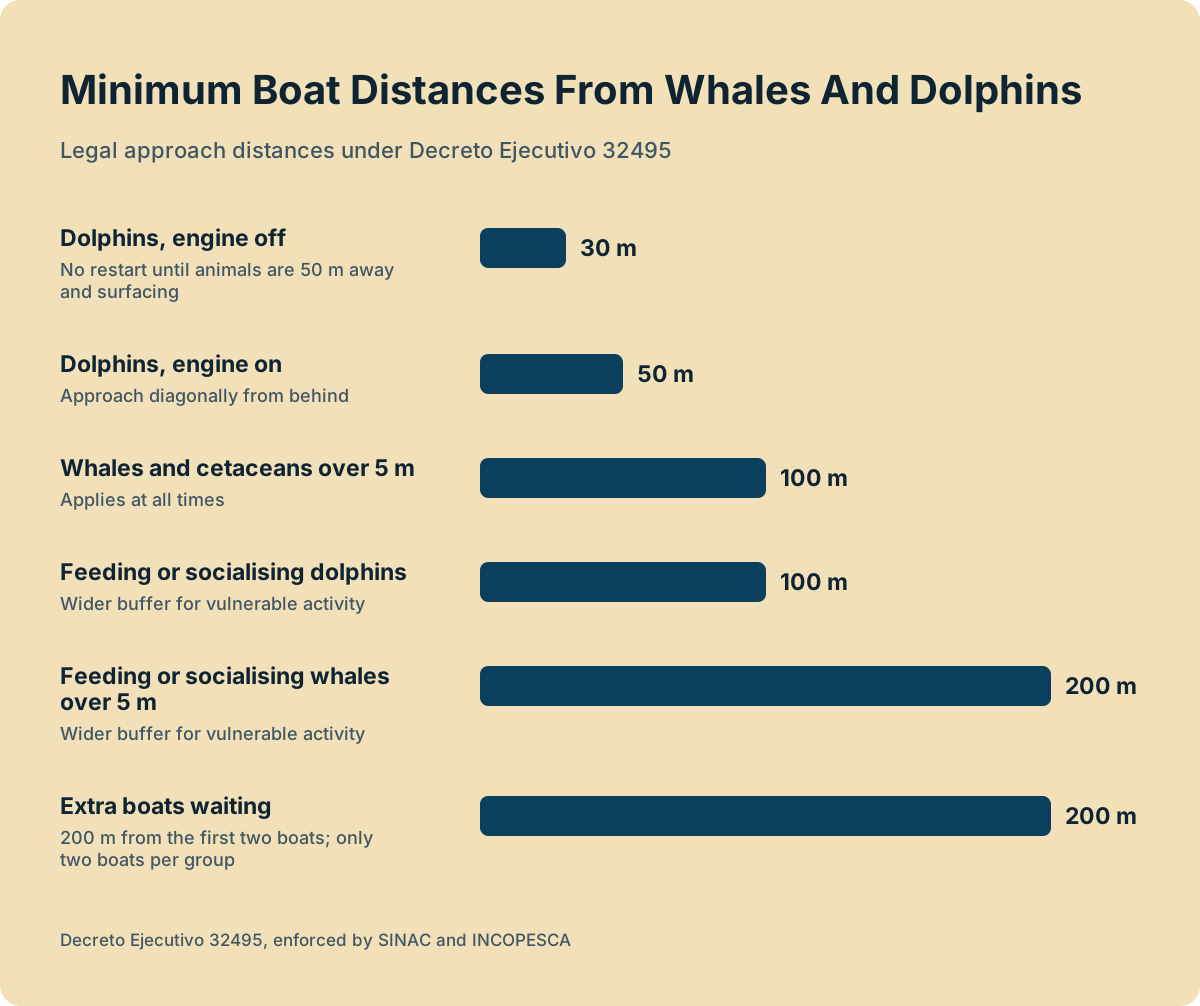
For feeding or socialising animals the buffer widens: 100 m for dolphins and smaller cetaceans, 200 m for whales over 5 m. Distances are hard to judge from a deck, which is why the regulation leans on trained guides and captains rather than passenger estimation. The listing for the featured tour on this site, the Pacific Expeditions Whale Watch from Uvita, rates 4.8 from 183 reviews at from $80 per person for a 3 hour shared trip, and lists a tour guide among its inclusions. The distance rules are the same whether you are on the roomiest boat in the fleet or the smallest: the law does not scale with ticket price.
| Situation | Minimum distance | Extra condition |
|---|---|---|
| Whales and cetaceans over 5 m | 100 m | Applies at all times |
| Dolphins, engine on | 50 m | Approach diagonally from behind |
| Dolphins, engine off | 30 m | No restart until animals are 50 m away and surfacing |
| Feeding or socialising dolphins | 100 m | Wider buffer for vulnerable activity |
| Feeding or socialising whales over 5 m | 200 m | Wider buffer for vulnerable activity |
| Extra boats waiting | 200 m from the first two boats | Only two boats per group |
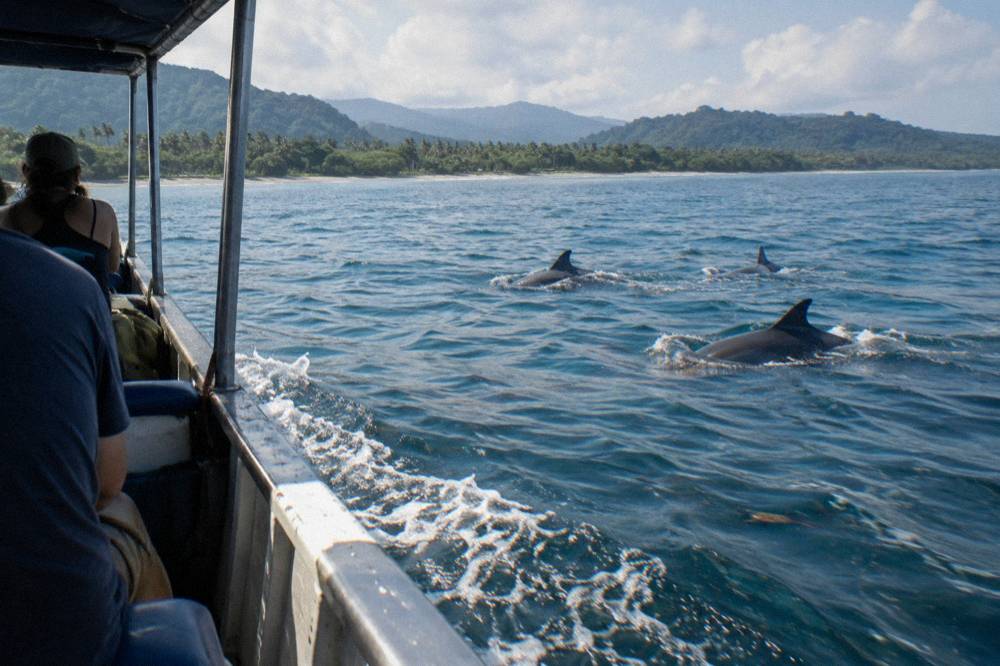
The rule governs what the boat does. The most reviewed trip listed here, the drinks and snacks boat trip from Uvita (4.5 from 775 reviews, from $95 per person, up to 80 guests), is exactly this kind of large shared platform where the crew's discipline matters more than any individual passenger's behaviour. Check availability alongside its full comparison in our guide to Whale Watching Tours From Uvita Compared: Group, Private And Combo.
How Are Mother Whales And Calves Protected?
The decree gives mother and calf pairs a shorter clock: 15 minutes maximum instead of 30, and boats must never come between a mother and her calf or approach a pair from the front. The same article sets a wider 150 m distance for mother-calf pairs in one clause, though another article of the same decree states 100 m, so the safest published figure for whales generally is the 100 m minimum.
The mother-calf rules are where Costa Rican law is at its most protective, and for good reason. Marino Ballena's warm, shallow bay is a nursery: southern-hemisphere humpbacks arrive from the Antarctic from July to mid-November, with operator pages describing the strongest mother-calf presence in August and September, and northern-hemisphere humpbacks follow from December to March or April. A calf nursing in the bay is the entire point of the migration, the longest recorded migration, and the regulation treats those pairs as the most easily disturbed animals on the water.
Because the two distance figures inside the decree conflict (150 m in Article 13.5, 100 m in Article 16.5), the mother-calf distance is not settled in the text; the 100 m whale minimum and the 30 minute group limit are the numbers both articles agree on. What is settled is the conduct around a pair: no boat positions itself between mother and calf, no boat approaches from the front, and the observation window shrinks to 15 minutes.
What Are Tourists Not Allowed To Do Around Whales?
Swimming, diving, snorkelling, kayaking, jet skiing or any in-water activity around cetaceans is prohibited, as is feeding, touching or making excessive noise near them, and underwater sound devices are restricted. Passengers cannot override a captain on these points: the bans apply to everyone on the water, not just to commercial crews.
The in-water ban surprises people who have seen swim-with-whales content from other countries. In Costa Rica it is unambiguous: Article 16 lists swimming, diving, waterskiing, jet ski, windsurf, rowing, canoe and kayak among the prohibited activities around cetaceans, and Article 14 makes touching, trapping, feeding or capturing marine mammals totally prohibited. Echo sounders and any underwater sound beyond the engine are banned near animals, and no waste may be dumped. This is why no legitimate Uvita listing will ever promise you a chance to slip into the water with a whale, and why a snorkel stop on a combo tour is timed and placed away from any cetacean sighting, not built around one.
For passengers the practical list is short. Do not ask the crew to get closer than the law allows, do not shout or use the engine noise moment for a scream-and-point photo, and keep single-use plastic off the boat because the park bans it outright, along with pets, alcohol and any attempt to feed or touch anything. The SINAC park page lists the full set of prohibitions: SINAC's official Marino Ballena page is the authority. Phones and cameras are fine for passengers; professional underwater photography or filming inside a protected area needs a SINAC permit and an orange flag under Article 9.
| Prohibited for tourists | Prohibited for boats | Restricted extras |
|---|---|---|
| Swimming or diving near cetaceans | Restarting the engine before animals are 50 m clear | Professional underwater filming needs a permit |
| Feeding or touching any animal | Splitting or dispersing a group | Echo sounders banned near animals |
| Excessive noise near animals | More than two boats per group | Smoking inside the park |
| Kayaking or jet ski around whales | Speed above 4 knots in observation areas | Single-use plastic inside the park |
| Getting between a mother and calf | Staying over 30 minutes with a group | Waste dumping of any kind |
How Do You Spot A Responsible Whale Watching Operator In Uvita?
Read the listing for three signs: a named certified or bilingual naturalist guide, park entry included or clearly itemised, and cancellation terms stated plainly. Then read the recent reviews for words about distance and time keeping, because a crew that respects the 30 minute cap is the one guests describe as patient rather than rushed.
No listing will print "we comply with Decreto 32495" in those words, but the lineup gives you proxies. The whales watching adventure listing with expert guides (4.7 from 26 reviews, from $96 per person) names a bilingual guide, park ticket, hydration and fruit in its inclusions. The Pacific Expeditions whale watch (4.8 from 183 reviews, from $80 per person) lists the park entrance fee, lifejackets, a tour guide, tropical fruit and swimming time according to conditions, and states plainly on its own exclusions that there is no restroom on board and no snorkelling. The wider set of guides lives on Uvita Whale Watching.
Reviews are your enforcement layer from the deck. Guest language about a crew "holding back", cutting the engine, or leaving a sighting on time maps directly onto Article 16 conduct, while complaints about boats crowding an animal or chasing it map onto violations. One verbatim review of the combo tour from the listed tours praises exactly this: "they had excellent communication with other boats so once one whale was spotted we were able to get there quickly", which describes boats coordinating with each other. Guides also matter for the clock: a crew member announcing the time remaining with a group is complying, not nagging. For the wider seasonal picture of which months pair with which rules-heavy encounters, see our guide to Best Time For Whale Watching In Uvita By Month.
| Check before booking | What a good sign looks like | Red flag |
|---|---|---|
| Guide | "Bilingual certified guide" or "naturalist guide" named in inclusions | No guide mentioned at all |
| Park entry | Park entrance fee listed as included | Vague "all fees" with no park line |
| Time and distance conduct | Reviews mention engine cutting, patient crews, leaving on time | Reviews describe chasing or crowding animals |
| In-water promises | Snorkel only as a separate, conditions-dependent stop | Any hint of swimming with whales |
| Cancellation and meeting point | Free cancellation stated, meeting point clear | Neither stated, no answers before booking |
What Permits Must A Marino Ballena Tour Boat Have?
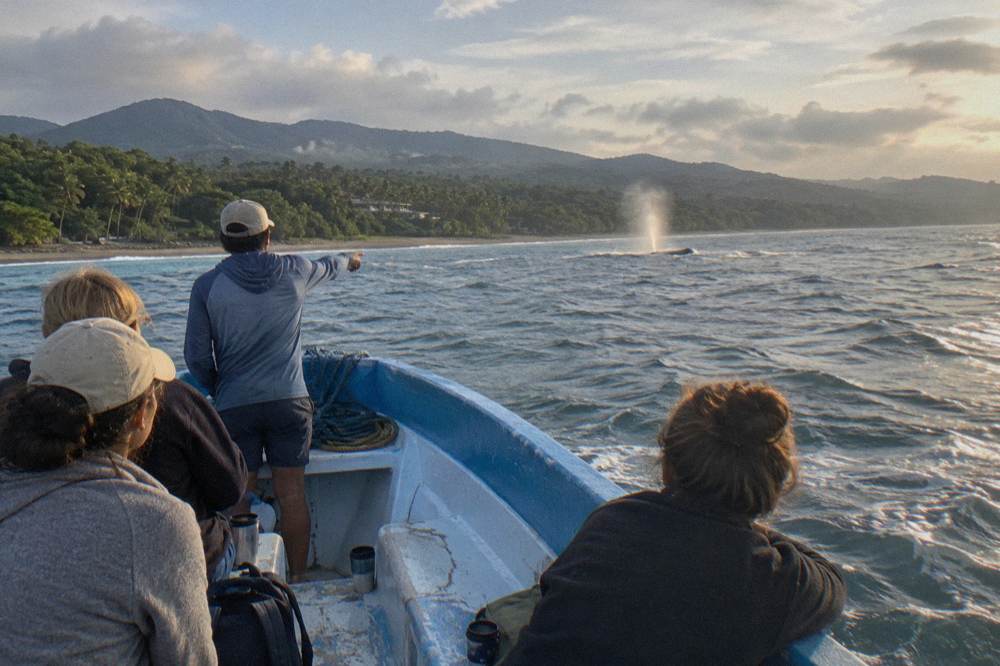
The decree's own permit clauses cover professional underwater photography and filming (a SINAC permit inside protected areas, INCOPESCA outside, plus an orange flag, under Article 9) and research (MINAE and INCOPESCA, Article 10). For a tour operator's own licensing, ask the operator directly rather than guessing from a listing.
Uvita's whale watching happens inside the national park's marine area, and none of an operator's paperwork appears on a booking page as a certificate scan, which is why the honest advice is to ask. An operator that answers in one line has told you something; one that dodges the question has too.
Your own park entry is a separate question from the boat's permit, and the lineup answers it listing by listing. Marino Ballena entry per SINAC is USD 6.78 for a non-resident adult and USD 5.65 for a non-resident child, card payment only, valid for the day, and most shared whale tours listed here fold that fee into the ticket. The drinks and snacks trip lists the park entry fee as included; the humpback wildlife watch (from $129 per person, 4.2 from 10 reviews) includes a donation to a humpback whale research project alongside its biologist expedition leader, a different kind of ethics signal, research funding rather than fee handling. For the full fee and ticket mechanics, see our guide to Marino Ballena National Park Entrance Fee And Tours.
| Permit | Who it applies to | Where it comes from |
|---|---|---|
| SINAC permit and orange flag | Professional underwater filming inside protected areas | Decreto 32495, Art. 9 |
| INCOPESCA permit | Professional underwater filming outside protected areas | Decreto 32495, Art. 9 |
| MINAE and INCOPESCA permits | Research on cetaceans | Decreto 32495, Art. 10 |
What Happens If A Boat Breaks The Whale Watching Rules?
Under Article 18 of the decree, INCOPESCA and MINAE can close an observation area temporarily for weather, boat saturation or biological reasons. For a tourist the practical consequence is a cancelled or rerouted trip, which is why free cancellation terms on a listing are worth checking before you sail.
Article 18 is the clause most likely to touch your itinerary directly. When the authorities judge that boats have saturated an area, or that weather or a biological reason warrants it, they can shut observation temporarily, and an operator has no say in the matter. Weather reroutes are the everyday version: crews cancel or shorten trips for sea state, and honest listings say so. No listing promises a sighting. The featured listing's own Know-before-you-go text states "the season from December to March there is a 50% chance of sightings and the season from July to October 90%", and that is one operator's statement about its own trips, quoted as such, never a coast-wide rate.
The park's four land sectors are open every day of the year: Uvita 7:00 to 17:00, Colonia 7:00 to 18:00, Ballena and Piñuela 8:00 to 16:00. Passengers who watch a violation can report it to SINAC. What you should not do is argue with a crew mid-trip: note the operator, the time and the behaviour, and take it to SINAC or the listing review afterwards, where it actually sticks.
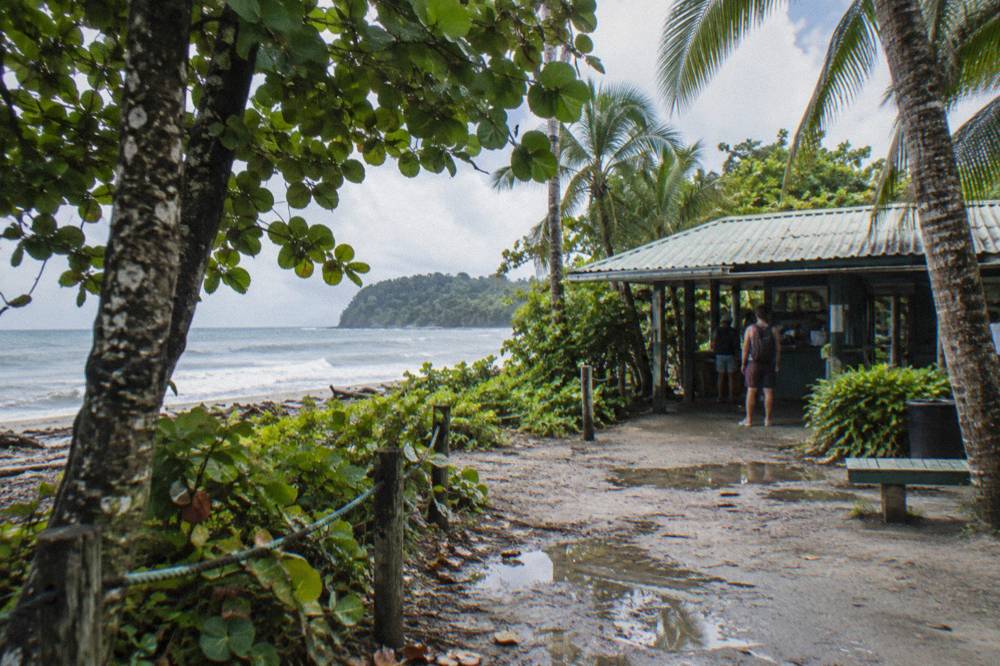
Does Following The Rules Ruin The Experience?
No, and the reviews argue the opposite: the encounters guests describe most warmly, a mother and calf watched at length, dolphins and turtles on the same trip, come from crews working inside the rules.
The verbatim reviews listed here describe crews working inside the rules. Tessa, reviewing a Marino Ballena whale watch (4.5 from 110 reviews, from $105 per person, up to 20 guests), writes "We were lucky enough to see a mother whale and her calf, and at another spot, we also saw a bull with some dolphins." Julie_B, on the morning whale and dolphin tour (4.8 from 210 reviews, from $75 per person), describes a small tour where the boat's guests voted between more whale searching and snorkelling at the Whale Tail, and the crew went with the vote. Neither trip promises anything; both describe crews exercising judgment inside the rules.
The ethics question also has a festival dimension. Each early September, Bahía Ballena holds the Festival de Ballenas y Delfines, timed to the southern-hemisphere peak, and the IWC handbook notes that during the festival tour prices drop and many boat owners who do not normally offer commercial tours take part. For a rules-minded traveller that is a week to be extra careful about which listing you book: the established fleet, with named guides and stated inclusions, is the safer bet than an unknown boat appearing for the weekend. The broader season picture is in the Costa Rica whale watching overview.
| Compliant behaviour | What it looks like on deck |
|---|---|
| Cutting the engine at distance | Boat drifts, dolphins may bow-ride |
| 30 minute group cap | Crew announces time and moves off |
| Diagonal rear approach | Boat runs parallel, never head on |
| Two-boat limit | Further boats wait 200 m back |
| Calf pair left after 15 minutes | Captain turns away from a nursery pair |
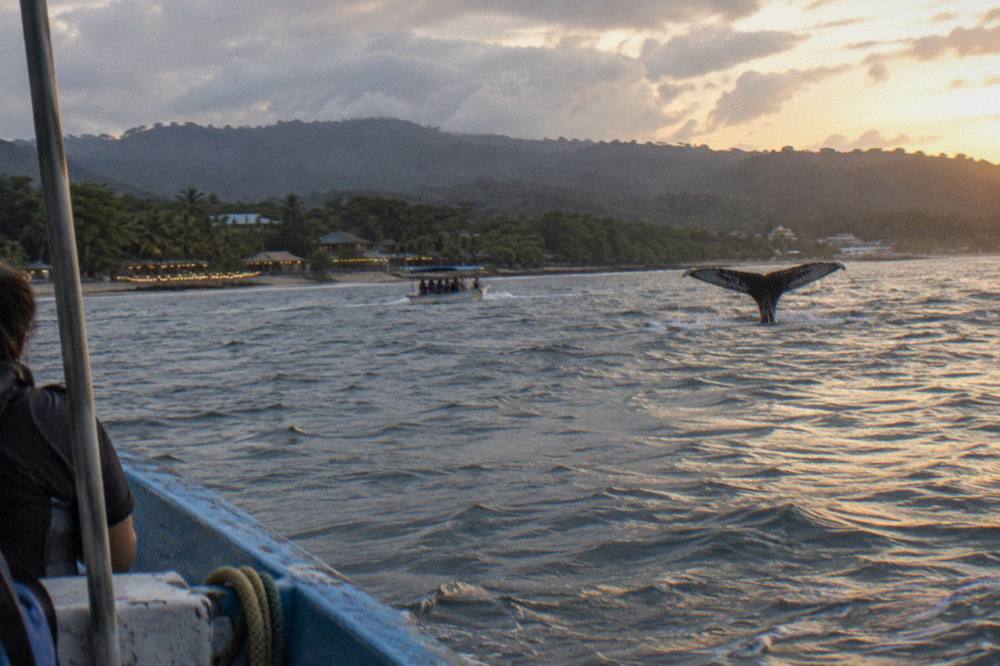
The short version for a booking decision: the rules are strict, they apply where Uvita's fleet operates, and the signs of a careful operator are visible on a listing before you pay. Named guide, itemised park entry, honest exclusions, stated cancellation, and reviews that describe patience rather than pursuit. The boats that clear those checks are not a compromise option, they are the ones whose guests write home about the whales. For more on matching a boat to your group, our guide to Private Vs Group Whale Watching Boat: Which To Book covers how size changes the conduct equation.
Common Questions About Whale Watching Rules In Costa Rica
How Close Can Whale Watching Boats Get In Costa Rica?
Decreto Ejecutivo 32495 sets a 100 m minimum from whales and any cetacean over 5 m, and 50 m from dolphins with the engine on, tightening to 30 m with the engine off. Feeding or socialising animals get wider buffers of 100 m and 200 m respectively.
Is Swimming With Whales Legal In Costa Rica?
No. Swimming, diving, snorkelling, kayaking and any in-water activity around cetaceans is prohibited, along with touching, feeding or capturing them. No legitimate Uvita listing will offer it.
How Long Can A Boat Stay With A Group Of Whales?
At most 30 minutes with a group, and only 15 minutes with a single individual or a mother and calf pair. At most two boats may share one group, with any further boats keeping 200 m back.
What Permits Do Whale Watching Boats In Uvita Need?
The decree's permit clauses cover professional underwater filming (a SINAC permit inside protected areas, INCOPESCA outside) and research (MINAE and INCOPESCA). For an operator's own licensing, ask the operator directly.
Does Following The Rules Mean Seeing Less?
The reviews listed here suggest the opposite: guests describe extended sightings of mother and calf pairs, plus dolphins and turtles on the same trip.
How Do I Check An Operator Follows The Whale Watching Rules?
Look for a named certified or bilingual guide, itemised park entry, honest exclusions and stated cancellation on the listing, then read recent reviews for language about distance, patience and leaving sightings on time. You can also ask the operator directly to confirm their permit.