Is Bahía Ballena Worth Visiting?
A straight answer on whether Bahía Ballena is worth visiting, covering the whale seasons, park fees, boat trips from Uvita, and what the bay offers beyond the boats.
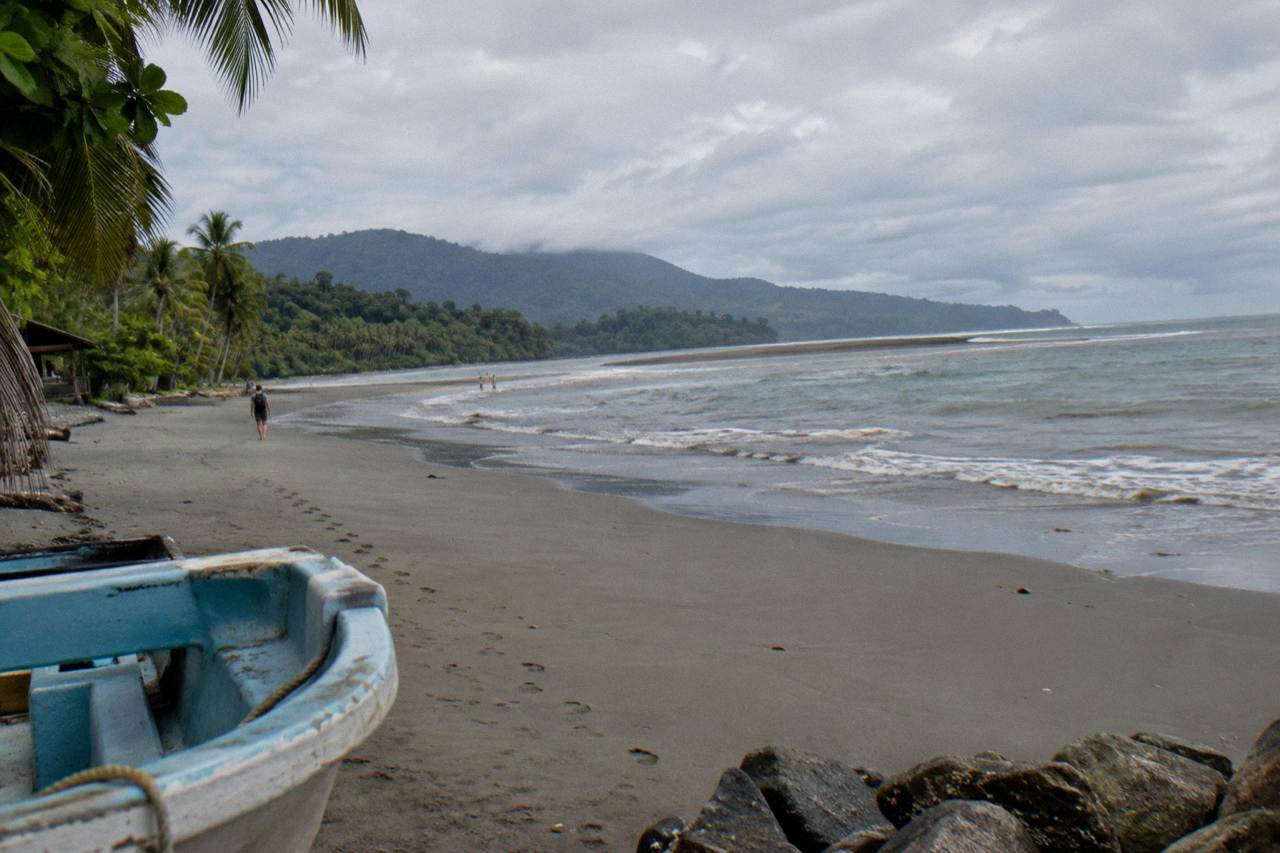
Bahía Ballena is the community and crescent bay immediately south of Uvita, and its whole economy bends around one protected stretch of ocean. Marino Ballena National Park was the first park in Costa Rica created specifically for marine resources, covering 5,160 marine hectares along a 15 km coastal strip from the mouth of the Rio Morete to Punta Pinuela, according to the park's own SINAC page. The bay's sandbars, islands and whale seasons are what pull people down Route 34 in the first place. Before you commit a day to it, our answer to Is Marino Ballena National Park Worth Visiting? covers the entry fees, the whale watching seasons, and whether the famous Whale Tail sandbar lives up to the photos.
That background matters because the question of whether the bay is worth visiting splits into two smaller ones. Is the shore worth your time, with the entry fee and the tides that gate the famous whale tail? And is the water worth it, with a lineup of boat trips that run from $75 per person upward? This article answers both, using the park's official figures, the actual tour listings, and the whale seasons as documented by the International Whaling Commission. If you're weighing the town as a base rather than just the bay, our answer to Is Uvita Worth Visiting In Costa Rica? asks the same question about the village itself.
There is also a naming question worth settling at the start, because the labels overlap. Bahía Ballena is the community and the bay; Marino Ballena is the national park that protects the water and the coastal strip; Uvita is the town at the northern end and the practical base, with the supermarkets, ATMs and clinics. Visitors stay in Uvita, walk or drive into the park sectors, and board boats from the beach inside the bay. When a listing says it departs Uvita and another says Bahía Ballena, they are describing the same stretch of coast from slightly different addresses. Once you know you'll be basing yourself in Uvita, the next practical question is money, and our answer to Is Uvita Costa Rica Expensive? shows where your budget actually goes on park fees, tours, food and transport.
Yes, for most travellers, and the reason is density: two humpback seasons a year, a national park you can walk into from town, dolphins on the park's fauna list, and boat trips from $75 per person, all inside one small bay about 18 km south of Dominical.
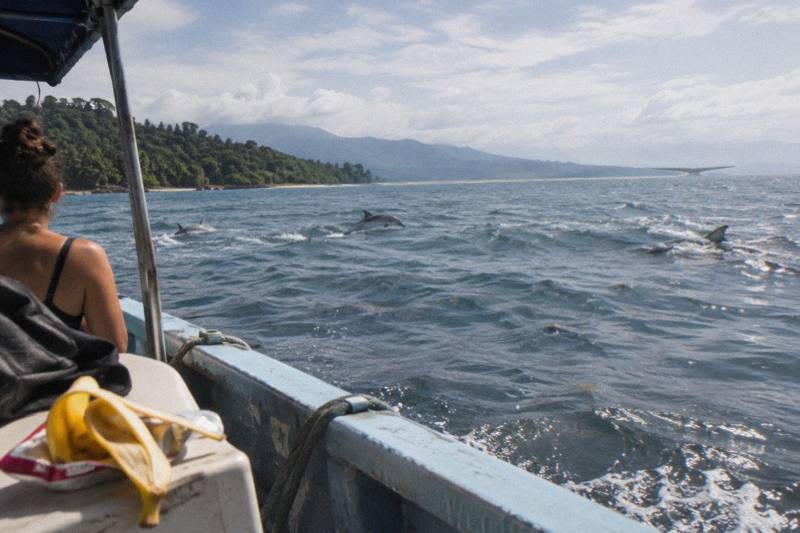
The strongest case for the bay is the calendar. The IWC's Costa Rica profile records that the country's Pacific waters host two separate humpback populations: one from the Northern Hemisphere present December to March, and one from the Antarctic that arrives from July to mid-November. Operator pages put the peak for southern mother-calf pairs in August and September, which is exactly when the community holds its yearly whale and dolphin festival in early September. Hosting two whale populations in one year is the bay's single biggest draw.
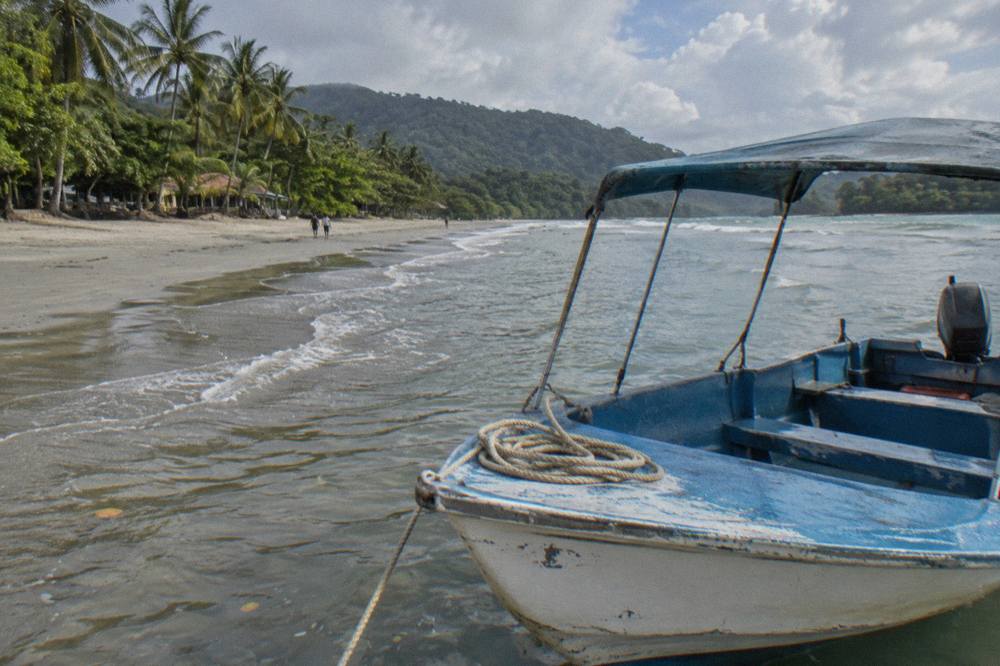
The second case is access. Boats leave directly from the beach at Uvita and Bahía Ballena, with no dock: guests wade to the boat, a detail one operator states plainly. You can be standing on the sandbar at low tide in the morning and on the water by early afternoon without ever transferring to a marina town. Meeting times are confirmed at booking, and one operator asks guests to be at its office by 8:30 AM, so a bay morning does not eat your whole day.
Worth also depends on what you compare it against, so here are three different ways onto the same water:
The most reviewed of the three is the drinks and snacks boat trip, rated 4.5 from 775 reviews, from $95 per person for 3.5 hours with park entry, fruit, juice and coffee included. The fast-boat alternative costs from $122 and includes national park tickets, snorkel gear in the dry season and a naturalist guide. The Ballena Aventura combo, from $90, pairs whale and dolphin watching with a coffee station before departure, watermelon and pineapple on board, and parking. Three honest ways into the same water.
A final framing thought before the detail: the bay rewards a two-day minimum. One day for the shore, timed to a low tide, and one day on the water, gives you both halves of what the park protects.
What Is There To Do In Bahía Ballena Besides The Boats?
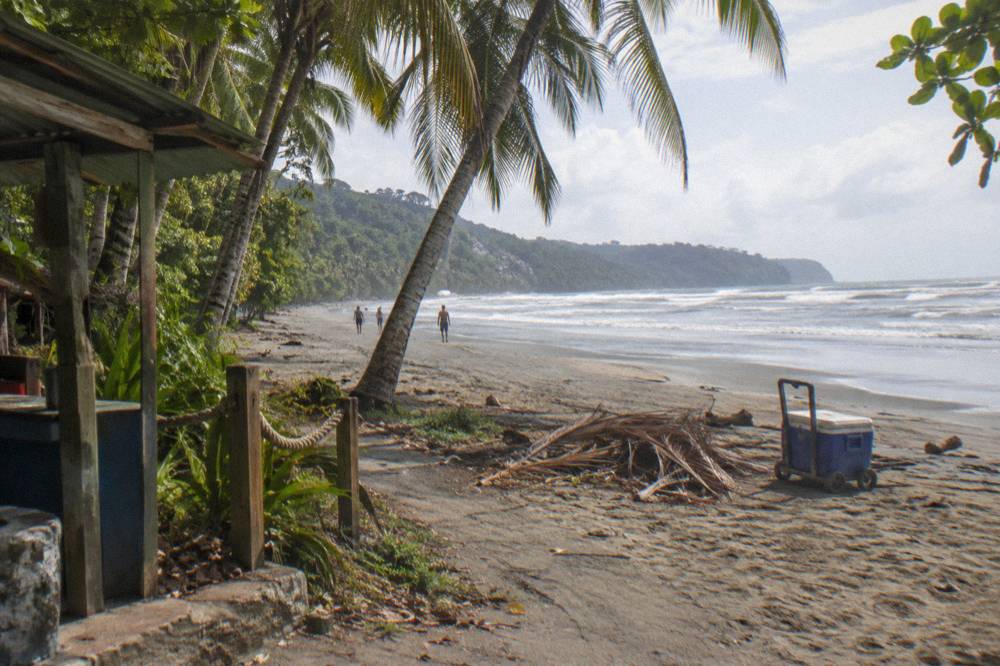
The shore side is genuinely good: the whale tail sandbar at low tide, snorkelling over the reef beside the tombolo, surf at the open sectors, and mangrove and coastal walks, all listed by SINAC as official park activities. The bay is also a working town with supermarkets, ATMs and clinics, not just a tour staging post.
The park's own page names the activities: snorkel, surf, kayak, flora and fauna watching, mangrove and coast walks, and diving. The reef sits on the left side of the tombolo and around Isla Ballena, so snorkelling from shore is realistic when the water is calm. Visibility in Marino Ballena is best from January to April, according to one local operator, which lines up with the dry season SINAC describes as running mid-December to mid-April. Water temperature runs 78 to 84 F year round per the same source.
The whale tail itself deserves a planning note. SINAC states access to the Cola de Ballena happens only at low tide, during the six hours of low tide, so check a tide table before you walk out. Our fuller walkthrough of the sandbar, the tides and the photo angles is in our guide to Whale Tail Beach At Marino Ballena National Park.
Beyond the park, the practical texture of the town helps: Uvita has BCR and Banco Nacional ATMs, supermarkets and clinics, with no hospital in town. That is enough infrastructure for a comfortable multi-day stay without the bay ever feeling built up. If you are weighing Bahía Ballena against a longer day at sea, the Caño Island reserve sits about 50 to 80 minutes away by boat according to one local operator, and we compare the two day trips directly in our guide to Caño Island Vs Marino Ballena: Which Boat Day To Pick. Note that Caño requires a prior reservation through SINAC and permits the marine part only, so it is strictly a boat day.
When Is The Best Time To Visit Bahía Ballena?
For whales, aim for August to September, the peak of the southern humpback season and the months around the early-September whale festival, or January to February for the northern season. For drier weather and clearer water, the dry season from mid-December to mid-April is the safer window, with February and March the lowest-rainfall months on long-term averages.
The two seasons are the bay's signature fact. Southern-hemisphere humpbacks, which feed around the Antarctic Peninsula and southern Chile, make what the IWC calls the longest recorded migration to breed in Costa Rica, arriving July to mid-November. Northern-hemisphere humpbacks arrive December to March or April. Operator pages describe August and September as the peak for mother-calf pairs in the southern season and January and February as the northern peak. Both populations come to these waters to mate, give birth and nurse, per the IWC, and operator pages place the mother-calf peak in the southern window.
One operator states on its listing that sightings run about 50 percent from December to March and about 90 percent from July to October; that is that operator's own claim about its own trips, not a rate for the coast. The IWC lists common bottlenose and pan-tropical spotted dolphins as commonly seen on Costa Rican tours, so a boat trip in the shoulder months is not a straight choice between whales and nothing. Manta rays, hammerhead sharks and parrotfish are among the fauna SINAC itself names for the park.
Rain matters less than you might think but more than brochures admit. SINAC describes sporadic rains even in the dry season, and the rainy season runs mid-April to mid-December. Trips cancel or reroute for sea state, and operators say so plainly. The month-by-month breakdown, including which months carry which whale population, is in our guide to Best Time For Whale Watching In Uvita By Month.
The festival deserves a line in any timing decision. Local reports describe a programme of whale and dolphin tours at special prices for nationals, concerts, free surf classes, a running race, an artisans' fair and a large recycled-material whale sculpture, supported by the national tourism institute. It is a lively weekend to be in town, and also a busier one, so book boats and lodging early if your dates land in the first week of September.
How Much Does A Day In Bahía Ballena Cost?
Park entry for a foreign adult is USD 6.78 and for a child USD 5.65, card payment only, valid for the whole day of the visit, per SINAC. Boat trips on the bay run from $75 to $129 per person for three hours on shared boats, and a private group cruise starts at $1,120 per group for 3.5 hours with lunch.
The lowest-priced listing on the bay is the morning whale and dolphin tour at from $75 per person for 2.5 to 3 hours, rated 4.8 from 210 reviews, with snacks, bottled water, snorkel equipment and free on-site parking listed as included. From there the shared whale trips step up in small increments:
| Trip | Price | Duration | Rating and reviews |
|---|---|---|---|
| Morning Whale and Dolphin Tour | from $75 per person | 2.5 to 3 hours | ★ 4.8 · 210 reviews |
| Pacific Expeditions Whale Watch | from $80 per person | 3 hours | ★ 4.8 · 183 reviews |
| Fruit and Swim Time Included | from $90 per person | 3 hours | ★ 4.4 · 4 reviews |
| Ballena Aventura Whale Combo | from $90 per person | 3 hours | ★ 4.5 · 17 reviews |
| Drinks and Snacks Included | from $95 per person | 3.5 hours | ★ 4.5 · 775 reviews |
| Humpback and Wildlife Focus | from $129 per person | 3 hours | ★ 4.2 · 10 reviews |
Two budget notes from the listings themselves. The Coral Expeditions trip at from $90 lists a vehicle parking fee of $8 cash only as an exclusion, while most other listings include parking. And whether park entry is inside your tour price varies listing by listing: 14 of the 18 shared whale and combo tours listed here include the Marino Ballena entry fee, so read the inclusions block before assuming.
The snorkel combos and the Caño Island days are different products and different budgets. The 3-hour combos pair whale watching with a snorkel stop from $84.42 per person, while the Caño Island trips are 6 to 8 hour days from $150 to $185 per person, most with lunch included. More detail is in our guide to Whale Watching And Snorkeling Combo From Uvita. As a rough budget sketch, a couple doing one shared whale trip plus park entry on a second day is looking at roughly $165 to $205 total for the two experiences, before food and lodging.
The Ballena Infocenter trip that runs 3 to 4 hours, rated 4.6 from 107 reviews and from $92 per person, sits between the two: it includes a coffee station before departure, swimming time or snorkel in the dry season, a visit to Whale's Rock or Ventanas Cave, and fruit and water on board. It is a good middleweight if three hours feels short. Note that its snorkel gear is not included during the rainy season, May through December, as the listing states, because conditions do not support it then.
Is The Whale Tail Beach Worth The Entry Fee?
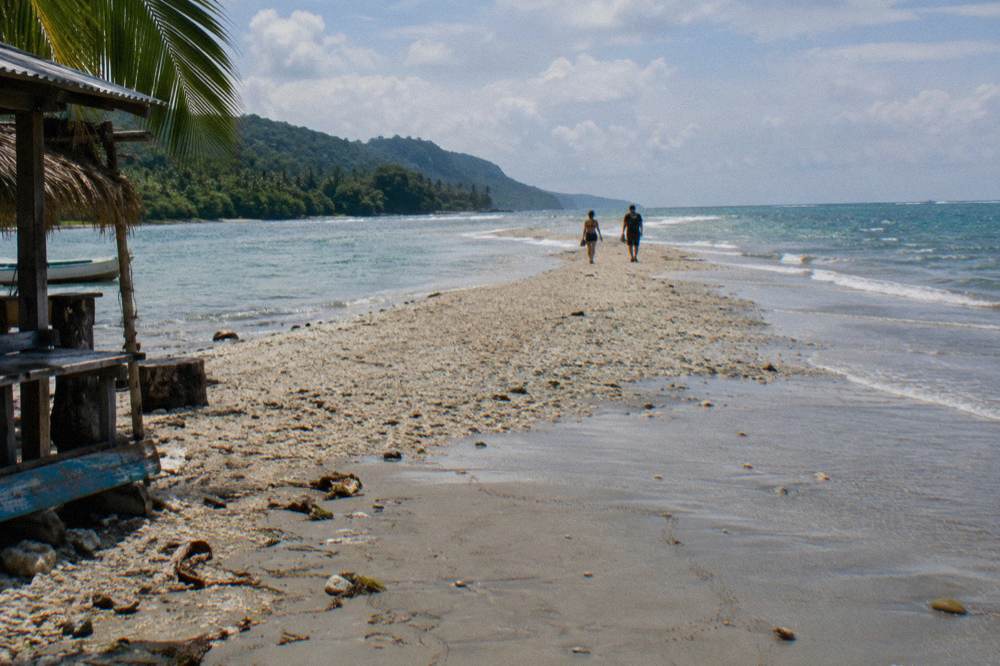
At low tide, yes without hesitation: the tombolo is a natural sandbar shaped like a whale's tail, walkable for a limited window, with reef snorkelling beside it and Isla Ballena offshore. At high tide it is underwater, so the fee buys you a regular beach. Time your visit to the tide table or you will pay to look at a sandbar that is not there.
The honest framing is that the fee is small and the timing risk is real. SINAC's own instruction is to consult tide tables because the crossing is only at low tide, and Playa Arco, reached through Sector Ballena, can itself only be entered and left at low tide. Park hours differ by sector: Uvita 7:00 to 17:00, Colonia 7:00 to 18:00, Ballena and Pinuela 8:00 to 16:00, every day of the year.
What you get on shore, beyond the sandbar, is a protected beach with rules that keep it clean: no pets, no single-use plastic, no extracting stones or plants, no vehicles on the beach. SINAC's page also prints a claim, in its own words, that the park ranked eighth in the world for cetacean watching per a National Geographic listing. If your day is shore-only, the free options and the honest fee caveats are laid out in free things to do in Uvita and Marino Ballena.
Is Bahía Ballena Good For Families And Non-Swimmers?
Mostly yes. The boat trips are shared, guided and relatively short, dolphins are on the park's fauna list, and several listings include swim stops that are optional rather than forced. Minimum ages are not stated on the listings, so families should check each listing before booking; non-swimmers can stay aboard during swim stops, and lifejackets are listed as included on most trips.
The morning whale and dolphin tour illustrates the flexible format. A guest review on that listing describes a small tour where the boat was offered a choice between more whale searching or snorkelling at the Whale's Tail, and voted for snorkelling: "This was an excellent small tour. We saw whales and dolphins. We were given the choice of finding more whales or snorkeling at the Whale’s Tail. The boat voted for snorkeling. Raymond was a fun guide." Choice, not compulsion.
For the water side, know that boarding is from the beach: several boats have no dock and guests wade to them, shorts and sandals are the practical outfit, and some boats list no restroom on board. Those small realities matter more with children than the whales do. Sea state, not schedule, is what cancels days, so build one spare morning into a family itinerary rather than betting the whole trip on a single departure. Our deeper rundown of ages, gear and sea-time realities is in our guide to Whale Watching With Kids In Uvita: Ages, Safety And Timing.
The rules that protect the animals also shape the family experience. Under Decreto Ejecutivo 32495, boats keep at least 100 m from whales and 50 m from dolphins with the engine on, at most two boats may observe one group, and no one swims with, touches or feeds cetaceans, as the decree text records. Observation time with any group is capped at 30 minutes even at proper distance. Guests still get close views, but the encounters are managed, which is a reasonable trade for a family and a good thing to explain to children before the boat leaves.
What Do Guests Say About The Bahía Ballena Trips?
The review pools are small but consistent: the most reviewed trip holds 4.5 from 775 reviews, the two strongest whale-only listings hold 4.8 from 183 and 210 reviews, and the recurring themes in guest reports are guides who communicate between boats, long mother-and-calf sightings, and swim stops that land the day.
A review on the combo tour captures the inter-boat cooperation that makes sightings work: "Phenomenal tour. The guides really know what they are doing. I’ve never gone real watching before but they had excellent communication with other boats so once one whale was spotted we were able to get there quickly and be very close to them." On the 3 to 4 hour trip, a guest reports observing a mother and baby humpback for at least 20 minutes alongside sea turtles and a swim in the sea. And on the Marino Ballena Tours listing, a reviewer describes a mother whale and calf plus a bull with dolphins at a second spot.
The honest caveats are the same ones the listings print. No trip promises a sighting; weather and sea state cancel or reroute days; boats without restrooms and beach boarding are stated exclusions, not surprises. Read each rating with its review count, and treat tiny pools with care. If you are still deciding whether the whole country's whale watching justifies the trip, the broader argument is in our answer to Is Whale Watching In Costa Rica Worth It?
The private option deserves one line of its own. A private Marino Ballena cruise runs from $1,120 per group for 3.5 hours with lunch, tropical drinks, snorkelling and park entry included, no reviews yet. A second private listing starts at from $95 per person with a note that the price varies by group size, so confirm on the booking page. The trade-offs are mapped in private versus group whale watching boats.
For the widest picture of what a trip here delivers and how the bay stacks against its neighbours, the Uvita Whale Watching homepage comparison gathers every listing here in one place, and the trip picker matches a boat to your dates and budget.
Common Questions About Bahía Ballena
Is Bahía Ballena Worth Visiting?
Yes, for most travellers. The bay combines two humpback seasons, a national park with a tide-gated whale tail sandbar, dolphins, and boat trips from $75 per person, all within a short drive of lodging in Uvita and Dominical.
What Is The Best Month To Visit Bahía Ballena?
August and September for the southern humpback peak and the early-September whale festival; January and February for the northern season peak plus the dry season, with the best snorkel visibility January to April per one operator. February and March are the lowest-rainfall months on long-term averages.
How Much Does It Cost To Enter Marino Ballena National Park?
Per SINAC, a foreign adult pays USD 6.78 and a child USD 5.65, tax included, by card only, and the ticket is valid for the whole day of the visit. Many boat trips include the marine park entry fee in the tour price; check the inclusions on your listing.
Can You Walk On The Whale Tail At Any Time?
No. SINAC states access to the Cola de Ballena is only at low tide, within roughly the six hours of the low-water window. Check a tide table before you go; at high tide the sandbar is submerged.
Do The Boat Trips Leave From A Dock?
Several Uvita and Bahía Ballena boats launch straight off the beach with no dock, and guests wade to the boat. Wear shorts and sandals you do not mind wetting, and expect no restroom on some boats, as their listings state.
Will You See Whales From Bahía Ballena?
No trip promises a sighting. One operator states on its listing that its trips see whales on about 90 percent of departures from July to October and 50 percent from December to March, but that is that operator's own figure, not a coast-wide rate. The IWC lists bottlenose and spotted dolphins as commonly seen on tours.