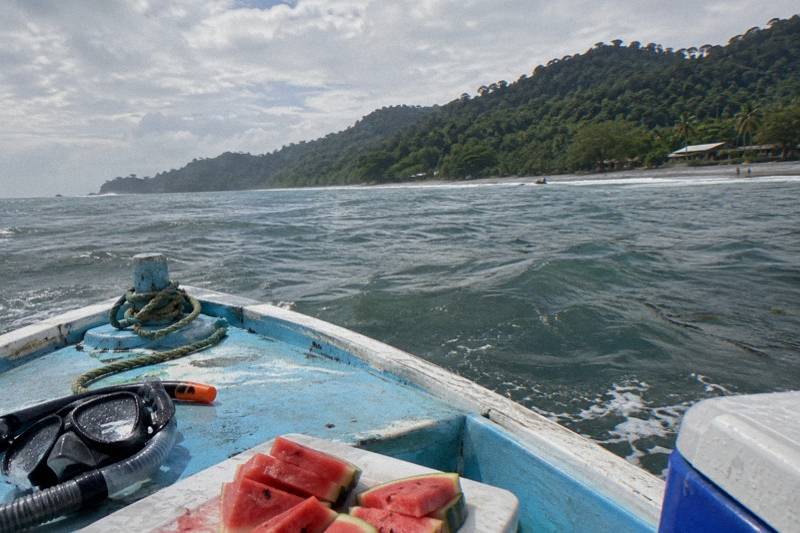
Is It Safe To Swim In Uvita?
An honest look at swimming safety in Uvita and Marino Ballena National Park: tides, sectors, reef snorkeling, swim stops on whale tours, and the rules around swimming near whales and dolphins.
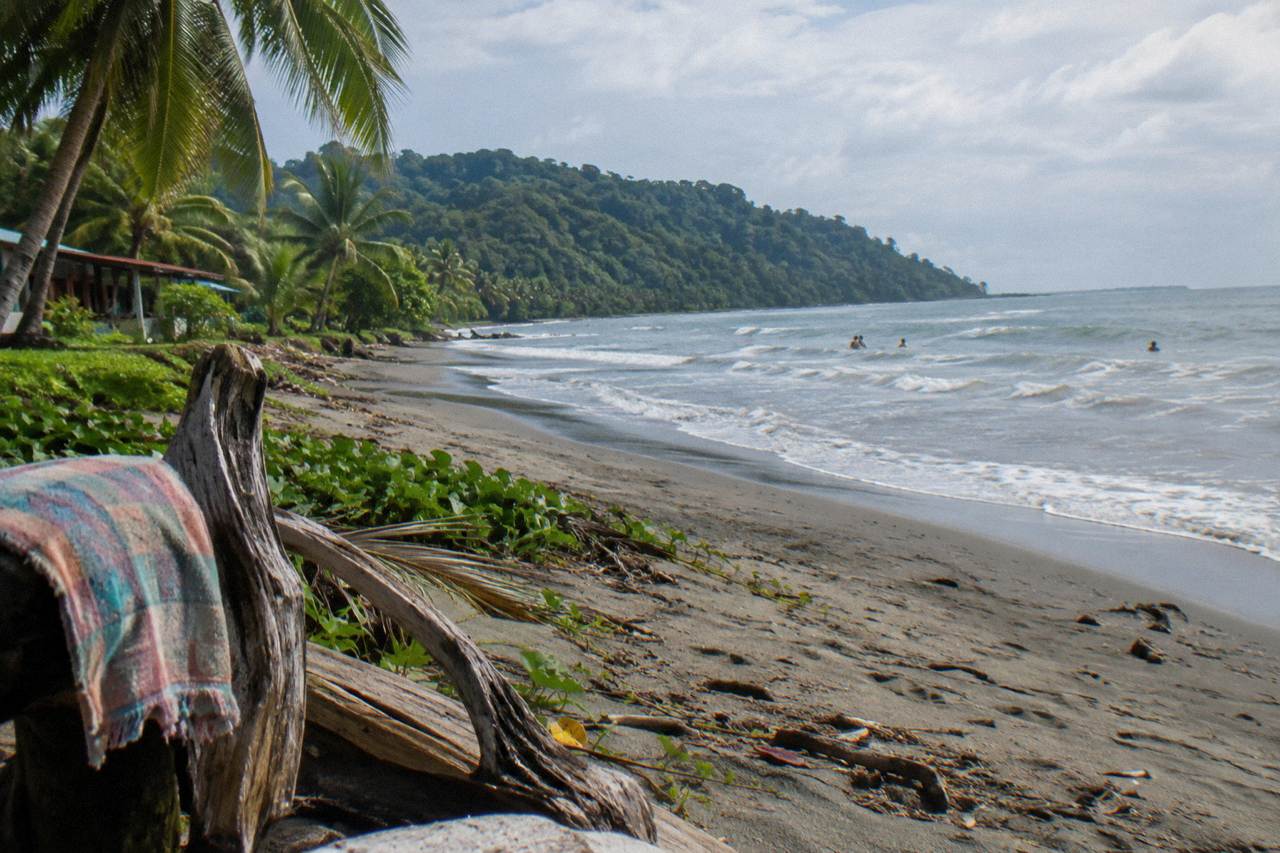
Yes, in the sense that swimming is an established activity here: SINAC, the national park authority, lists snorkeling, surfing and kayaking among the recognized uses of Marino Ballena National Park. But no honest answer can promise safety on a given day, because the conditions that matter, tide, wave state and season, change constantly and the Whale Tail sandbar is only walkable at low tide. Swimmers share these waters with humpback mothers and calves in season, and our answer to Where Do Whales Give Birth? explains when and how to see them from shore.
That is the honest frame for this question. What the record shows is a beach town inside a marine national park, Uvita Whale Watching territory, where the main beach, Playa Uvita inside the park's Uvita sector, is a long stretch of sand inside a protected bay, and where the park's own rules, not lifeguard flags, do a lot of the safety work.
The park authority names its activities plainly: snorkel, surf, kayak, flora and fauna watching, mangrove and coast walks, and diving. Check conditions on the day, watch the tide table the park itself tells visitors to consult, and treat the operators on the beach as your best local source. One practical note that surprises many first-time visitors: several whale watching boats in Uvita launch straight off the beach with no dock, and guests wade out to board, which tells you something about how normal getting wet is here.
The water itself is rarely the problem. One operator source measures the local sea temperature at 78 to 84 degrees Fahrenheit across the year, which is comfortable swimming water in any month. What the water temperature does not tell you is anything about the tide, the current or the day's wave state, and those three, not cold, are the variables that decide whether a swim is sensible on any particular afternoon. That is why the rest of this article is organized around them.
For readers whose real question is "can I combine a swim with a boat trip", several listings here include swim stops in their inclusions. The featured drinks and snacks boat trip, 3.5 hours from $95 per person and rated 4.5 from 775 reviews, lists time to swim among its inclusions, and the 3 to 4 hour Marino Ballena watching tour lists swimming time or snorkeling in the dry season right in its inclusions, alongside a coffee station and a visit to Whale's Rock or Ventanas Cave. Check availability for the featured trip if a boat day is the plan.
Where Is It Safe To Swim In Marino Ballena National Park?
The park has four official beach sectors, Uvita, Colonia, Ballena and Pinuela, and all four are open every day of the year, with hours ranging from 7:00 to 17:00 at Uvita to 8:00 to 16:00 at Ballena and Pinuela. SINAC names snorkeling and surfing as recognized activities, and notes reef on the left side of the tombolo and around Isla Ballena. Playa Arco, reached through Sector Ballena, can only be entered and left at low tide.
Entry is not free: the park charges non-resident adults USD 6.78 and non-resident children USD 5.65, tax included, card payment only, and the ticket is valid for the whole day of the visit, per the official SINAC page. The park also bans pets, single-use plastic, alcohol and leaving trails.
| Park sector | Daily hours | What the official page says for swimmers |
|---|---|---|
| Uvita | 7:00 to 17:00 | Main beach and park post |
| Colonia | 7:00 to 18:00 | Longest hours of the four sectors |
| Ballena | 8:00 to 16:00 | Entry point for Playa Arco, low tide access only |
| Pinuela | 8:00 to 16:00 | Southernmost sector of the park's 15 km coastal strip |
None of this amounts to a safety guarantee, and lifeguard coverage is not something to assume, so the working rule is simple: swim inside the park's sectors, in daylight hours, with the tide table checked, and ask locally about the day's conditions. The park spans 5,160 marine hectares along a 15 km coastal strip, so conditions can differ from one end to the other on the same afternoon. Readers planning a fuller beach day can pair this with our guide to Free Things To Do In Uvita And Marino Ballena On A Budget, which covers the sandbar and shore views honestly, including that park sectors charge a fee.
What Do Tides Have To Do With Swimming Safety In Bahía Ballena?
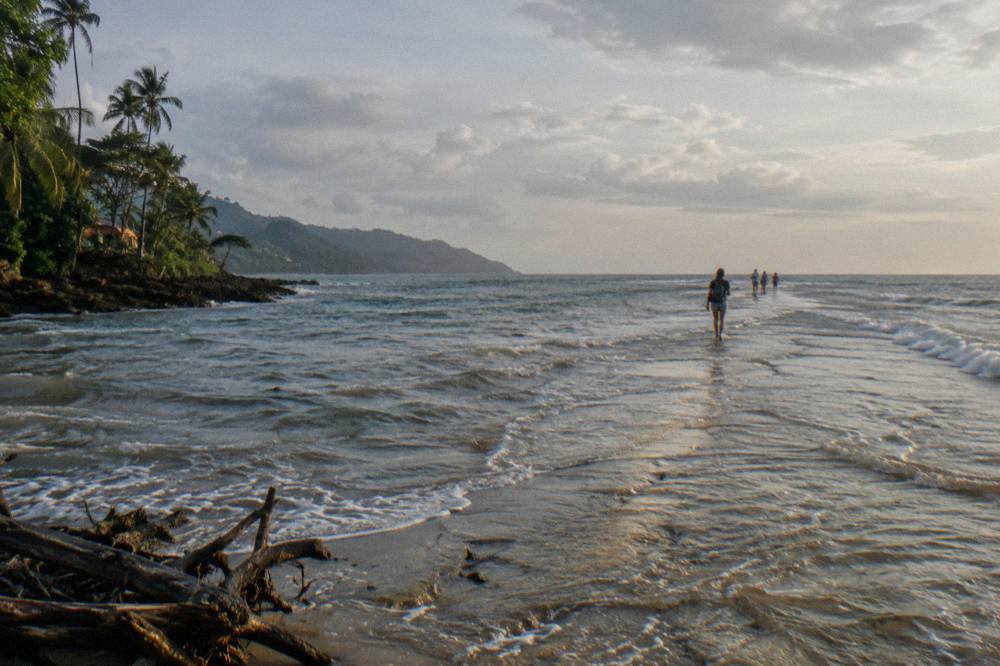
A great deal, and this is the most underappreciated safety factor on this coast. SINAC's own page states that access to the Cola de Ballena, the Whale Tail sandbar, happens only at low tide, roughly a six hour window, and the same rule applies at Playa Arco. Swimming and wading near a sandbar on a rising tide is how people get caught out, so the tide table is safety equipment here.
The park authority does not mince words on this: it tells visitors to consult tide tables before the visit, because the sandbar that makes Uvita famous appears and disappears with the tide rather than existing as a permanent beach. Walkers who cross at low tide and linger too long can find the return route getting shallower and then deeper as the water returns over the tombolo. This is a general description of how tombolos work, and the practical advice follows from it: time the crossing for the low tide window, watch the water level on the way back, and keep children close.
The tide also shapes the swimming itself. At low tide more reef and rock show near the tombolo's left side and around Isla Ballena, where SINAC notes the reef, and footing gets uneven for casual waders. Neither state is dangerous by definition; each asks for different attention. If the day's plan is shore time rather than a boat, the sandbar walk is covered in detail in our guide to Whale Tail Beach At Marino Ballena National Park.
The caves at Playa Ventanas, a short drive south of Uvita, run on the same clock. Reporting on the caves says they are tide-dependent and safest to explore only at low tide, and that a rising tide can trap visitors. No tour can guarantee entry, and kayak trips to the caves require intermediate ocean skills. The lesson repeats: on this coast, the tide table is the first thing to read in the morning.
Is It Safe To Snorkel At Uvita's Reef Sites?
Snorkeling inside Marino Ballena is a listed park activity, and one operator source says visibility is best from January to April, in the dry season, with water temperatures of 78 to 84 degrees Fahrenheit year round. The reef sits on the left side of the Whale Tail tombolo and around Isla Ballena, per SINAC. Safe snorkeling here means calm conditions, the right tide, and going with a boat crew when you are unsure.
The dry-season window, mid-December to mid-April per SINAC's climate description, is when one operator reports the clearest water, and February and March stand out as the lowest-rainfall months in long-term averages. Rainy-season snorkeling still happens, and one whale watching listing notes that snorkeling gear is simply not offered from May through December because of water conditions. That is a useful signal: when one operator pulls the gear for half the year, independent snorkelers should read the same signal about visibility and surface conditions.
It is also worth knowing what lives around the reef before you get in. SINAC's own fauna list for the park includes parrotfish, manta rays and hammerhead sharks alongside the humpback whales and dolphins the area is famous for. It does mean the reef is a live environment rather than a swimming pool, and the standard reef etiquette applies: look, do not touch, and give any larger animal space to leave. For a closer look at those dolphins, our guide to Dolphin Watching From Uvita: Spotted And Bottlenose Pods covers which species live in these waters year round and which boat trips give you the best odds of finding them.
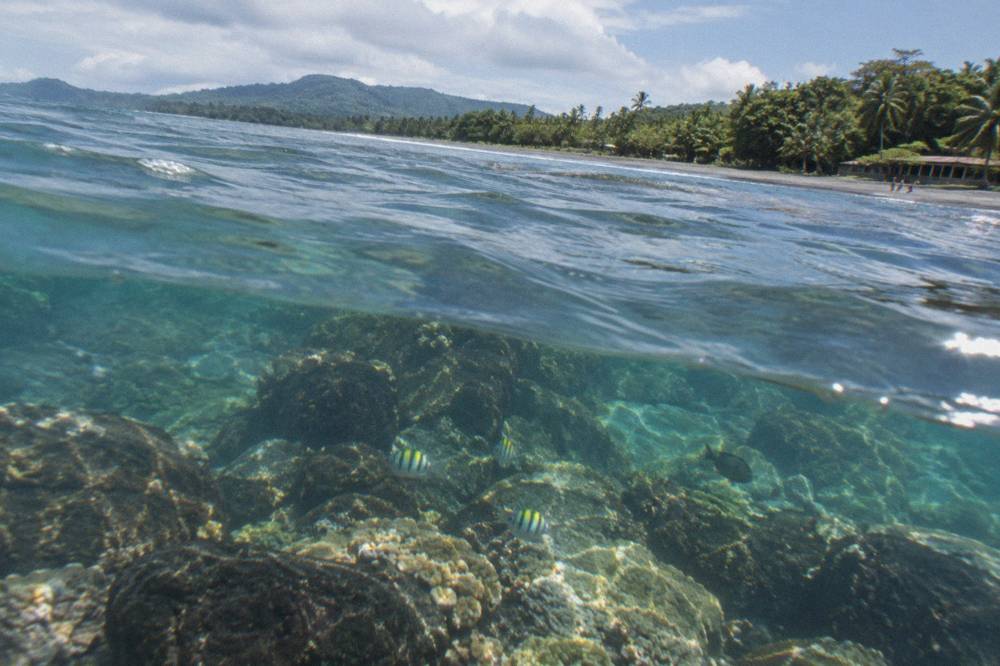
For snorkelers who want structure, the lineup splits cleanly into two products. The 3-hour whale and snorkel combos pair a whale watching run with a snorkel stop inside the park; our guide to Whale Watching And Snorkeling Combo From Uvita compares them. The Caño Island day trips are a different animal, 6 to 8 hours round trip with a 50 to 80 minute boat ride each way, and SINAC's rules for that reserve are strict: no landing on the island at all, marine areas only. Never assume a Caño trip is a whale trip or vice versa; the listings say what each includes.
| Snorkel option from Uvita | Time on the water | What the listings actually include |
|---|---|---|
| Whale and snorkel combo (park) | 3 hours | Whale watching plus a snorkel stop, gear and park entry on most lines |
| Marino Ballena watching tour, 3 to 4 hours | 3 to 4 hours | Swim time or snorkeling in dry season, coffee station, Whale's Rock or Ventanas Cave visit |
| Caño Island day trips | 6 to 8 hours | Snorkel stops, lunch, reserve entry on most listings, no landing on the island |
If spotting whales from the boat leaves you wondering how close you can safely get, our answer to Are Humpback Whales Friendly To Humans? explains what the rules, the science, and guest reports actually say.
Can You Swim During A Whale Watching Tour In Uvita?
Some trips include a swim stop, and the lineup says exactly which. The 3 to 4 hour Marino Ballena watching tour lists swimming time or snorkeling in its inclusions, dry season only, with tropical fruits and water. The Pacific Expeditions whale watch lists swimming time according to conditions. The featured drinks and snacks trip lists time to swim, and its exclusions name snorkel gear. Read the inclusions line before booking, because this varies listing by listing.
The distinction matters enough to repeat: on these tours, swim stops are a per-product fact, not a category-wide feature. The 3-hour Marino Ballena boat tour lists swimming time, tropical fruits and a bilingual guide in its inclusions and notes no snorkeling and no restroom on board. The morning whale and dolphin tour from Bahía Ballena includes snorkel equipment and free parking, and one guest review describes the crew offering a genuine choice: "We were given the choice of finding more whales or snorkeling at the Whale’s Tail. The boat voted for snorkeling." That quote captures how swim stops actually work, as a flexible option decided on the day.
A swim stop on a whale boat also comes with a crew on hand, and most listings include life jackets. For families weighing this, our guide to Whale Watching With Kids In Uvita: Ages, Safety And Timing covers minimum ages and what to pack; no listing states a minimum age, so check each listing. And if the underlying question is whether whales will even be there, the honest odds discussion lives in our guide to Will You See Whales: Sighting Odds And Best Departure Time.
Is It Safe To Swim Near Whales And Dolphins In Costa Rica?
No, and in Costa Rica it is not a matter of choice: it is prohibited. Decreto Ejecutivo 32495, the national regulation for cetacean activities, bans swimming, diving and any in-water activity around whales and dolphins for tourism, and forbids coming between a mother whale and her calf. Boats must keep at least 100 metres from whales and 50 metres from dolphins with the engine on, and spend no more than 30 minutes with any group.
This is the clearest safety answer on the whole page because it does not depend on conditions. The decree text sets the framework: boats approach from behind at an angle, travel no faster than 4 knots in observation areas, at most two boats may share a group, and touching, feeding or trapping marine mammals is entirely prohibited. Swimmers, kayakers and jet skis are all excluded from the observation zone. So the swim stop on a tour happens well away from any whales, which is precisely the point.
It is worth saying plainly that this rule protects animals and people at once. A humpback mother with a calf is a large wild animal in its nursery, and the regulation treats her accordingly. The full text is in the official decree, and our guide to Whale Watching Boat Rules And Ethics In Costa Rica unpacks it.
What Months Have The Calmest Water Around Uvita?
By the official climate definition, the dry season runs mid-December to mid-April and the rainy season mid-April to mid-December, per SINAC. February and March are the lowest-rainfall months in long-term averages, and one operator source says park snorkel visibility is best January to April. Whale season adds its own calendar: southern humpbacks July to mid-November, northern humpbacks December to March or April.
Those two calendars only fully overlap in one stretch, and it is worth naming: January through March is dry and inside the northern humpbacks' window. The southern-hemisphere season, the stronger one for mother-calf pairs peaking August to September, sits inside the rainy season. One operator states plainly on its own listing that December to March carries a 50 percent chance of sightings and July to October 90 percent; that is that operator's claim, not a coast-wide rate, and it is quoted here only with that attribution.
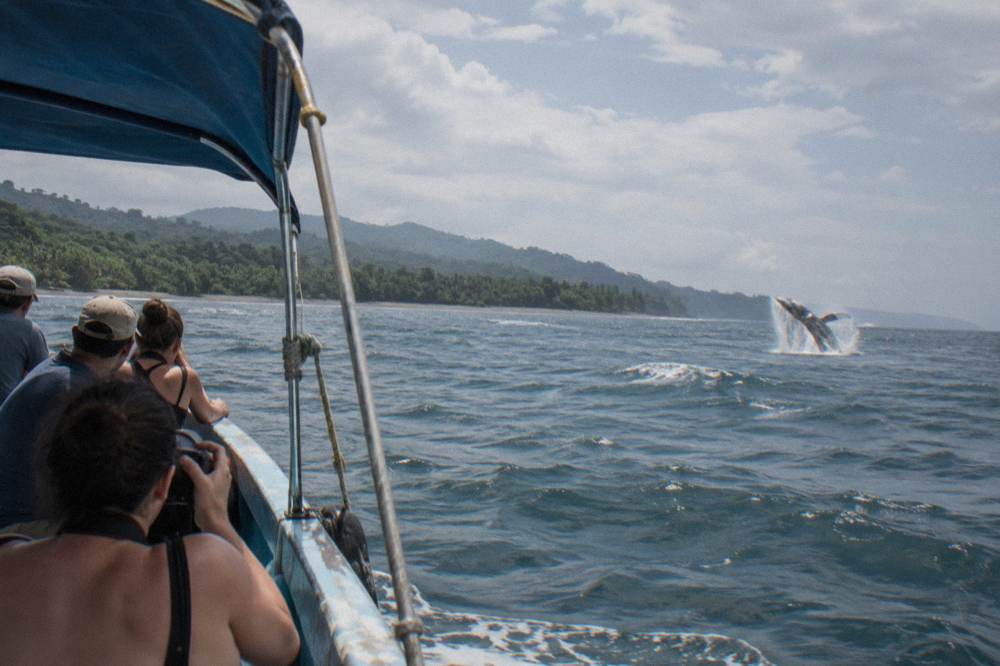
For swimmers, the honest takeaway is that no month is off limits and no month is a guarantee. The month-by-month detail, including what it means for boats and bookings, is worked through in our guide to Best Time For Whale Watching In Uvita By Month. If calm water for swimming is the priority, the dry-season months are the statistical pick; if whales are the priority and a swim is a bonus, the August to September peak comes with wetter weather.
Common Questions About Swimming In Uvita
Is It Safe To Swim In Uvita?
Swimming is an established, listed activity in Marino Ballena National Park, in water that runs 78 to 84 degrees Fahrenheit year round. But safety on any given day depends on tide, sector and season, and no honest source guarantees conditions. Check the tide table, swim in daylight inside the park sectors, and ask locally about the day's state of the sea.
Can You Swim At The Whale Tail Sandbar?
You can walk the Whale Tail only at low tide, and SINAC says the access window is roughly the six hours of each low tide. Time your visit around the tide table, and keep an eye on the water level if you cross.
Do Whale Watching Tours In Uvita Include A Swim Stop?
Some do, and the listings name them. The 3 to 4 hour Marino Ballena watching tour lists swimming time or snorkeling in the dry season, and the Pacific Expeditions whale watch lists swimming time according to conditions. The featured drinks and snacks boat trip lists time to swim, and its exclusions name snorkel gear. Read the inclusions line for the specific tour.
Is It Legal To Swim With Whales In Costa Rica?
No. Decreto Ejecutivo 32495 prohibits swimming, diving and all in-water activity around whales and dolphins for tourism, and boats must stay at least 100 metres from whales and 50 metres from dolphins with the engine running. Swim stops on tours happen away from any cetaceans.
When Is Snorkeling Visibility Best In Marino Ballena?
One operator source places best visibility from January to April, matching SINAC's dry season of mid-December to mid-April. One operator withdraws snorkel gear entirely from May through December because of water conditions, so the dry season is the reliable window.
Do You Need To Pay To Swim At Uvita's Beaches?
The park sectors charge entry: non-resident adults pay USD 6.78 and children USD 5.65, tax included, card payment only, valid for the whole day of the visit. Many boat tours include the park entry fee in the tour price, per each listing's inclusions.