Where Do Whales Give Birth?
Humpback whales travel thousands of kilometres to give birth in warm, protected tropical water, and the coast off Marino Ballena National Park is one of the places they choose. Here is why, when, and how to see mothers and calves from Uvita.
Humpback whales give birth in warm, protected tropical waters, thousands of kilometres from the cold feeding grounds where they feed. Costa Rica's southern Pacific is unusual because two separate humpback populations, one from each hemisphere, both use it: southern-hemisphere whales calve here roughly July to mid-November, northern-hemisphere whales roughly December to March or April.
That is the short answer, and it explains almost everything about whale watching in Uvita. A humpback that feeds around the Antarctic Peninsula in the southern summer swims north into Central American water for the southern winter, gives birth in water warm enough for a newborn calf, and then turns around and swims back. Months later a second wave arrives, humpbacks that fed off the northwest coast of the United States, doing the same thing during the northern winter. The International Whaling Commission's country profile for Costa Rica describes this as two Pacific coastal populations visiting every year, with the southern migration described as the longest recorded migration of any humpback population breeding in Costa Rica.
Why warm water, specifically? Operator and guide pages describe females migrating to give birth and nurse calves in warm, protected waters. The water off Marino Ballena runs 78 to 84 F year-round according to one Costa Rica Divers reading.
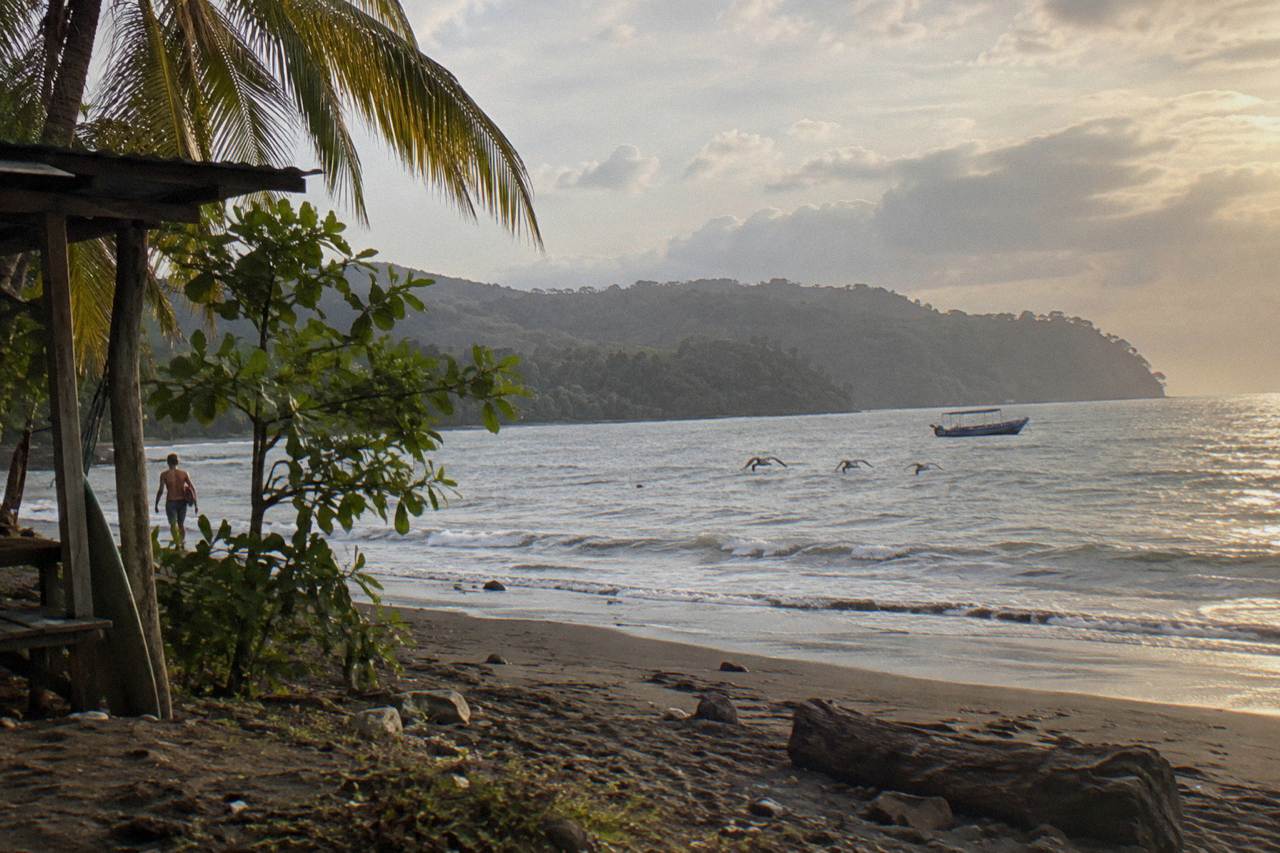
Bahía Ballena, the bay beside Uvita, sits inside that nursery zone. The park itself is Costa Rica's first protected area created exclusively for marine resources, 5,160 marine hectares and 171 land hectares along a 15 km coastal strip, per the official SINAC park page. Operators report mother-and-calf pairs in these waters most years, and the listings that run here, the Pacific Expeditions whale watch from $80 per person, the expert-guided trips, the wildlife-focused humpback expedition, all structure their tours around the same seasonal rhythm.
Why Do Humpback Whales Migrate So Far To Give Birth?
A humpback migration splits the year between two jobs in two places: feeding in cold, high-latitude water, and birth and nursing in warm, protected tropical water. So the species migrates, and Costa Rica's Pacific is a breeding ground that populations from both hemispheres reach.
The feeding half of the story is straightforward. Humpbacks feed in cold, productive water: the Antarctic Peninsula and southern Chile for the southern population, the northwest coast of the United States for the northern one. That is where the calories are. The birth happens somewhere else.
The birth half drives the long swim: females migrate to give birth and nurse calves in warm, protected waters, per operator and guide pages.
Costa Rica's position makes it a double nursery. The IWC's Costa Rica profile notes the Pacific coastal waters host both populations each year, and that whale watching in the country originally developed in exactly the southern communities around Dominical, Uvita, Drake Bay, Caño Island and Golfo Dulce. Operator and guide pages for the Uvita area describe the southern season as running July to October with the strongest mother-calf period in August and September, and the northern season December to March or April, peaking January to February. That is why a single bay off Costa Rica can have whales present for the better part of eight to ten months of the year.
When Can You See Whale Mothers And Calves In Marino Ballena?
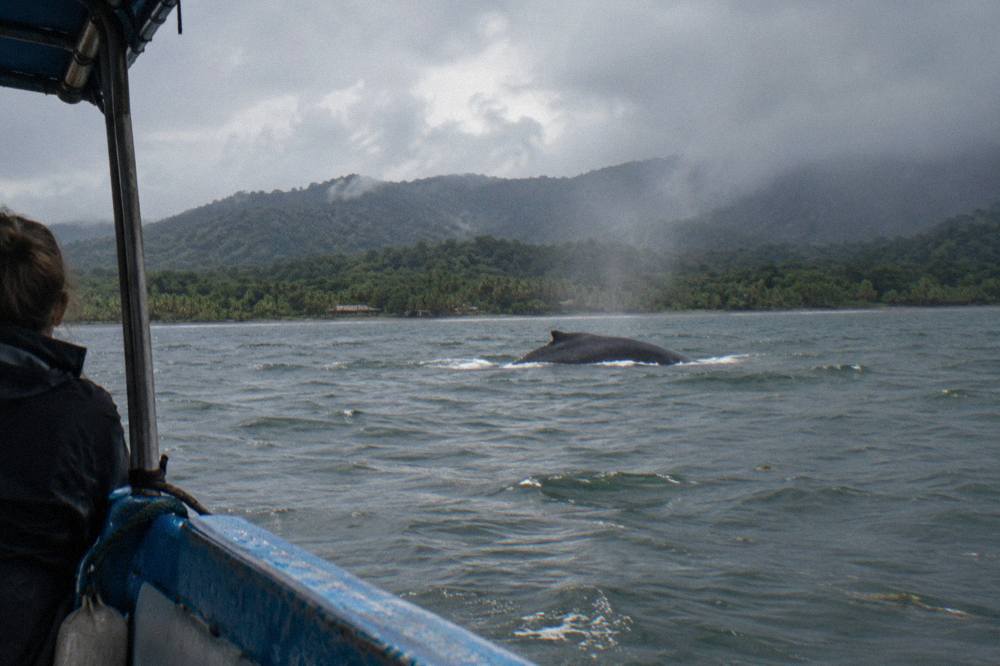
Mother-and-calf sightings around Marino Ballena concentrate in two windows that follow the two migrations: southern-hemisphere mothers calve roughly July to mid-November, with operator pages placing the strongest mother-calf period in August and September, and northern-hemisphere mothers calve roughly December to March or April, peaking January to February. August and September are the months most associated with newborn calves in this bay.
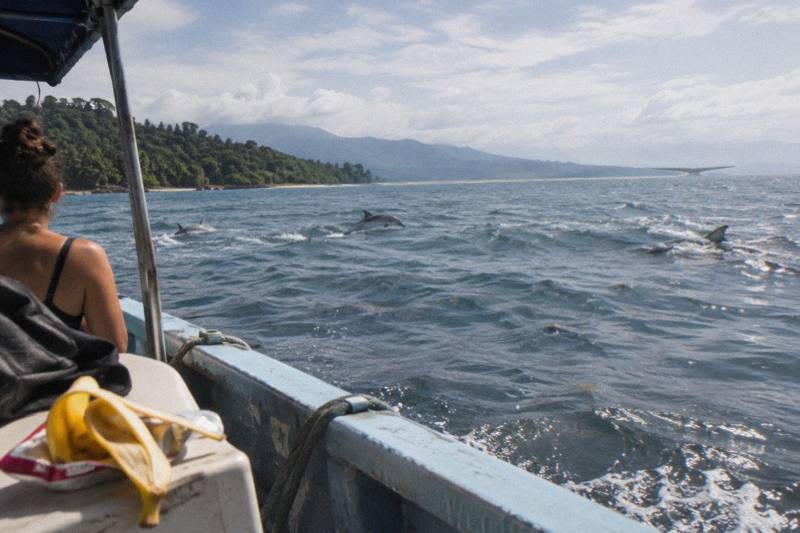
The reason the southern window is famous here is timing. Southern humpbacks arrive from Antarctic feeding grounds from July, and by August and September operator pages report the strongest mother-calf period. Guests on Uvita boats report those pairs. One review on the 3 to 4 hour Ballena Infocenter trip reads: "We observed a mother and baby humpback whale for at least 20 minutes. In addition we saw some sea turtles and had the chance to swim in the sea." Another, on the Marino Ballena Tours whale watch that runs up to 20 guests, says: "We were lucky enough to see a mother whale and her calf, and at another spot, we also saw a bull with some dolphins." Encounters like these often leave first time watchers wondering how the whales actually feel about people, and our answer to Are Humpback Whales Friendly To Humans? turns out to be a more complicated question than their calm behavior suggests.
The northern window gets less attention but works on the same logic. Whales that fed off the US northwest coast arrive from December and calve into the new year, with operator pages placing the January to February peak. The trade-off between the two windows is weather against certainty: the southern mother-calf peak sits inside the local rainy season (mid-April to mid-December per SINAC's climate description), while the northern season falls in the dry season, mid-December to mid-April, when Marino Ballena snorkel visibility is best (January to April according to one local operator) and February and March are the lowest-rainfall months on long-term averages.
One operator states sighting chances on its own listing: the featured drinks-and-snacks boat trip from Uvita, 3.5 hours, from $95 per person, 4.5 from 775 reviews, lists a "50% chance of sightings" for December to March and "90%" for July to October. That is one operator's own statement about its own trips, not a rate for the coast, and no boat can promise a sighting.
| Season window | Population | Best months for mothers and calves, per operator pages | Local weather context |
|---|---|---|---|
| July to mid-November | Southern hemisphere, Antarctic and southern Chile feeders | August and September peak for mother-calf pairs | Rainy season, mid-April to mid-December |
| December to March or April | Northern hemisphere, US northwest coast feeders | January and February peak | Dry season, mid-December to mid-April |
The calendar also explains the local festival. Each early September, the Bahía Ballena community holds its whale and dolphin festival timed to the southern mother-calf peak; the 16th edition ran 4 to 6 September 2026 with special tour pricing for nationals, concerts and community events, and the IWC profile notes tour prices drop during the festival and extra boat owners join the watching effort. It is a yearly early-September event.
There is more on the monthly picture, including the shoulder months, in our guide to Best Time For Whale Watching In Uvita By Month.
Where Exactly In Bahía Ballena Do Mothers And Calves Spend Their Weeks?
Operator pages describe females giving birth and nursing in warm, protected waters, and the protected marine area of Marino Ballena National Park, along the coastal strip between the Rio Morete mouth and Punta Pinuela, is where Uvita boats look for them.
SINAC's own park page names humpback whales, spotted dolphins and bottlenose dolphins among the park's fauna, alongside manta rays, hammerhead sharks and parrotfish on the reef.
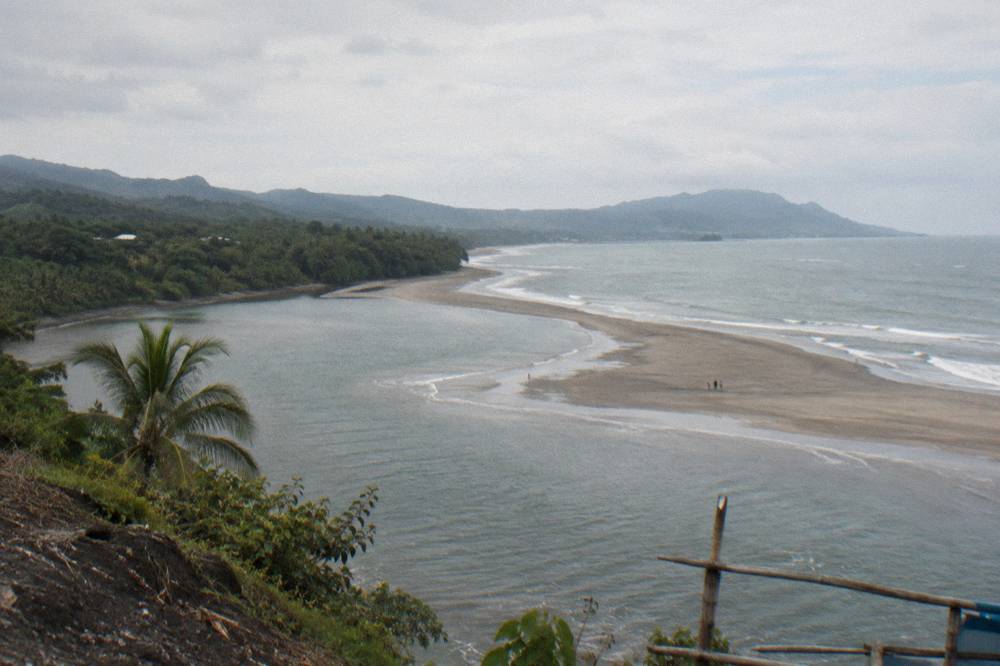
The geology is a coincidence worth noticing. The Whale Tail sandbar, the tombolo at Playa Uvita, is famously whale-shaped at low tide, and the bay's name, Ballena, is Spanish for whale. SINAC notes the tombolo is reachable only at low tide, with roughly the six hours of low water to walk it, and that the left side of the tombolo and Isla Ballena hold coral reef where snorkeling is possible. So a calf-season visitor can stand on the tail at low tide in the morning and be on a boat in the same marine park the same day.
The national watching rules, covered below, forbid boats from coming between a mother and her calf. Guests on the 2.5 to 3 hour morning whale and dolphin tour from Bahía Ballena, 4.8 from 210 reviews and the lowest-priced listing at from $75 per person, have even been offered a choice: one reviewer writes, "We were given the choice of finding more whales or snorkeling at the Whale’s Tail. The boat voted for snorkeling."
The wider area matters too. The IWC profile frames Uvita as part of a southern Costa Rican watching corridor that includes Drake Bay, Caño Island and Golfo Dulce, and boats from Uvita also pass whale habitat en route to Caño Island on full-day snorkel trips. But for a calf-focused day, the short 3-hour circuits inside Marino Ballena are the product built for it, and readers weighing the two can start with our guide to Caño Island Vs Marino Ballena: Which Boat Day To Pick.
Planning a calf-season day already? The Pacific Expeditions whale watch runs the nursery bay on a 3-hour circuit, leaving the afternoon free.
For readers who want the calf story from a research angle rather than a sightseeing one, there is a dedicated option: the humpback wildlife watching trip from $129 per person includes a donation to a humpback whale research project and a biologist expedition leader, with water, fruit and snorkel gear when weather allows.
How Close Can Boats Get To A Mother And Calf In Costa Rica?
Under Costa Rican Decreto Ejecutivo 32495, boats must stay at least 100 metres from whales and other cetaceans over 5 metres long, at most two boats may watch the same group at a time, and no boat may stay with a group longer than 30 minutes. Swimming near cetaceans, touching them or feeding them is prohibited outright, and mothers with calves get the strongest protection in the rules.
Those numbers come straight from the regulation, published in 2005, that governs every cetacean-watching operation in the country. For dolphins the minimum is 50 metres with the engine on and 30 metres with it off. Boats approach diagonally from the rear, move parallel to the animals, and travel no faster than 4 knots inside observation areas. The decree also bars boats from splitting or dispersing a group, from crossing between a mother and her calf, and from restarting an engine until the animals are at least 50 metres clear and at the surface. The full text is available through the official decree document.
What this means on a calf-season tour is simple. A boat holds its distance, the engine drops to a murmur or cuts, and the pair decides the encounter. If the mother brings the calf closer to the boat on her own, that is her choice. But no crew may chase, encircle or split a pair, and after 30 minutes the boat leaves even if the show is still on.
The rules also require leaving the area at low speed if animals show disturbance signs, and the authorities can temporarily close observation areas for weather, boat saturation or biological reasons. Responsible operators treat the 100-metre line and the 30-minute clock as hard limits, and a guest who sees a boat holding station alongside a mother and calf for longer is watching a rule get broken.
The ethics of all this deserve their own read in our guide to Whale Watching Boat Rules And Ethics In Costa Rica. The short version for a birth-season visit: choose a licensed operator, let the animals control the distance, and treat any sighting as borrowed time in the literal nursery of a long migration.
Which Uvita Boat Trip Fits A Calf-Season Visit?
For an August or September calf-focused day, the three listings that fit best are the Pacific Expeditions whale watch, 3 hours from $80 per person with park entry and fruit included; the expert-guided whale watch, 3 hours from $96 per person, 4.7 from 26 reviews; and the Marino Ballena Tours whale watch, 3 hours from $105 per person with park entry and a 20-guest cap. All three are shared boats departing from Uvita.
The differences come down to group feel, inclusions and price. The Pacific Expeditions whale watch, 4.8 from 183 reviews, includes the Marino Ballena entry fee, tropical fruit, a guide, parking and swimming time when conditions allow, and lists no restroom and no snorkeling on board; several Uvita boats here launch straight off the beach with no dock, so guests should expect to wade to the boat. The expert-guided trip includes the park ticket, hydration, fruit and a bilingual guide for a flat three hours. The Marino Ballena Tours option adds insurance and caps the boat at up to 20 guests, which ties for the smallest stated group among the mainstream shared trips.
| Listing | Price | Rating | Duration | Stated group cap | Park entry included |
|---|---|---|---|---|---|
| Pacific Expeditions whale watch | from $80 per person | ★ 4.8 · 183 reviews | 3 hours | Not stated | Yes |
| Expert Guides whale watch | from $96 per person | ★ 4.7 · 26 reviews | 3 hours | Not stated | Yes |
| Marino Ballena Tours whale watch | from $105 per person | ★ 4.5 · 110 reviews | 3 hours | up to 20 guests | Yes |
| Morning whale and dolphin tour | from $75 per person | ★ 4.8 · 210 reviews | 2.5 to 3 hours | Not stated | Not stated |
Readers with a different shape of day in mind have real alternatives. A family wanting whales plus a snorkel stop can look at the 3-hour whale and snorkel combo, from $84.42 per person, which pairs watching with in-water time. A couple or small group wanting the nursery to themselves can price a private whales and dolphins charter, from $95 per person with the price varying by group size, confirm on the booking page, or the private cruise at from $1,120 per group with lunch and drinks included. And the most-reviewed listing here, the drinks-and-snacks boat trip with 775 reviews, is the one that publishes its own sighting-chance statement quoted earlier. Minimum ages across all of these are a check-the-listing matter, and free cancellation is listed on most but stated on each page rather than here.
Whatever the pick, the timing advice is the same: book the southern window for the highest chance of a mother-and-calf encounter per operator reporting, go in the morning, and keep the afternoon free, since boats cancel or reroute for weather and sea state and a flexible plan saves the day.
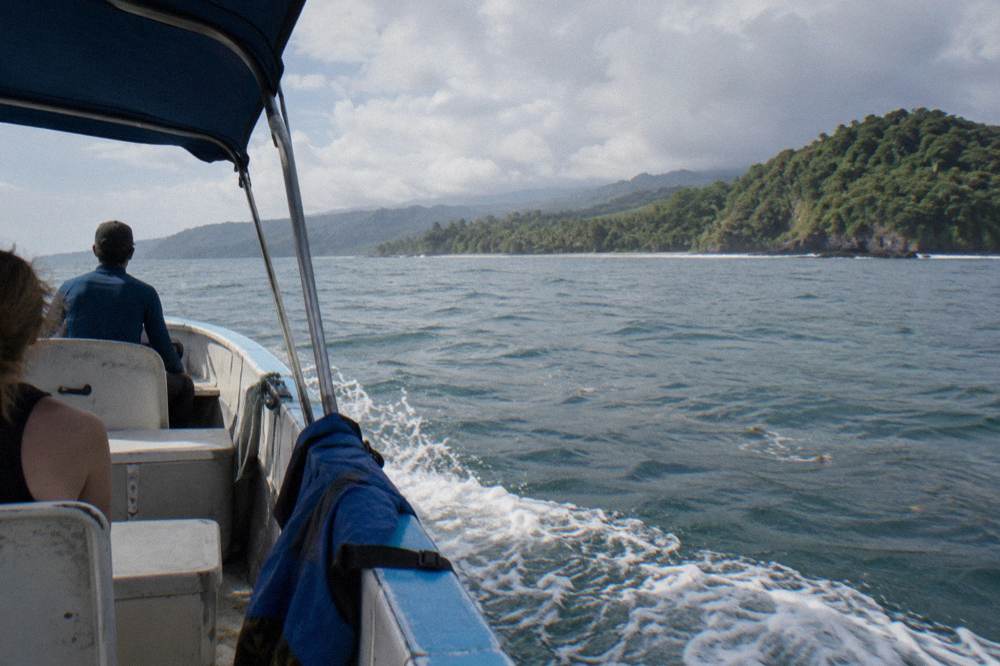
For the value-minded choice in calf season, the morning whale and dolphin tour stands out: the lowest price listed here at from $75 per person, a 4.8 rating from 210 reviews, free cancellation listed, and the same bay as the pricier trips.
Do Calves Born Here Ever Come Back To Bahía Ballena?
Nobody tracks individual whales on these tours, but the IWC records both populations returning to Costa Rica's Pacific every year.
Populations are structured by where they feed and where they breed, and the two Costa Rica-visiting groups stay distinct: one tied to Antarctic and southern Chile feeding grounds, the other to the US northwest coast.
Costa Rica protects that water through Marino Ballena, in SINAC's description, the first protected area in the country created exclusively for marine resources, and through Decreto 32495, which controls how boats behave around the animals using it.
The local community's identity reflects it, from the Ballena name to the yearly early-September festival, and the tour economy is built on a resource that only survives if the nursery keeps working.
For readers whose curiosity runs deeper than one boat ride, our guide to Humpback Whales In Costa Rica: Two Migrations Explained unpacks the double migration in full, and our answer to Are Humpback Whales Friendly To Humans? tackles the question people always ask next.
Ready to book a calf-season boat day? These are the three Uvita listings worth comparing first.
Common Questions About Where Whales Give Birth
Where Do Whales Give Birth?
Humpback whales give birth in warm, protected tropical waters, far from their cold polar feeding grounds. Off Costa Rica, southern-hemisphere mothers calve roughly July to mid-November and northern-hemisphere mothers roughly December to March or April, and Marino Ballena National Park near Uvita sits inside that nursery area.
Do Whales Give Birth In Marino Ballena National Park?
The protected marine area is part of the breeding and nursery ground both humpback populations use, and boats from Uvita report mother-and-calf pairs in these waters, most often around August and September per operator pages.
What Month Are Baby Whales Born In Costa Rica?
For the southern population, operator pages place the mother-calf peak in August and September. For the northern population, the peak is January to February. One Uvita operator states a 90 percent sighting chance July to October and 50 percent December to March on its own listing, as that operator's claim only.
How Long Do Whale Calves Stay With Their Mothers?
Operator and guide pages describe females nursing their calves in Costa Rica's warm, protected waters during the breeding season, before the populations return to their feeding grounds.
Why Don't Whales Give Birth Where They Feed?
The feeding grounds are cold, high-latitude water, while females migrate to give birth and nurse calves in warm, protected waters, per operator and guide pages, so the species migrates between the two.
Can You Swim With Whale Mothers And Calves In Costa Rica?
No. Costa Rican Decreto Ejecutivo 32495 prohibits swimming, diving and other in-water activities around cetaceans, and bars boats from crossing between a mother and calf. Watching happens from the vessel at regulated distances.