Are Humpback Whales Friendly To Humans?
Humpbacks around Uvita and Marino Ballena are calm around boats, but friendliness is the wrong frame: here is what the rules, the science and guest reports actually say.
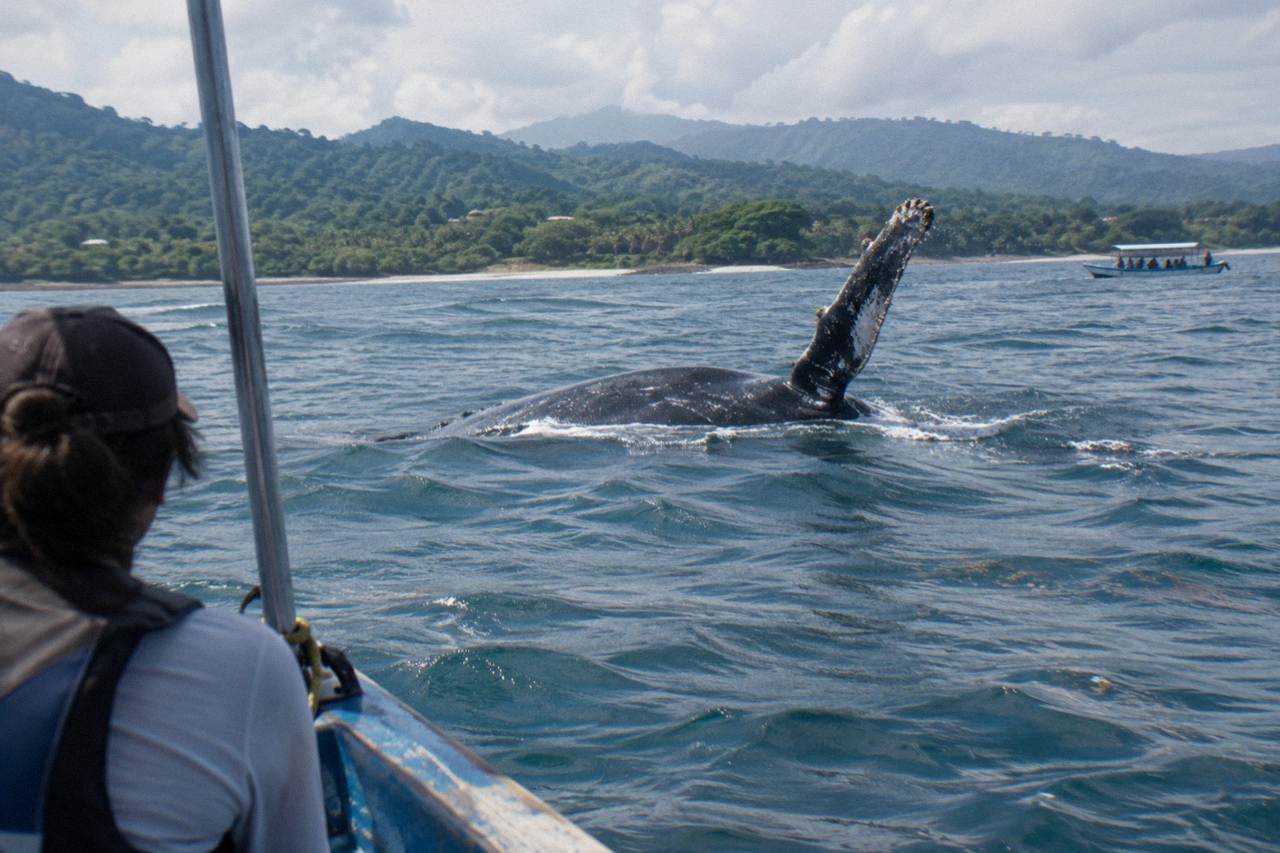
No, and the honest answer is better than that. Humpback whales are wild animals that show remarkable tolerance of boats rather than friendship toward people. Costa Rican rules keep every boat at least 100 metres away, and the calm you see deserves respect rather than a cuddly label. The question matters because it shapes expectations. A traveler who boards a boat in Bahía Ballena expecting a sea full of eager, people-loving giants is set up for disappointment or, worse, risky behavior like reaching out or expecting close contact. A traveler who understands what humpbacks actually do around boats, resting, rolling, occasionally raising a flipper or breaching, gets far more out of the same three hours on the water.
Humpbacks around Costa Rica belong to two distinct populations that visit the same stretch of Pacific coast at different times of year. The International Whaling Commission's country profile notes that southern-hemisphere humpbacks arrive from July to mid-November, making what is described as the longest recorded humpback migration, while northern-hemisphere animals come between December and March. The same profile records that whale watching in Costa Rica originally developed in Pacific communities including Dominical, Uvita and Drake Bay. That history is the background to every question about how "friendly" the animals are.
It is worth pausing on what friendliness would even mean for an animal that spends its life in a habitat humans can only visit briefly. Dogs were bred over millennia to read human gestures and seek our approval. Humpbacks have had no such history. What looks like warmth from a boat rail is a wild animal going about breeding, nursing and resting while choosing not to flee a slow vessel. Framing it correctly is not pedantry. It is the difference between a visitor who respects the distance rules and one who presses a crew to close them.
If the question is really "will I have a good encounter on a boat from Uvita," the practical answer is that a well-run tour gives you a genuine wild sighting at a respectful distance, and the lineup of trips departing from town is built around exactly that.
The featured listing on this site, the whale and dolphin watching boat trip with drinks and snacks, runs 3.5 hours from Uvita, carries up to 80 guests, includes the Marino Ballena park entry fee, and holds a 4.5 rating from 775 reviews, from $95 per person. The Uvita Whale Watching homepage comparison walks through the listed tours if you want the wider picture before choosing.
How Close Do Boats Get To Humpback Whales In Marino Ballena?
Costa Rican regulation sets the minimum at 100 metres for humpbacks, at most two boats around one group, no more than 30 minutes with that group, and a maximum speed of 4 knots in observation areas. Swimming with whales is prohibited outright. So the closeness you experience is a legal distance, not a whale's choice. These numbers come from Decreto Ejecutivo 32495, the 2005 regulation governing cetacean activities in Costa Rica, published in full on the INA's training portal. The same text requires boats to approach diagonally from the rear, move parallel to the animals, and leave at low speed if the whales show signs of disturbance. It also bans touching, trapping, feeding or capturing marine mammals entirely.
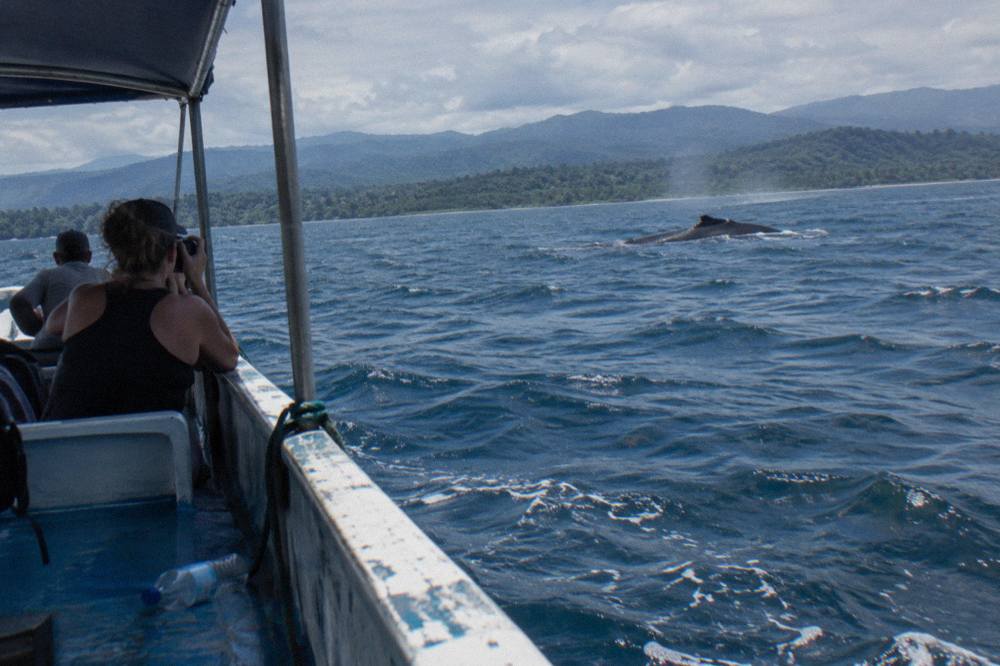
The practical read for a visitor is simple: the whales close the gap, not the boat. A mother resting with a calf may drift nearer to a stationary vessel with its engine off, and the decree accounts for that by requiring the crew to confirm the animal is at least 50 metres away before restarting the engine. Guests on the Marino Ballena National Park watching whales and dolphins tour, a 3 to 4 hour trip rated 4.6 from 107 reviews with up to 20 guests, from $92 per person, ride a capped boat; its listing includes the park entrance, a coffee station before departure and swimming or snorkel time in the dry season.
The 100-metre figure sometimes surprises visitors who have seen dramatic close-up footage elsewhere. Two things explain the gap between those images and a legal tour. First, some footage is shot with permits under special conditions, such as the professional underwater photography that the decree says requires its own SINAC authorization inside protected areas. Second, lenses compress distance, and a whale photographed at 100 metres with a long lens can look close enough to touch. Neither fact makes a regulated encounter lesser; it makes it honest.
| Rule from Decreto 32495 | What it means on the water |
|---|---|
| 100 m minimum from whales over 5 m | Boats hold back; close photos happen when whales swim nearer |
| 50 m from dolphins, engine on; 30 m engine off | Dolphin encounters run closer than whale encounters |
| Two boats maximum per group | Other vessels wait 200 m back |
| 30 minutes maximum per group | Every boat eventually moves off |
| No swimming, diving or kayaking near cetaceans | You watch humpbacks from the boat, period |
Wondering how a morning actually works before you commit?
Should You Book A Guided Boat Or Watch From Shore?
A guided boat from Uvita puts you inside the regulated encounter zone with a crew operating under the approach rules, which is the only legal way to be near humpbacks on the water. Shore watching from the Whale Tail sandbar is free of boat logistics but distances are huge and sightings depend on luck. For the question of friendly whales, the boat is where the behavior is visible. The beach option is covered in detail in our guide to Whale Tail Beach At Marino Ballena National Park, including the low-tide access rule from the park's own page.
Do Humpback Whales Ever Approach Boats In Bahía Ballena?
Yes, approaches happen, and they are initiated by the whale. A resting mother-calf pair can surface near an idling boat. The regulation assumes this: it governs what the boat does, then sets the protocol for when an animal comes to the boat rather than forbidding the encounter. Guest reviews from the listed tours back this up without exaggeration. One review of the 3 to 4 hour Marino Ballena trip reads: "We observed a mother and baby humpback whale for at least 20 minutes. In addition we saw some sea turtles and had the chance to swim in the sea. It was overall a great trip!" That 20-minute window sits inside the decree's 30-minute limit.
The Whale and Dolphin Festival held each early September in Bahía Ballena is built around this same reality. The International Whaling Commission's handbook describes it plainly: each September the community organizes a whale festival during which tour prices drop and many boat owners who do not normally run commercial trips join the whale-watching fleet. The event coincides with the southern season's peak for mother-calf pairs, the situation where the rules matter most.
That is the honest framing of "friendliness" here. The whales are not seeking you out. They are going about the business of breeding, giving birth and nursing in the same bay the boats use, and a well-run operator positions the vessel so the animals can be observed without their behavior changing. When a whale chooses to linger nearby, it reads as magical, but the mechanism is tolerance plus luck.
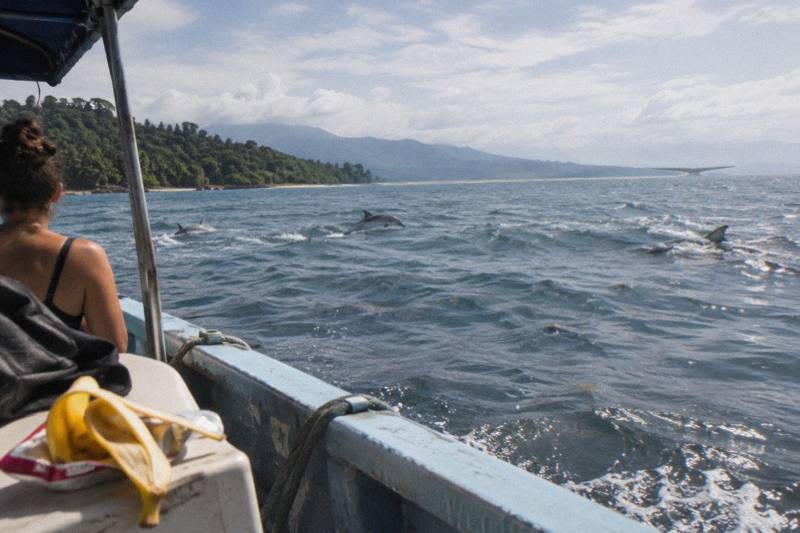
Dolphins complicate the picture in an instructive way. The park's own page names spotted and bottlenose dolphins among its fauna, and the decree allows boats within 50 metres of dolphins with the engine running, or 30 metres once it is off. Dolphin encounters can therefore feel more interactive than whale encounters. Visitors who take that energy as "friendliness" then expect the same from humpbacks, and the comparison misleads. A humpback is a different animal on a different mission.
Are Humpback Whales Dangerous To Swimmers Or Kayakers?
The danger is accidental rather than hostile: a casual flip of a huge animal's tail or an accidental collision can injure a swimmer without any hostile intent. That is why swimming near cetaceans is banned in Costa Rica, full stop. The decree is explicit that no swimming, diving, waterskiing, jet ski, windsurf, rowing, canoe or kayak activity is permitted around cetaceans, and that boats must never come between a mother and her calf. This is not bureaucratic caution. A calf is a magnet for attention and a mother's protective presence is the single most sensitive situation on the water.
For visitors planning their own water time around Uvita, the split is clear. Snorkeling inside Marino Ballena near the reef, an activity the park's official page names among its permitted uses, is separate from whale watching and happens at fixed sites. Our guide to Uvita Snorkeling Tours And Reefs covers where that fits. Whale watching from a licensed boat is the only format that puts you near the animals, and every shared whale tour listed here is a boat trip, from the budget end at $75 per person upward.
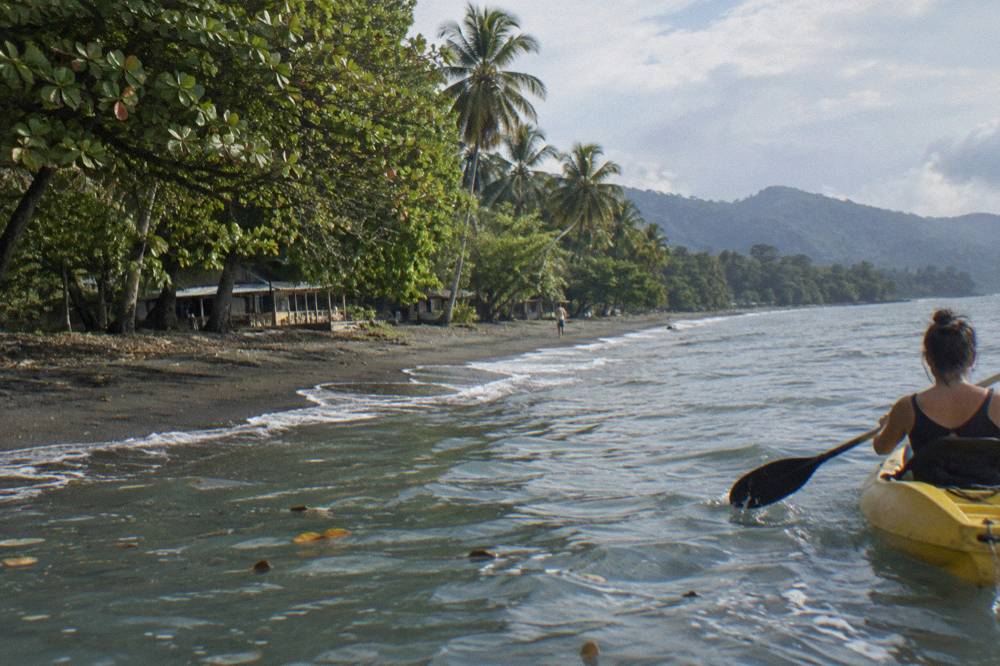
Kayakers should simply route away from whales. Ventanas cave kayak trips out of the Uvita area, which one operator page describes as requiring intermediate ocean skills and depending entirely on tides and wave conditions, are tide-dependent coastal paddles, not whale pursuits, and there is no guarantee of cave entry. Keep the two activities on separate days if you are tempted to combine them.
The same logic extends to drones and cameras. Check with the operator and park authorities before flying a drone over the marine park, and treat any close-footage request to a crew as a request to break the law. A guest who asks a captain to edge closer puts that captain in an impossible position; the good ones decline, and the best ones explain the 100-metre rule so well that the question stops feeling like a sacrifice.
Why Are Uvita's Humpbacks So Tolerant Of Small Boats?
Regulation and protection shape every encounter here. Since 2005 every licensed trip has operated under approach rules that limit distance, speed and time, and the bay sits inside a marine park created for exactly this water. Marino Ballena holds a specific place in this story. SINAC's official page describes it as the first protected area in Costa Rica created exclusively for marine resources, 5,160 marine hectares along a 15-kilometre coastal strip, with humpback whales, spotted dolphins, bottlenose dolphins, manta rays and parrotfish among its named fauna.
| Factor | Effect on whale behavior around Uvita |
|---|---|
| Two migrating populations, separate seasons | Whales present in two windows, boats active through both |
| Approach rules since 2005 | Distance, speed and 30 minute limits on every licensed boat |
| Marine national park | Breeding and nursing water inside a protected area |
The whale-focused research framing is on some listings too. The Uvita humpback whales wildlife watching tour, 3 hours from $129 per person, includes a donation to a humpback whale research project and a biologist expedition leader, which makes it the clearest pick for a reader whose curiosity about whale behavior, not just sightings, is the point of the trip.
Habituation has limits worth naming. Tolerant behavior is not a promise; whales can change course, dive deep or simply vanish, and a bay that produced a twenty-minute mother-and-calf observation for one boat can give the next boat nothing but a distant blow. The decree even allows the authorities to close observation areas temporarily for weather, boat saturation or biological reasons, which is a reminder that the whole system is managed around the animals' needs first and the visitors' second.
What Do Guests Actually Report On Uvita Whale Tours?
Across the listed tours, the pattern in guest reviews is calm animals, close-but-legal views, and guides who explain behavior as it happens. Reviews describe mothers with calves, dolphins and swimming stops, with praise for communication between boats once a whale is spotted. Nobody describes petting, feeding or a whale seeking contact. Two verbatim reviews capture the range. From the morning whale and dolphin tour out of Bahía Ballena: "This was an excellent small tour. We saw whales and dolphins. We were given the choice of finding more whales or snorkeling at the Whale’s Tail. The boat voted for snorkeling. Raymond was a fun guide." And from the Marino Ballena Tours whale watch, rated 4.5 from 110 reviews with up to 20 guests: "We thoroughly enjoyed the activity; Joana was incredibly kind and told us a lot about the whales. We were lucky enough to see a mother whale and her calf, and at another spot, we also saw a bull with some dolphins."
That word, lucky, is the one to hold onto. No operator listed here promises a sighting, and the one sighting figure listed here is a single operator's own statement on one listing, that December to March carries a 50 percent chance and July to October 90 percent; it describes that operator's experience, not the coast. Boats also cancel or reroute for weather and sea state, so a good booking is one you can move.
A third review, from the 3-hour whale and snorkel combo, shows how the fleet cooperates rather than competes: "Phenomenal tour. The guides really know what they are doing. I’ve never gone real watching before but they had excellent communication with other boats so once one whale was spotted we were able to get there quickly and be very close to them." Even that "very close" moment happened inside the two-boat and 30-minute limits; the boat communication the guest praises is precisely the mechanism the rules rely on to share sightings without crowding the animals.
The morning tour itself, from $75 per person with a 4.8 rating from 210 reviews, lists free cancellation, snack and water inclusions and use of snorkelling equipment, with no restroom on board. For a first-time reader weighing whether humpbacks are safe to be around, a small morning boat with a flexible cancellation policy is a low-stakes way to find out. Our guide to Will You See Whales: Sighting Odds And Best Departure Time digs into the timing question separately.
How Do You Watch Humpbacks Responsibly From Uvita?
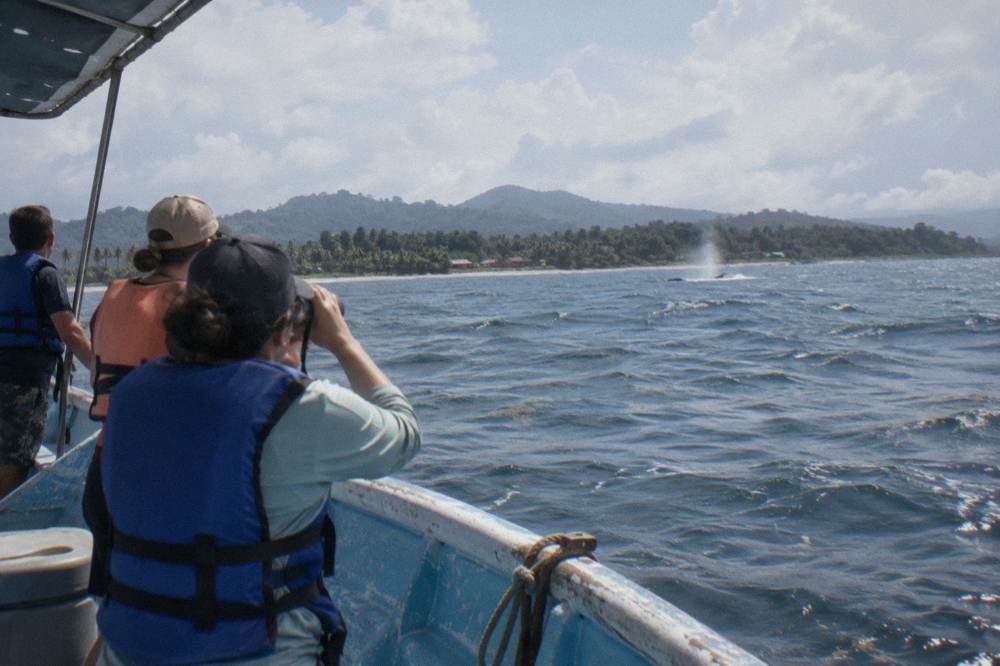
Choose a licensed boat tour, let the crew manage distance and time, keep noise down, and never ask for a closer approach or a swim stop near whales. Bring binoculars for surface behavior, sunscreen for the open Pacific, and patience. The friendliest thing a human can do for a humpback is stay 100 metres away and let the whale decide the rest. Practically, that means checking each listing's inclusions rather than assuming. Among the tours listed here, park entry is included on many whale tours, including the featured drinks-and-snacks trip and the 3 to 4 hour Marino Ballena tour, while the whale and snorkel combos list snorkel gear use and the morning Bahía Ballena tour lists gear but no restroom on board. Pickup is generally not included; most lines either state hotel pickup is not included with a meeting point at departure, or say nothing about pickup, so check the listing for transport. Minimum ages across the whale trips come down to "check the listing."
A responsible-choice summary:
| If you want... | Best fit | Price basis |
|---|---|---|
| The most-reviewed trip | Whale & dolphin boat trip with drinks and snacks, 4.5 from 775 reviews | from $95 per person |
| A small morning boat | Morning Whale and Dolphin Tour, 4.8 from 210 reviews | from $75 per person |
| A wildlife-research angle | Humpback Whales Wildlife Watching, biologist-led | from $129 per person |
| Whales plus a snorkel stop | 3-hour whale and snorkel combo, 4.3 from 136 reviews | from $84.42 per person |
Sighting luck, sea state and the whales' own moods vary, and every operator here cancels or reroutes when conditions demand it. Treat any single trip as one draw from a deck stacked in your favor during peak months, and the question of friendliness resolves itself: the whales were never performing for you, and that is exactly what makes a genuine encounter worth the boat ride.
Common Questions About Humpback Whales And Humans
Are Humpback Whales Friendly To Humans?
Not in the way dogs or performing dolphins are friendly. Humpbacks are wild animals that show strong tolerance of calm, regulated boats, especially in a long-protected breeding ground like Marino Ballena. They ignore people most of the time, tolerate them at legal distances, and occasionally drift close to an idling vessel on their own terms.
Do Humpback Whales Like Being Near Boats?
Some individuals appear indifferent and some curious, but the evidence is tolerance rather than attraction. Costa Rican rules assume whales may approach, and they require crews who have switched the engine off to confirm 50 metres of clearance before restarting. Close passes are the whale's choice, not the boat's.
Is It Safe To Swim Near A Humpback Whale?
Swimming, diving and kayaking near cetaceans are prohibited in Costa Rica under Decreto 32495, and for good reason: an unintended flip of a tail or a surfacing whale can injure a swimmer with no aggression involved. Watch from the boat. Snorkeling in Marino Ballena happens at reef sites, separate from whale watching.
Have Humpback Whales Ever Attacked People?
Humpbacks feed on small prey and show no predatory interest in people. The real risks around them are accidental: collision, tail strikes and boat incidents, which is why distance rules exist.
Why Do Humpback Whales Come So Close To Uvita?
The bay is a breeding and nursing ground. Southern-hemisphere whales arrive July to mid-November, northern-hemisphere whales December to March, and they come to mate, give birth and nurse calves, per the IWC's Costa Rica profile.