Will You See Whales: Sighting Odds And Best Departure Time
Honest odds for seeing whales from Uvita, season by season, hour by hour, and what the boats do when the ocean stays quiet.
Short answer
No operator can promise a whale. One Uvita listing states a 50 percent sighting chance from December to March and 90 percent from July to October, its own figure, not a coast-wide rate. Southern humpbacks peak August to September, northern humpbacks January to February, and most boats depart in the morning.
The single most honest answer about whale watching from Uvita is that nobody can guarantee a sighting, and any operator who does is selling something the ocean has never agreed to. What can be said with confidence comes from three places: the season windows published by the national park system, the migration record held by the International Whaling Commission, and the individual statements operators put on their own listings. The featured drinks-and-snacks boat trip, the most reviewed whale tour listed here at 4.5 from 775 reviews, states plainly on its listing that the season from December to March carries a 50 percent chance of sightings and the season from July to October a 90 percent chance. That is one operator's own number for its own trips, and it is the only quantified sighting figure that exists in the listings.
This guide sets out what the odds actually rest on: which whales are in Marino Ballena in which months, whether the morning or afternoon departure matters, and what happens on the days the sea stays quiet. The morning whale and dolphin tour from Bahía Ballena and the whale and snorkel combo both sell the same basic promise.
What Are The Real Odds Of Seeing Whales In Uvita?
The only hard number on this coast is an operator's own: the featured boat trip, 4.5 from 775 reviews from $95 per person, states a 50 percent sighting chance December to March and 90 percent July to October on its listing. It is not a coast-wide rate. Treat every other percentage you read as marketing, not measurement.
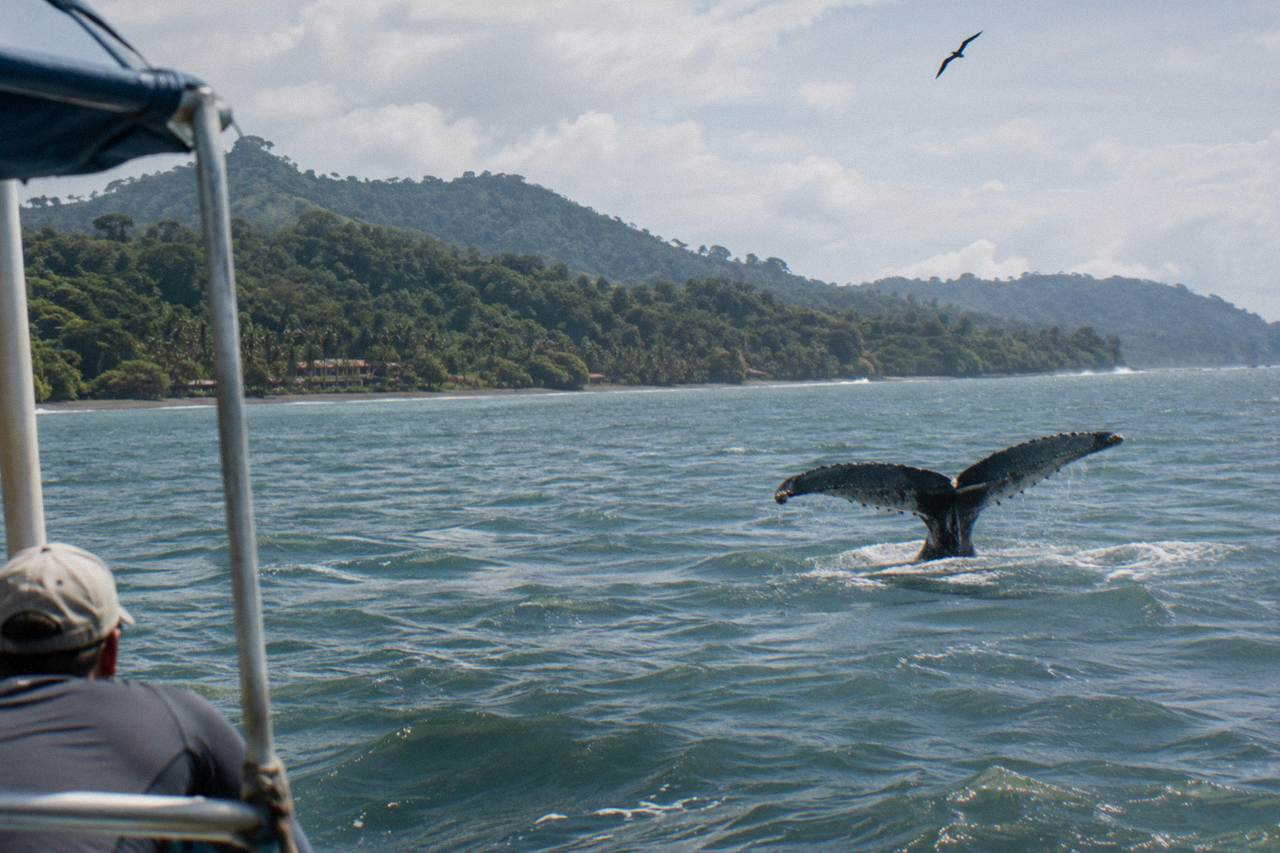
Those two percentages deserve careful reading because they describe two different whale populations doing two different things. The July to October window belongs to southern-hemisphere humpbacks, animals that feed around the Antarctic Peninsula and southern Chile and travel to Central America to breed, give birth and nurse. The December to March window belongs to northern-hemisphere humpbacks that feed off the northwest coast of the United States. The International Whaling Commission's country profile for Costa Rica notes that the southern migration is among the longest recorded of any whale, and that the Pacific coast hosts both populations in a single year.
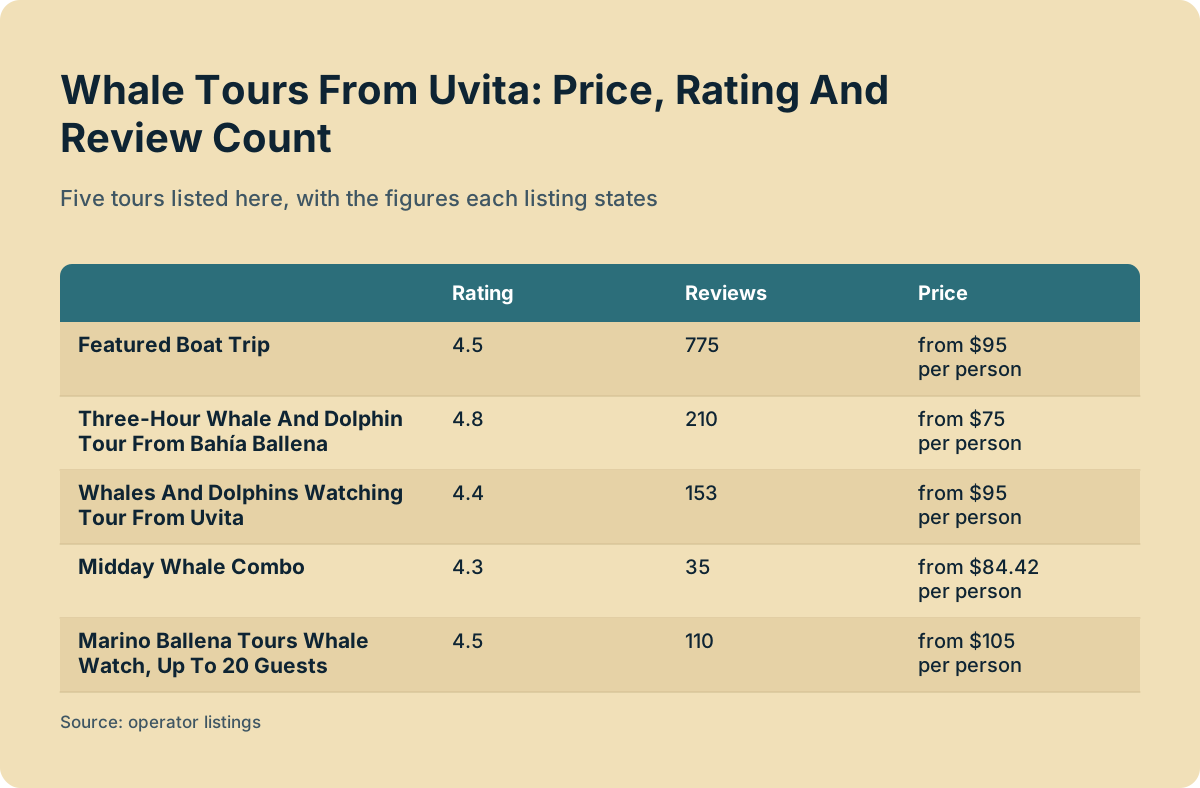
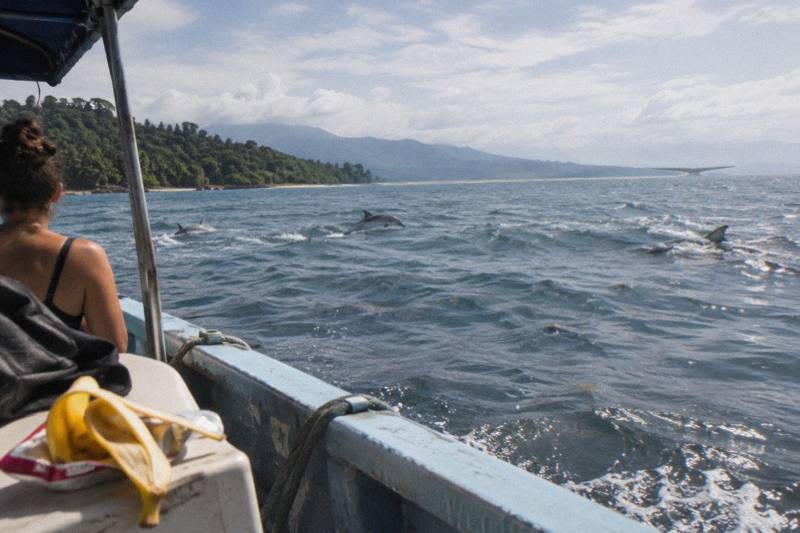
Dolphins change the arithmetic completely. Spotted and bottlenose dolphins are on the park's own species list, and the IWC lists both as commonly seen on Costa Rican tours. The morning whale and dolphin tour from Bahía Ballena, 4.8 from 210 reviews from $75 per person, is built around exactly this pairing, and its cheapest-listing price makes it the low-risk entry point if a whale is a hope rather than a requirement.
Which Months Give You The Best Whale Watching In Marino Ballena?
Southern humpbacks run July to mid November with a peak in August and September for mother-calf pairs; northern humpbacks run December to March or April with a peak in January and February. Mid December to mid April is the dry season per the national park system, and February and March are the lowest-rainfall months on long-term averages, which pairs drier weather with the northern whales.
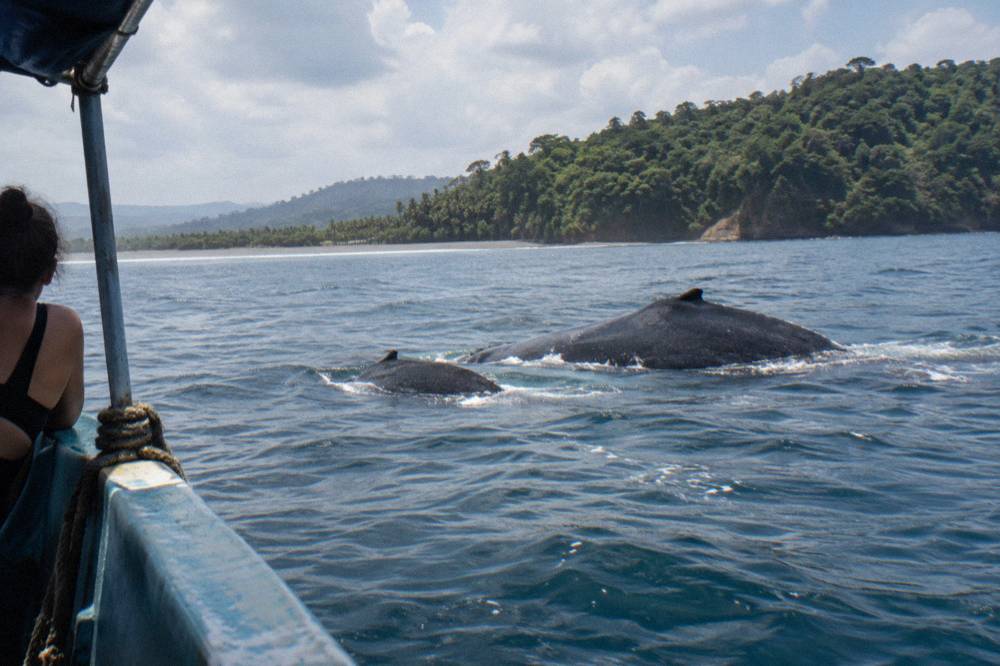
The table below marks season and conditions rather than promising a sighting rate.
| Months | Population in residence | What the season favors | Planning notes |
|---|---|---|---|
| January to February | Northern humpbacks, peak | Northern-season peak per operator pages | Dry season, best snorkel visibility January to April per one operator |
| March to mid April | Northern humpbacks, tail end | End of the northern season | Low rainfall; book the whale and snorkel combo to hedge |
| Mid April to June | Gap between the two seasons | Dolphin-focused trips | Rainy season begins mid April |
| July to mid November | Southern humpbacks | Peak August to September mother-calf pairs | Window of the operator-stated 90 percent figure (July to October) |
| August to September | Southern peak | Mother-calf pairs | Festival held in Bahía Ballena each early September |
| Mid November to December | Gap, then the northern season opens in December | Dolphin-focused trips | Rainy season ends mid December |
Early September deserves its own note. Each year the community of Bahía Ballena holds its whale and dolphin festival in early September, timed to the southern peak, and the IWC handbook records that tour prices drop during the festival and more local boats join in. That is the one moment on the calendar when timing your visit to a date rather than a month changes the cost.
Our guide to Best Time For Whale Watching In Uvita By Month breaks each month's trade-offs in more depth, and the wider migration story sits in our guide to Humpback Whales In Costa Rica: Two Migrations Explained.
Between those two peaks sits a truth most booking pages skip: the gap weeks around late November and early December, and again in late May and June, are when a dolphin-and-splash trip is the realistic product even if the listing still says whale watching. The Whales and Dolphins watching Tour From Uvita, 4.4 from 153 reviews from $95 per person, carries snorkel gear as a listed inclusion, which gives the shoulder-season buyer something to do while the spotters search.
Is Morning Or Afternoon Better For Seeing Whales From Uvita?
Most Uvita whale trips depart in the morning, with one operator asking guests to be at its office by 8:30 a.m. Treat the morning preference as a comfort and scheduling judgment, not a proven odds advantage.
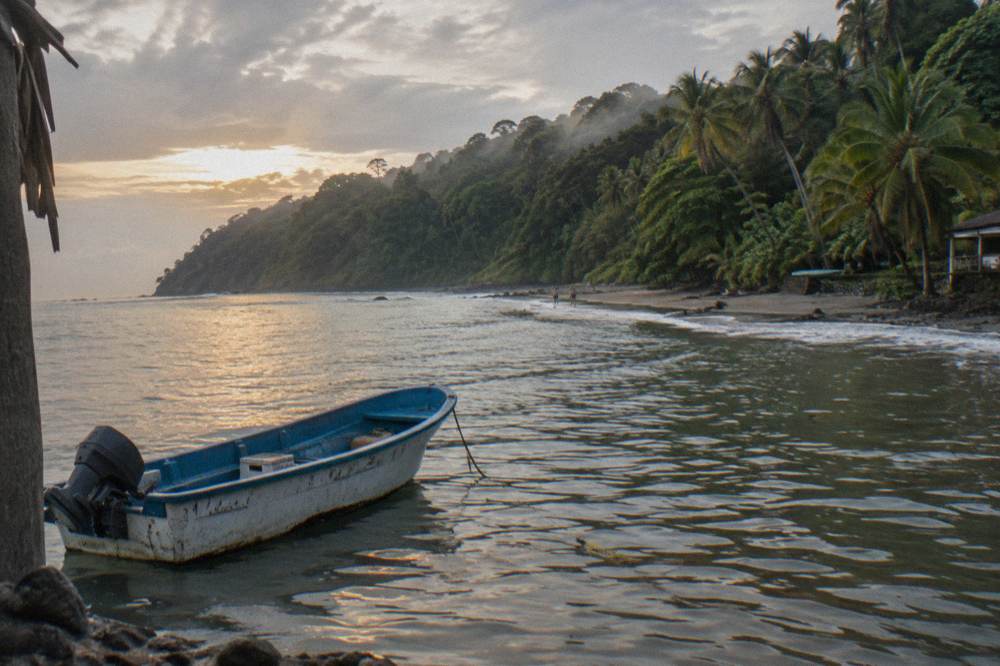
A rougher surface means harder spotting, since a distant blow disappears into chop, and a harder ride for anyone sensitive to motion. Operator pages note morning starts around 8:30, and the own structure reflects the pattern, with the morning whale and dolphin tour from Bahía Ballena explicitly named as a morning product while a separate midday combo covers the other slot.
Afternoon is not a lost cause. The Midday Whale Combo, 4.3 from 35 reviews from $84.42 per person, exists precisely because some travelers cannot make a morning departure, and its three-hour format keeps the outing short.
For families and anyone prone to seasickness, a morning departure on a capped boat, such as the Marino Ballena Tours whale watch with up to 20 guests from $105 per person, keeps the outing short and the deck less crowded.
One detail that surprises first-time buyers: guest reviews describe boats communicating with each other so that once one whale is found, nearby trips can reach it quickly within the rules.
What Time Of Day Do Whale Boats Leave Bahía Ballena?
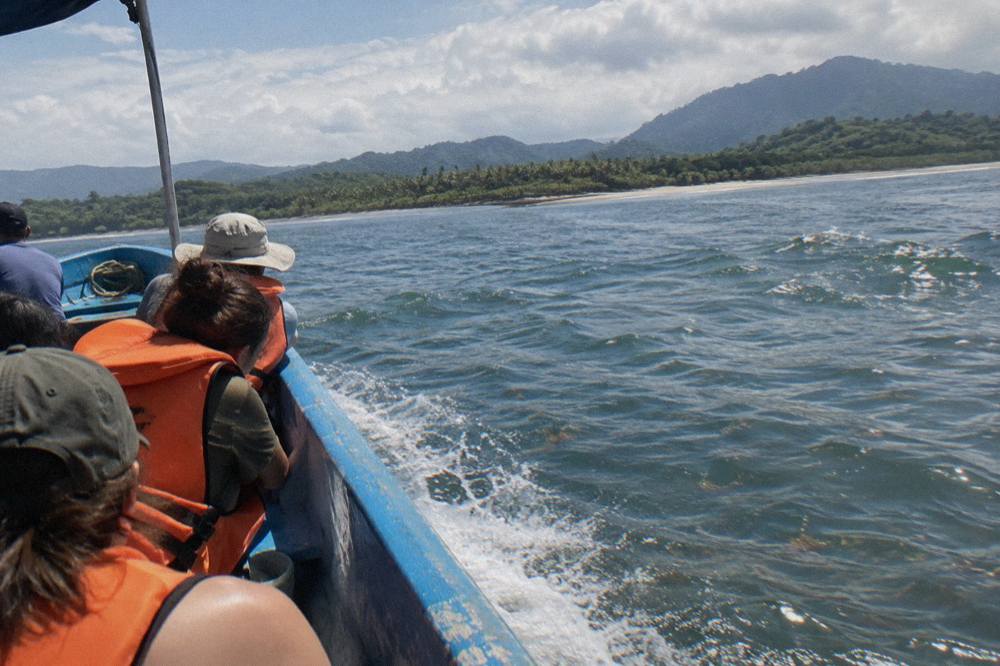
Departures cluster in the morning, with operator pages citing starts around 8:30 a.m., and most trips run 2.5 to 4 hours total. Every tour listed here meets at its stated departure point in Uvita or Bahía Ballena; several boats launch straight off the beach with no dock, so expect to wade to the boat.
That beach launch matters more for timing than it looks. The listings show it explicitly on the Pacific Expeditions whale watch, 4.8 from 183 reviews from $80 per person, whose exclusions state there is no dock and boarding happens directly from the beach. Arriving at the stated meeting time, not the departure time, is the difference between a calm boarding and a wet, rushed one.
| Tour | Highlight | Length | From (per person) | Rating and reviews |
|---|---|---|---|---|
| Morning Whale and Dolphin Tour | Morning tour, Bahía Ballena | 2.5 to 3 hours | $75 | ★ 4.8 · 210 reviews |
| Drinks and Snacks Included | Featured shared boat, Uvita | 3.5 hours | $95 | ★ 4.5 · 775 reviews |
| Snorkel Gear, Accessible Boat | Whales and dolphins, Uvita | 3 to 4 hours | $95 | ★ 4.4 · 153 reviews |
| Ballena Infocenter, 3 to 4 Hours | Coffee station, Whale's Rock visit | 3 to 4 hours | $92 | ★ 4.6 · 107 reviews |
| Marino Ballena Tours Whale Watch | Up to 20 guests | 3 hours | $105 | ★ 4.5 · 110 reviews |
The table shows the pattern: three hours is the standard Uvita whale product, and the outliers on either end trade either brevity for price or extra time for snorkel stops and coastal sights. The Ballena Infocenter trip, 4.6 from 107 reviews, uses its longer window for Whale's Rock and Ventanas Cave in addition to the whale search, which is a sensible hedge in the quieter months.
What Happens If No Whales Appear On Your Uvita Tour?
No tour listed here promises a whale; the standard outcomes are dolphins, turtles, swimming or snorkel time, and the coastal scenery of Marino Ballena. Free cancellation before the trip is listed on most of these products, so your real protection is the cancel window, not a sighting guarantee.
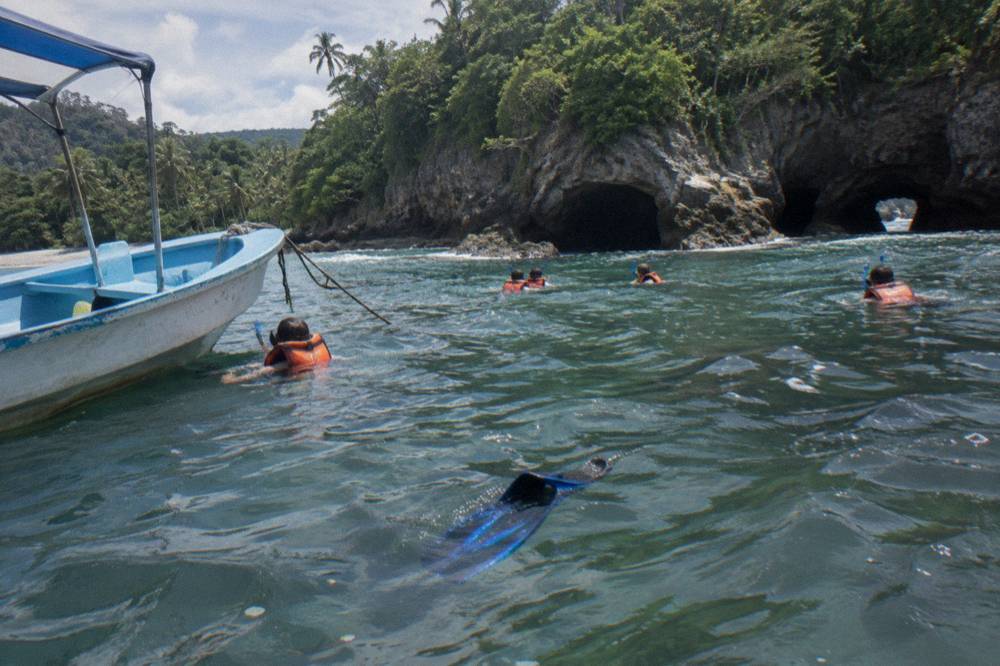
Read the inclusions before you book and the disappointment risk becomes manageable. The combo tours exist for exactly this scenario: the three-hour Combo Tour Marino Ballena National Park, 4.3 from 136 reviews from $84.42 per person, pairs the whale search with snorkel equipment, fruit and the park ticket, so the trip has a second act if the horizon stays empty. Guest reviews from that listing describe guides coordinating with other boats to reach a spotted whale quickly, which is how a quiet hour turns into a close encounter in minutes.
The law shapes what a no-whale day looks like, too. Under Decreto Ejecutivo 32495, boats must stay at least 100 metres from whales and 50 metres from dolphins with the engine on, may spend at most 30 minutes with any group, and at most two boats may surround the same animals at once. A guide who keeps distance is complying with the rules, not missing a better view. Swimming near cetaceans is prohibited outright, so the swim stops happen away from any animals.
| If no whales appear | What the listing actually offers | Products built for it |
|---|---|---|
| Dolphin encounters | Spotted and bottlenose dolphins, named by the park | Most whale and dolphin tours |
| Snorkel or swim time | Listed on combos and the 3 to 4 hour trips, dry season only on some | Combo tours, Ballena Infocenter trip |
| Coastal sightseeing | Whale's Rock and Ventanas Cave visits | Ballena Infocenter, 3 to 4 hours |
| Research and education | Informative talk and a research donation | Humpback and Wildlife Focus, from $129 |
The Humpback and Wildlife Watching trip from $129 per person is the most interesting hedge: its inclusions list a biologist expedition leader, an informative talk about whale watching and a donation to a humpback whale research project, so the product has value that does not depend on a blow on the horizon. Its 4.2 rating rests on 10 reviews, a small pool worth knowing about, but the format fills the quiet hours differently than any other listing here.
For the greatest cushion of all, book in the peak and book the morning. A September morning on the Ballena Infocenter 3 to 4 hour trip stacks the southern peak, a morning departure and a coffee station before departure in one product. One guest review from that trip describes watching a mother and baby humpback for at least 20 minutes, plus sea turtles and a swim in the sea on the same outing.
Do Weather And Sea State Change Your Sighting Odds In Bahía Ballena?
Yes: chop makes distant whales harder to spot, and operators cancel or reroute for sea state. Marino Ballena's dry season runs mid December to mid April per the park system, February and March are the lowest-rainfall months on long-term averages, and water temperature holds 78 to 84 F year-round per one dive operator.
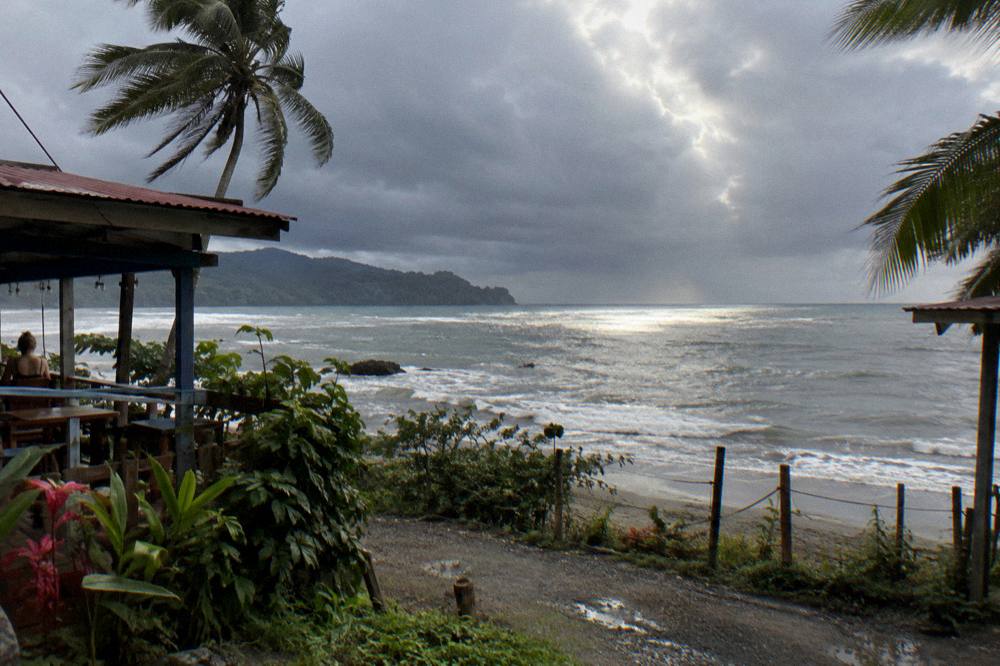
The interaction of season and weather is the part of planning people get wrong. Peak southern whales in August and September fall inside the rainy season. Dry-season visitors in January to April get drier weather but the lower operator-stated northern-season odds. There is no month that maximizes both; there is only the trade you choose.
| Condition | Effect on whale watching | When it peaks |
|---|---|---|
| Chop on the surface | Blows vanish into the surface noise | Any day |
| Rainy season | More rain on boat days | Mid April to mid December |
| Dry season | Drier weather; best snorkel visibility January to April per one operator | Mid December to mid April |
| Rough sea state | Operators cancel or reroute; free cancellation listings protect you | Any month |
Cancellation policy is your weather insurance, and the lineup makes it easy to buy. The morning whale and dolphin tour, the whale and snorkel combos and most shared boats list free cancellation, so a stormy forecast days ahead costs you nothing to walk away from. The Whale Watching Tour listing with 2 reviews, from $80 per person, also lists free cancellation, and the Spacious Boat trip from $86 per person does the same; small review pools, identical exit terms.
If the sea state cancels your trip entirely, Uvita itself has shore-side fallbacks. The Whale Tail sandbar is viewable from the beach at low tide, though park sectors charge an entry fee, and the details sit in our guide to Marino Ballena National Park Entrance Fee And Tours. For weather planning across the year, our guide to Uvita Weather By Month For Boat Days is the companion page.
The park's own climate description, dry from mid December to mid April and rainy from mid April to mid December, comes from the SINAC page for Marino Ballena National Park, and the migration windows come from the IWC whale watching handbook profile for Costa Rica. The full conduct rules, including the two-boat limit and 4-knot speed cap in observation areas, are in Decreto Ejecutivo 32495.
Pulling it together: pick the month for the whales you want, the morning for the sea, and the listing whose inclusions cover a quiet day, then hold the slot with a free-cancellation booking. That sequence, more than any single choice, is what maximizes the chance that the answer to "will you see whales" is yes. For the full field of options, the compared whale watching tours from Uvita lays out every listing side by side, and the morning tour itself has its own page at the Morning Whale and Dolphin Tour from Bahía Ballena, where current dates and availability are shown on the live listing.
Common Questions About Whale Sighting Odds In Uvita
Will You See Whales In Uvita?
Nobody can promise it. The most reviewed boat trip listed here states its own odds as 50 percent from December to March and 90 percent from July to October, an operator figure, not a coast-wide rate. Booking inside the August to September southern peak, on a morning departure, gives you the strongest realistic chance.
When Is The Best Time Of Year To See Whales In Costa Rica?
Southern-hemisphere humpbacks are present July to mid November, peaking August to September with mother-calf pairs. Northern-hemisphere humpbacks run December to March or April, peaking January to February. Together they give Marino Ballena whales roughly eight to ten months of the year.
Is Morning Or Afternoon Better For Whale Watching From Uvita?
Most trips run in the morning, with operator pages citing starts around 8:30 a.m. No study proves a morning sighting advantage, but the early slot leaves the afternoon free, and a midday combo exists if mornings do not work for you.
What Happens If No Whales Appear On Your Tour?
No listing here promises a whale. The realistic outcomes are dolphins, turtles, snorkel or swim time where listed, and coastal stops such as Whale's Rock. Free cancellation before departure is listed on most trips, which is your actual protection.
Do Whales Come Close To The Boats In Marino Ballena?
Boats must keep at least 100 metres from whales and 50 metres from dolphins under Costa Rican rules, with at most 30 minutes per group and at most two boats around the same animals. Whales sometimes approach on their own, but the boat may not chase, and swimming near cetaceans is prohibited.
Does Rain Ruin A Whale Watching Day In Uvita?
Usually not on its own. The rainy season runs mid April to mid December per the park system. Rough sea state, not rain itself, is what triggers reroutes or cancellations, and those calls sit with the operator.