Osa Peninsula Travel Guide From The Uvita Side
The Osa region holds rainforest, islands and marine parks, and Uvita sits at its northern gateway with the boats, park access and day trips that make the region workable in a week.
Short answer
Uvita is the practical northern gateway to the Osa region: Marino Ballena National Park borders the town, Caño Island lies a 50 to 80 minute boat ride offshore, and whale watching runs from $75 per person. Caño Island snorkel tours cost from $150 per person, park entry is $6.78 per foreign adult at Marino Ballena, and the humpback seasons run July to mid-November and December to April.
What Is The Osa Peninsula And Where Does Uvita Fit?
The Osa region is the far south of Costa Rica's Pacific coast, a stretch of rainforest, gulfs and islands that includes Marino Ballena National Park, Caño Island and the forested peninsula itself, and Uvita is the northern gateway: the small town where Route 34 meets the sea, where the whale-watching boats launch, and where the region's most bookable day trips begin. The Osa is often pictured as remote and hard to reach, and parts of it are. But the northern edge, the Bahía Ballena bay and the national park that sits inside it, is a fully serviced base. Uvita Whale Watching covers this gateway's boat fleet in depth.
The International Whaling Commission's handbook on Costa Rica notes that whale watching in the country originally developed in the Pacific communities of the south, naming Uvita and Drake Bay among the places where it started. That history still shapes the region: the same waters that made Uvita a whale town also carry the boats out to Caño Island and along the coast of the national park. The town itself sits on Route 34, the coastal highway, roughly 222 km from San Jose by one map reading, with the drive quoted between 3 hours and a little over 4 hours depending on the source. From the north, Dominical to Uvita is about 18 km and 15 minutes.
What the Osa offers from Uvita is concentration. Within a single week based in one town you can watch humpback whales inside a national park, snorkel a protected biological reserve 50 to 80 minutes offshore, walk a whale-tail sandbar at low tide, and use the town as a launch point for drives further down the coast. This guide lays out what is actually bookable, what the parks charge, how the seasons work, and how the pieces fit together.
Which Osa Boat Trips Can You Actually Book From Uvita?
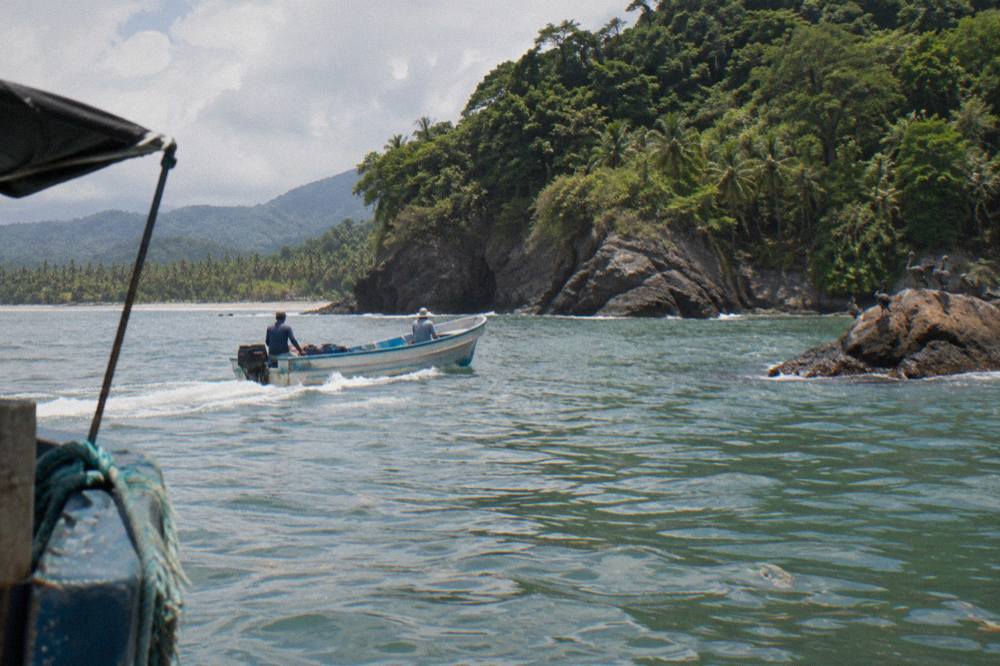
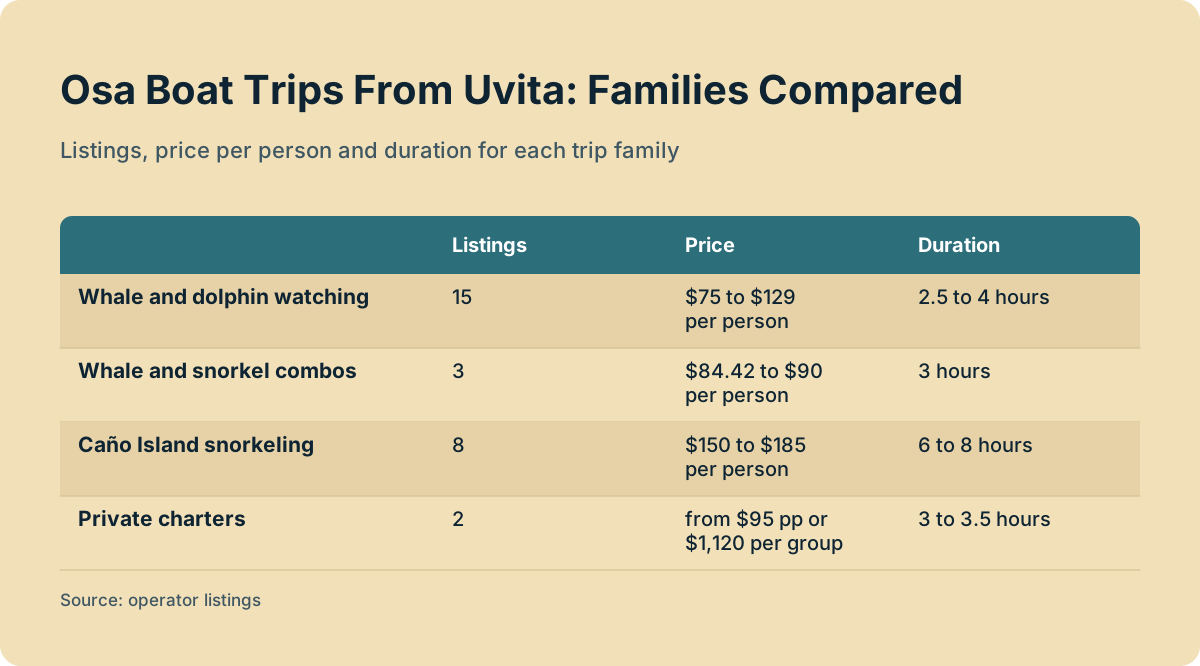
Three families of boat trips run from Uvita: whale and dolphin watching inside Marino Ballena National Park (2.5 to 4 hours, from $75 to $129 per person), Caño Island snorkel days (6 to 8 hours, from $150 to $185 per person), and private charters (from $95 per person or $1,120 per group). Twenty-eight listings sit listed here, and they break down into those families cleanly. The whale and dolphin fleet is the largest, with 15 shared-boat listings. The Caño Island fleet is eight listings. Between them sit three whale-and-snorkel combos and two private options.
The whale-watching side of the lineup runs from $75 per person for the morning Bahía Ballena tour (4.8 from 210 reviews) up to $129 for the humpback-and-wildlife research trip with a biologist expedition leader. The most reviewed boat listed here is the drinks-and-snacks trip at 4.5 from 775 reviews, from $95 per person, which carries up to 80 guests and includes the Marino Ballena entry fee, fruit, pastries, juice and coffee. At the quieter end, the Marino Ballena Tours whale watch takes up to 20 guests, 4.5 from 110 reviews, from $105. If cost is the driver, the lowest-priced listing here is the $75 morning trip, and a fuller cost breakdown lives in our guide to How Much Does Whale Watching Cost In Uvita.
The table shows the range across the trip families.
| Trip family | Listings | Price range | Duration | Best-reviewed listing |
|---|---|---|---|---|
| Whale and dolphin watching | 15 | $75 to $129 per person | 2.5 to 4 hours | Morning Whale and Dolphin Tour, 4.8 from 210 reviews |
| Whale and snorkel combos | 3 | $84.42 to $90 per person | 3 hours | Ballena Aventura Whale Combo, 4.5 from 17 reviews |
| Caño Island snorkeling | 8 | $150 to $185 per person | 6 to 8 hours | 8-Hour Caño Snorkel, 4.9 from 92 reviews |
| Private charters | 2 | from $95 pp or $1,120 per group | 3 to 3.5 hours | Charter 3.8 from 4 reviews; cruise not yet rated |
Three things decide which family fits. Time: a whale trip costs half a day, a Caño day costs the whole of it. Water: the Caño trips, two of the combos and several whale listings include snorkel gear. Budget: the gap between a $75 whale watch and a $150 Caño day is real, roughly doubling the per-person spend. Our guide to Whale Watching And Snorkeling Combo From Uvita splits the difference, pairing whale watching with a swim stop in three hours.
Is Caño Island The Osa's Best Day Trip From Uvita?
Caño Island is the Osa's flagship full-day trip from Uvita: a protected biological reserve about 50 to 80 minutes offshore by boat, snorkel-only (landing on the island is not permitted), with foreign adult entry at $16.95, boat days from $150 per person. The island is run by the SINAC park system as a biological reserve, and the official page is specific about how it works: visits require a prior reservation, hours are 8:00 a.m. to 3:00 p.m., access is by boat from the communities of Bahia Drake, Bahia Uvita and Sierpe, only the marine part is open for diving and snorkel, and there is no drinking water on the island. Each listing states what is included. To see how the shorter Marino Ballena boat trips stack up against a full day on the water, our guide to Uvita Snorkeling Tours And Reefs also breaks down how visibility shifts through the year.
The top-rated Caño listing from Uvita is The Wonders of Caño Island Snorkeling Tour, 4.9 from 92 reviews, from $150 per person for an 8-hour day that includes lunch (the listing describes a typical Costa Rican dish such as chicken and rice with fresh fruit), snorkel equipment, safety gear, bottled water and free on-site parking. Its exclusions are honest ones to plan around: no onboard bathroom, and specialty meals can carry an extra fee if ordered 48 hours ahead. The most reviewed is the pastries-and-lunch Caño trip at 4.7 from 135 reviews, from $160 per person, which also includes the park ticket and showers.
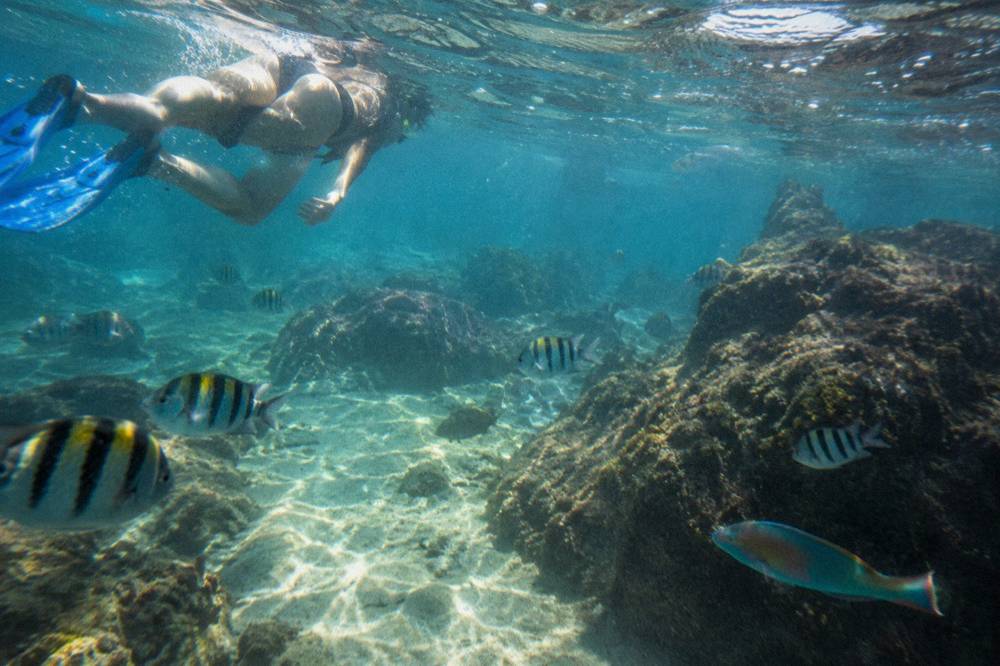
A word on expectations, because the Osa sells itself on wildlife. Caño Island is a snorkel destination, not a whale trip: the listings do not promise whales, and the reserve's own attractions page names diving, snorkel, dolphin and whale watching as the marine activities in the wider area, without guaranteeing any of them. One operator source puts Marino Ballena bay visibility at its best between January and April. Water temperature in these waters runs 78 to 84 degrees Fahrenheit year-round, per one diving operator's reading.
The Caño fleet from Uvita at a glance, prices and review counts from the listed tours:
| Tour | Price | Duration | Rating | Meals |
|---|---|---|---|---|
| 8-Hour Caño Snorkel, Meal | $150 pp | 8 hours | 4.9, 92 reviews | Lunch |
| Check-In Pastries, Picnic Lunch | $160 pp | 8 hours | 4.7, 135 reviews | Lunch |
| Full Day Caño Snorkel | $160 pp | Full day | 4.7, 98 reviews | Lunch |
| 6 to 7 Hour Caño Snorkel | $170 pp | 6 to 7 hours | 4.4, 45 reviews | Lunch |
| Picnic Lunch, Dietary Options | $185 pp | 8 hours | 4.7, 8 reviews | Lunch |
| 6-Hour Reserve Snorkel, Meal | $175 pp | 6 hours | 4.4, 5 reviews | Lunch |
Dietary needs matter here more than on a whale trip: the picnic-lunch listing is the one that names vegan, vegetarian and gluten-free options on its line, and the pastries-and-lunch trip asks about allergies at booking. For a deeper comparison against the closer, cheaper bay alternative, see our guide to Caño Island Vs Marino Ballena: Which Boat Day To Pick, and the full option set is laid out in our guide to Caño Island Snorkeling From Uvita: Trip Options And Conditions.
What Does Marino Ballena National Park Protect In The Osa?
Marino Ballena National Park is the Osa's northern protected core: 5,160 marine hectares and 171 land hectares along a 15 km strip of coast, created as Costa Rica's first park specifically for marine resources, with four entrance sectors, humpback whales and resident dolphins as its flagship species, and a foreign adult entry fee of $6.78 including tax. The numbers on the official SINAC page are worth knowing before you plan anything. The fee scale, the sector hours and the tide rule for the famous whale-tail sandbar all come from that page: card payment only, tickets valid for the day, Uvita sector open 7:00 a.m. to 5:00 p.m., Colonia to 6:00 p.m., Ballena and Pinuela 8:00 a.m. to 4:00 p.m., and access to the whale tail only at low tide, roughly the six hours of low tide.
Most whale tours from Uvita fold the park entry into the ticket price: each listing states whether the entrance fee is included, and on the big shared boats it generally is. The drinks-and-snacks trip lists the Marino Ballena entry fee among its inclusions, as does the fast-boat adventure trip and the fruit-and-swim trip. Where a listing does not include it, you pay the $6.78 foreign adult fee at the park post yourself, by card. The full fee picture, including children's rates and what the tours cover, is in our guide to Marino Ballena National Park Entrance Fee And Tours.
| Fee or rule | Figure | Source note |
|---|---|---|
| Foreign adult entry | $6.78, tax included | SINAC official page |
| Foreign child entry | $5.65 | SINAC official page |
| Payment | Card only, no cash | SINAC official page |
| Sector hours | Uvita 7 to 5, Colonia 7 to 6, Ballena and Pinuela 8 to 4 | SINAC official page |
| Whale tail access | Low tide only, check tide tables | SINAC official page |
| Park size | 5,160 marine ha, 171 land ha, 15 km of coast | SINAC official page |
Beyond the whales, the park's species list names spotted and bottlenose dolphins, manta rays, hammerhead sharks and parrotfish, and its activity list covers snorkel, diving, surfing and kayaking alongside wildlife watching. The dolphins are the year-round backbone of the fleet: local wildlife sources describe them as present in every month, while the humpbacks arrive on the two seasonal migrations covered below. For how that plays out on the water, see our guide to Dolphin Watching From Uvita: Spotted And Bottlenose Pods.
The 3-to-4-hour Watching Whales and Dolphins trip (4.6 from 107 reviews, from $92, up to 20 guests) is the listing that best matches the park's own scope: its inclusions name Whale's Rock and/or Ventanas Cave as stops, a coffee station before departure, and swimming or snorkel during the dry season only.
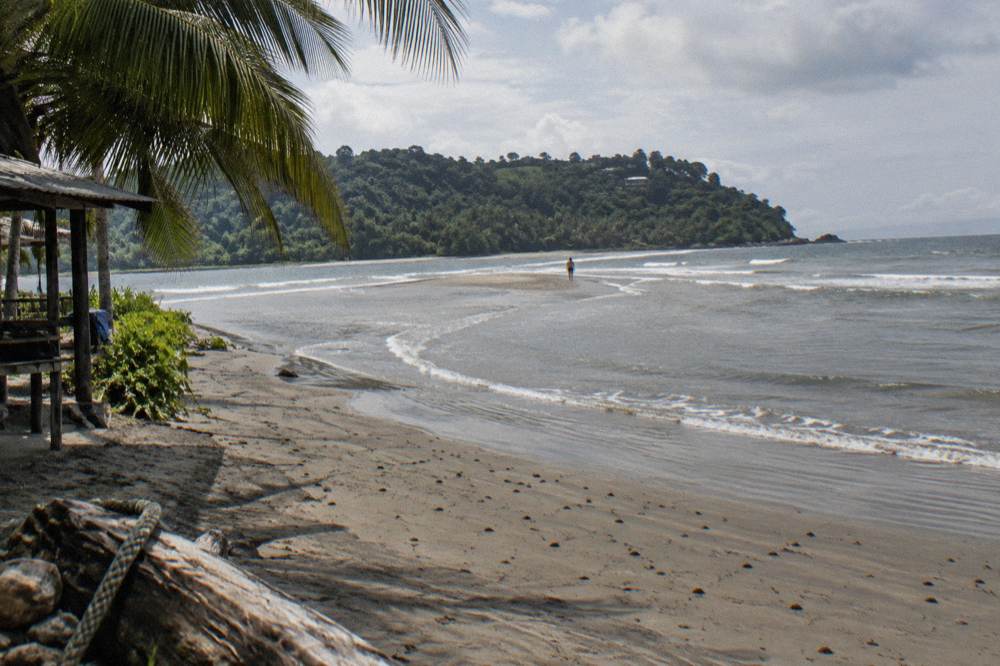
How Do You Get Around The Osa Region From Uvita?
Uvita is the Osa's road hub: Route 34 passes through town, San Jose is about 222 km and 3.5 to 4 hours away by one map reading, Dominical is 18 km north, Ojochal sits a similar short hop south, and Caño Island is reached only by boat from Uvita, Drake Bay or Sierpe, never by road. There is no road to Caño Island at all, which is why every Caño listing here is a boat day. Going the other way, the peninsula proper, Puerto Jimenez and the far south are a long drive: published routes put those journeys at roughly 375 to 460 km total from the San Jose area, so treat any southern itinerary beyond the Ojochal stretch as needing its own research.
The practical distances from Uvita:
| Route | Distance | Time | Reading |
|---|---|---|---|
| San Jose to Uvita (Route 34) | about 222 km | about 3 h 28 min | One map reading; other sources 3 h to 4 h |
| Dominical to Uvita | about 18 km | about 15 min | Coastal highway reading |
| Ojochal to Dominical via Uvita | 37 km | 41 min | Route reading |
| Quepos to Uvita | 40 to 62 km | 30 to 49 min | Sources vary |
| Uvita to Caño Island | by boat only | 50 to 80 min | One operator source |
Tracopa buses run from San Jose on the coastal route; check schedules directly with the operator and confirm the route stops in Uvita, rather than trusting any single fare figure. One caution from the road network: the public works ministry opened provisional passage and started works on a bridge over the Rio Coronado on Route 34 in the Osa zone, so check conditions before southern drives. For the drive down from the capital in detail, see our guide to San Jose To Uvita: Getting There For A Whale Trip, and for local logistics our guide to Car Rental In Uvita Costa Rica: Do You Need One weighs whether you need wheels at all.
Staying put is genuinely viable. A week in Uvita without a car works because the boats, the park sectors and the town's supermarkets and banks sit within a short radius, and the two flagship day trips, Marino Ballena and Caño Island, both depart from the beach in town. Several listings note that boats launch directly from the sand with no dock and guests wade to the boat, so pack footwear you can get wet. Where to base yourself is covered in where to stay in Uvita.
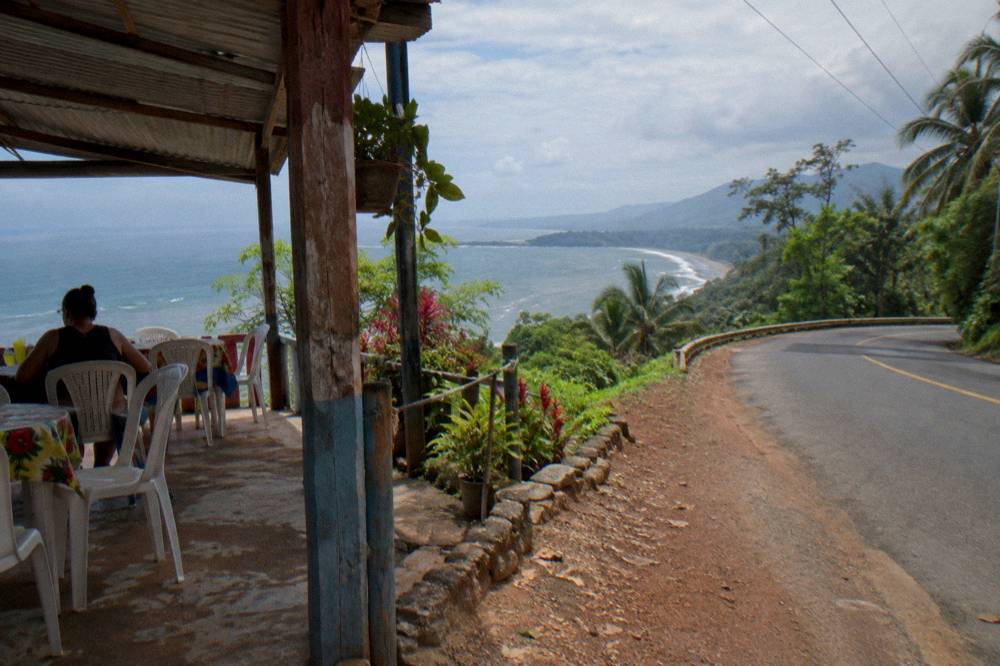
When Is The Best Season To Visit The Osa From Uvita?
The Osa's whale calendar is double-loaded: southern-hemisphere humpbacks visit from July to mid-November with the strongest mother-and-calf period in August and September, northern-hemisphere humpbacks visit from December to April peaking January and February, and the driest, calmest months for boats and snorkeling are January through March. That double season is the region's signature fact. The IWC handbook describes Costa Rica's Pacific waters hosting two humpback populations from opposite hemispheres each year, with the southern visitors making what it calls the longest recorded migration.
For a boat-focused trip, season and weather point the same way. SINAC defines the dry season as mid-December to mid-April, and the lowest-rainfall months in long-term averages are February and March. Snorkel visibility in the Marino Ballena bay is best January to April according to one local operator, which is also the window two listings limit their snorkel stops to. The rainy season, mid-April to mid-December, brings the southern whales: it rains more, seas are less predictable, and the trade is a better chance of mothers with calves. One listing, the most reviewed boat listed here, states its own sighting figures: a 50 percent chance December to March and 90 percent July to October. That is that operator's claim on its own listing, not a rate for the coast.
| Period | What the Osa gives you | Trade-offs |
|---|---|---|
| January to March | Northern humpbacks peak, driest months, best bay visibility | Southern whales absent |
| April to mid-December | Rainy season, lush coast | More rain, less predictable seas |
| July to mid-November | Southern humpbacks, mothers and calves August to September | Wet-season seas; tours run anyway |
| Early September | Whale and dolphin festival weekend in Bahía Ballena | More boats on the water; discounts aimed at nationals |
September deserves its own note. Each year in early September the Bahía Ballena community holds its whale and dolphin festival, timed to the southern-season peak: the 16th edition ran 4 to 6 September 2026 with concerts, a beach race, a shared cebiche event and tours at special prices for Costa Ricans, and the 15th ran the same weekend in 2025. The full monthly picture, including what the festival weekend means for booking ahead, is in our guide to Best Time For Whale Watching In Uvita By Month.
Whatever the month, the $75 morning Bahía Ballena tour (4.8 from 210 reviews) is the lowest-priced departure, and one guest review on that listing describes a small morning tour where the boat voted between more whale time and snorkeling the whale tail.
What Rules Protect Whales And Dolphins In Osa Waters?
Costa Rica regulates whale watching across the Osa's waters under Decreto Ejecutivo 32495: boats must keep at least 100 m from whales and 50 m from dolphins with the engine on (30 m engine off), at most two boats may watch one group, viewing time is capped at 30 minutes, and swimming with, touching or feeding cetaceans is prohibited. Those are the national rules, published in the official register, and they apply to every boat in these waters. The decree adds approach geometry: vessels come in slowly from behind at an angle, travel parallel to the animals, and hold a maximum of 4 knots inside observation areas. If a whale shows signs of disturbance, boats leave slowly.
For a visitor, the rules translate into what a good trip looks like. A boat that keeps its distance and moves on after half an hour is following the law, not being timid. A captain who will not come between a mother and calf is doing exactly what the regulation requires. You can read the full breakdown, including what the rules mean for choosing an operator, in our guide to Whale Watching Boat Rules And Ethics In Costa Rica.
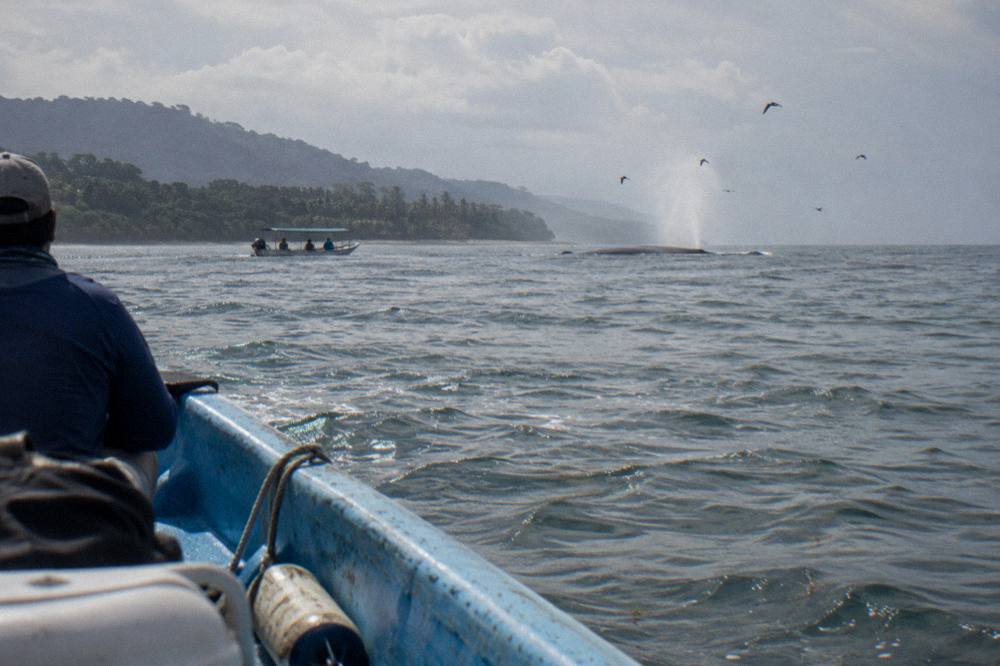
What Should An Osa Week From Uvita Look Like?
A workable Osa week from Uvita runs: two whale-watching mornings on different boats (one big shared boat, one small-boat trip), one full Caño Island day mid-week, the whale tail sandbar and a park beach on a low-tide afternoon, and the remaining days for the coast south toward Ojochal or north to Dominical. Book the whale trips around the weather window, which in the rainy season means trusting the operator's judgment on sea state, since boats do cancel or reschedule for conditions.
Budgeting the week, using listed prices and SINAC fees: a $75 morning whale trip, a $95 drinks-and-snacks trip and a $150 Caño day are the core boat spends, itemized per person, plus the $6.78 park entry on top only if a chosen trip leaves it out. Swapping the second whale trip for a $84.42 combo trims it; adding a private charter at from $1,120 per group for the boat, which includes lunch and drinks on its line, pushes the marine budget up sharply but buys the whole vessel. The cheapest and the priciest listings here sit in the same bay, which is the Osa-from-Uvita story in one sentence: the full range, one beach.
Sample split of a week:
| Day | Activity | Cost basis |
|---|---|---|
| 1 | Arrive, town, tide-table check for the whale tail | Park entry $6.78 foreign adult |
| 2 | Morning whale watch, big shared boat | from $95 pp |
| 3 | Caño Island full day | from $150 pp |
| 4 | Rest day, Playa Pinuela or Ballena sector beach | Park entry $6.78 foreign adult |
| 5 | Small-boat whale and dolphin trip or combo | $75 to $90 pp |
| 6 | Drive south to Ojochal or north to Dominical | 15 to 40 min each way |
| 7 | Whale tail at low tide, depart | Tide-dependent; park entry $6.78 |
Common Questions About The Osa Peninsula
Is Uvita Part Of The Osa Peninsula?
Uvita sits at the northern edge of the wider Osa region rather than on the peninsula proper. It is the practical gateway: Marino Ballena National Park borders the town, Caño Island boats leave from its beach, and Route 34 connects it south toward the peninsula and north toward Dominical and San Jose.
Can You Visit Caño Island From Uvita?
Yes. Caño Island is reached only by boat, with the ride from Uvita taking about 50 to 80 minutes according to one local operator. Tours listed here run from $150 to $185 per person for 6 to 8 hour days including gear and lunch, and the reserve permits snorkeling and diving in the marine area only, with no landing, entry at $16.95 per foreign adult, and visits between 8:00 a.m. and 3:00 p.m.
Which Is Better, Caño Island Or Marino Ballena?
They are different products. Caño is a full-day offshore snorkel trip (6 to 8 hours, from $150); Marino Ballena is the in-bay national park where the whale-watching fleet operates on half-day trips (2.5 to 4 hours, from $75). The comparison is laid out in our guide to Caño Island Vs Marino Ballena: Which Boat Day To Pick.
How Many Days Do You Need For The Osa From Uvita?
A week covers it comfortably: two whale-watching mornings on different styles of boat, one Caño Island day, the whale tail sandbar at low tide, and day drives to Dominical or Ojochal. Four days is the minimum for one whale trip, one Caño day and the sandbar.
When Can You See Whales In The Osa From Uvita?
Two humpback seasons follow each other: southern-hemisphere whales from July to mid-November, strongest for mothers and calves in August and September, and northern-hemisphere whales from December to April, peaking January and February. No operator can promise a sighting on any given day; boats run in both seasons and dolphins are present year-round.
Do You Need A Car In Uvita For The Osa?
Not for the boat trips: the whale fleet and the Caño boats depart from the beach in town, and several listings include parking for those who drive to the meeting point. A car helps for exploring the coast toward Dominical and Ojochal and for the drive from San Jose, about 222 km on Route 34.