Is Uvita Worth Visiting In Costa Rica?
An honest look at whether Uvita is worth the trip: whale seasons, park fees, boat tour prices, snorkeling, costs and how to decide.
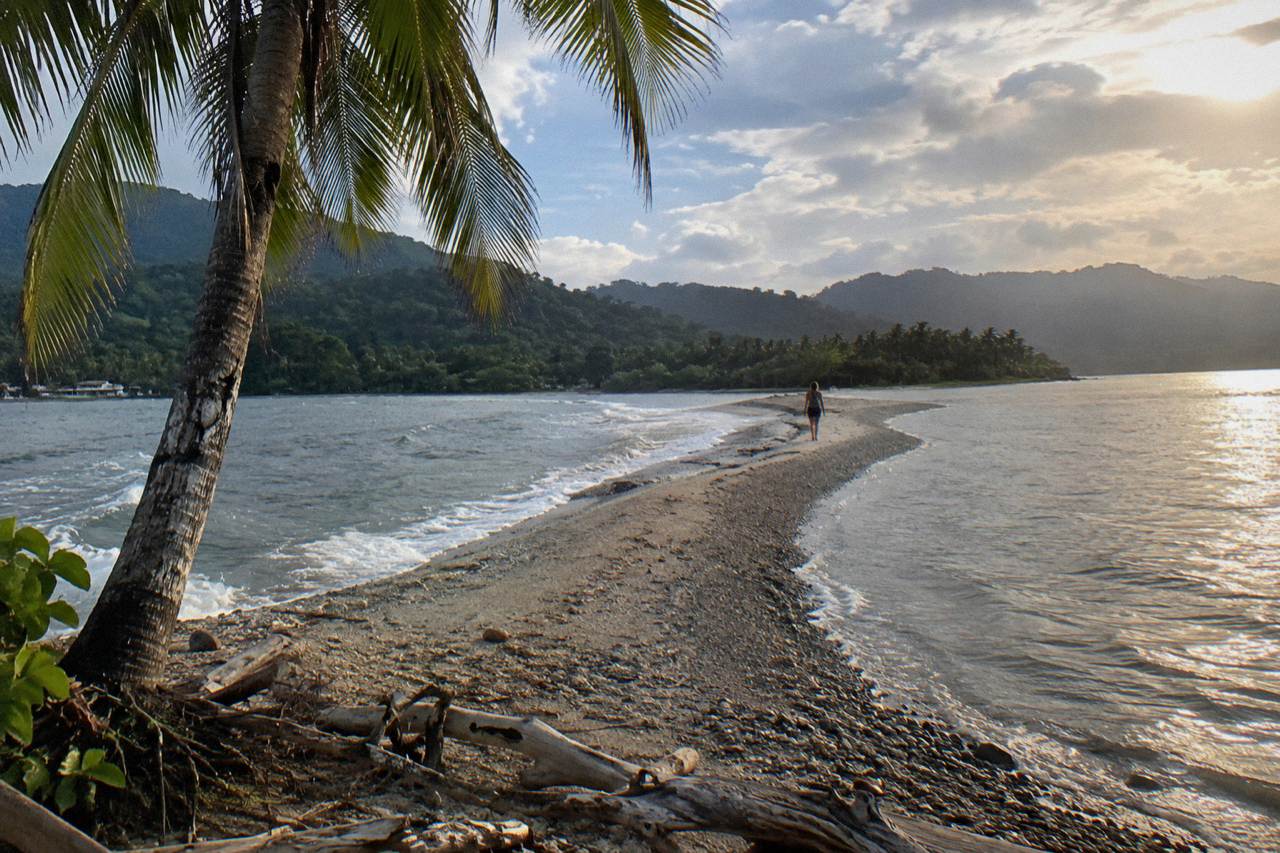
Uvita sits where the Costanera Sur highway meets the sea in the canton of Osa, a strip of supermarkets, ATMs and tour offices backed by forested ridges. The draw is not the town itself but what lies offshore: Marino Ballena National Park, the first protected area in Costa Rica created specifically for marine resources, with 5,160 marine hectares and a 15 km coastal strip from the mouth of the Rio Morete to Punta Pinuela, per the park's official SINAC page. The park also prints a claim, attributed to National Geographic, that the area ranks eighth in the world for cetacean watching, and while that ranking is SINAC's own wording rather than an independent verdict, the underlying fact is not in dispute: two separate humpback whale populations, one from each hemisphere, pass through these waters in different halves of the year. Catching those whales in person comes down to timing and budget, and our answer to Is Uvita Costa Rica Expensive? covers park fees, tour prices and daily spending.
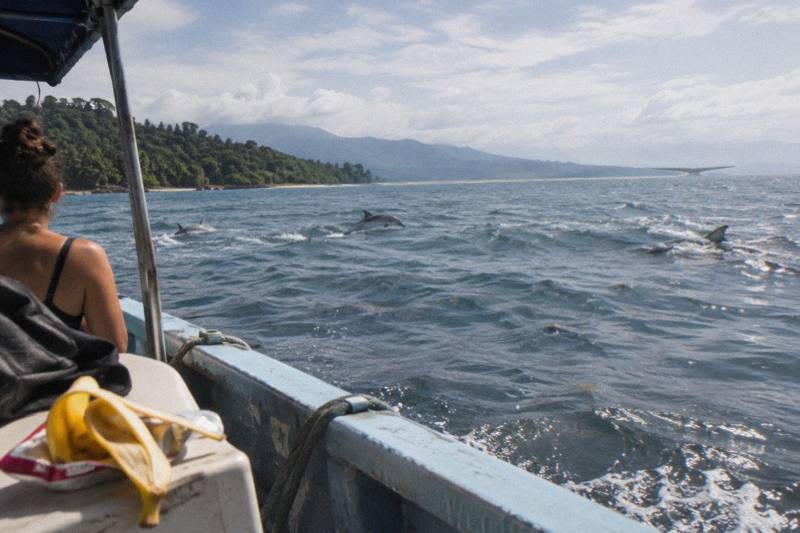
For most travelers whose Costa Rica list includes wildlife and coast, yes: Uvita earns at least two nights, because Marino Ballena National Park offers a whale-shaped sandbar you can walk at low tide, reef snorkeling near the tombolo, and boat trips to humpbacks and dolphins from $75 per person. It is not a resort strip or a nightlife town, and travelers chasing that will be disappointed. If you're weighing whether to base yourself in the neighboring village instead, our answer to Is Bahía Ballena Worth Visiting? walks through the whale seasons, park fees, and what the bay offers once the boats head out.
The case for Uvita is the density of ocean experiences within a few minutes of a town you can cross in ten minutes. Whale watching is the anchor: the shared boat trips listed here run 2.5 to 4 hours, from $75 to $129 per person, and the most reviewed listing, the drinks-and-snacks boat trip with 4.5 from 775 reviews at from $95, carries park entry, fruit, juice and coffee in the price. Alongside it sit whale-and-snorkel combos from $84.42, full-day Caño Island snorkel trips from $150, and private options from $95 per person or $1,120 per group. A town of this size supporting twenty-plus bookable marine products tells you where its value lies.
The case against is equally honest. There is no hospital in town, only clinics, per local guides. Beaches inside park sectors charge entry, and the whale tail sandbar is walkable only around low tide. If your route is short and your priorities are volcano hikes or cloud forest, Uvita is a detour measured in hours, not minutes.
Three listings frame the decision neatly: the Pacific Expeditions whale watch at 4.8 from 183 reviews and from $80 per person, the expert-guides trip at 4.7 from 26 reviews and from $96, and the Marino Ballena Tours whale watch at 4.5 from 110 reviews and from $105 with a cap of 20 guests. If none of those tempts you onto a boat, the rest of this article will help you decide whether the shore-side attractions alone justify the trip.
What Makes Bahía Ballena And Marino Ballena National Park Special?
The park's signature is the Cola de Ballena, a whale tail-shaped tombolo you can walk to only during low tide, roughly within the six-hour low-water window the park's official page describes. Around it sit four sectors, Uvita, Colonia, Ballena and Pinuela, all open daily, with coral reef along the left side of the tombolo and at Isla Ballena where snorkeling is possible. Non-resident adult entry costs USD 6.78, card payment only.
That fee, printed on the SINAC page with tax included, buys a ticket valid for the whole day of the visit. Children who are non-residents pay USD 5.65. Hours differ by sector: Uvita 7:00 to 17:00, Colonia 7:00 to 18:00, Ballena and Pinuela 8:00 to 16:00, every day of the year. The park bans single-use plastic, pets, touching, feeding or harassing animals, and taking stones or plants. Check a tide table before you set out. SINAC's own guidance says access to the Cola de Ballena happens only at low tide; arriving mid-tide means watching the tail from shore.
For the full picture on fees, hours and which tours bundle entry into their price, our guide to Marino Ballena National Park Entrance Fee And Tours breaks it down listing by listing. Most whale trips listed here, fourteen of the eighteen shared whale and combo listings, fold the park entry fee into the tour price, which matters when comparing a $75 trip against an $80 one.
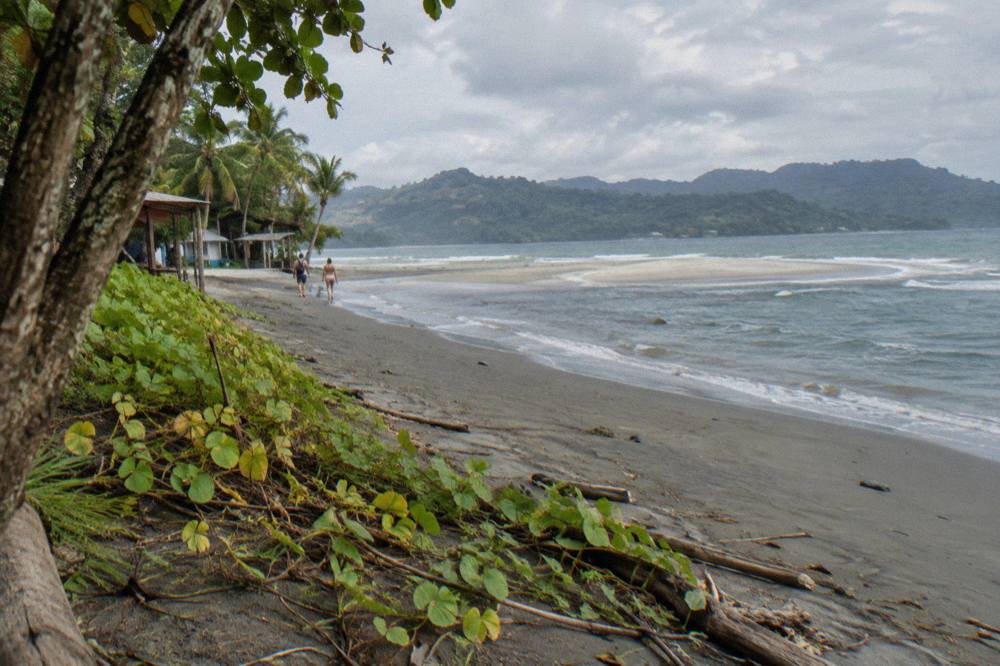
Beyond the tombolo, the park names snorkeling, surfing, kayaking, mangrove walks and diving among its official activities, and its fauna list includes humpback whales, spotted dolphins, bottlenose dolphins, manta rays, hammerhead sharks and parrotfish. The International Whaling Commission's handbook notes whale watching in Costa Rica originally developed in exactly these southern coastal communities, Dominical, Uvita, Drake Bay, Caño Island and Golfo Dulce. In other words, Uvita is not a town that added whale tours to a resort scene; whale watching developed here early, and it is largely why the town appears on itineraries at all.
When Is The Best Time To Visit Uvita?
Southern-hemisphere humpbacks visit July to mid-November, peaking August to September for mother-calf pairs, while northern-hemisphere humpbacks arrive December to March or April, peaking January to February. With two populations in separate windows, Uvita has whales for roughly eight to nine months of the year, and dry season runs mid-December to mid-April per SINAC.
That dual-hemisphere pattern is the single most underappreciated fact about this coast. Marino Ballena gets two seasons, because humpbacks that feed off the northwest United States arrive in the northern winter, and humpbacks from the Antarctic Peninsula and southern Chile, described in the IWC handbook as making the longest recorded migration, arrive from July. February and March carry the lowest long-term rainfall averages, and one operator source, Costa Rica Divers, reports Marino Ballena snorkel visibility is best January to April, with water temperature 78 to 84 F year-round.
| Period | What to expect | Notes |
|---|---|---|
| Mid-December to mid-April | Dry season, northern humpbacks, best snorkel visibility | Peak months January to February per operator pages |
| May to mid-July | Rainy season starts, southern humpbacks arrive from July | Greener hills |
| August to September | Peak mother-calf window for southern humpbacks | Whale festival held each early September |
| October to mid-November | Southern season tapers | Rainy season continues |
| Late November to mid-December | Transition between seasons | Gap before the northern season |
One operator states on its own listing that sighting chances run 50 percent December to March and 90 percent July to October; that is a single operator's claim, not a coast-wide rate. Treat any percentage a booking page shows as marketing, and weigh the season windows instead. The month-by-month detail, including rainfall and crowd patterns, is covered in full in our guide to Best Time For Whale Watching In Uvita By Month.
Each early September the community of Bahía Ballena holds its whale and dolphin festival; the sixteenth edition ran 4 to 6 September 2026, with boat tours at special prices for nationals, concerts, a running race, surf classes and an artisan fair, per local reports. The IWC handbook notes the festival also brings out boat owners who do not normally run commercial tours. It is a genuine reason to time a visit.
What Does It Cost To Visit Uvita?
A realistic day budget is park entry at USD 6.78 per non-resident adult plus a whale boat trip from $75 to $129 per person, so a couple's boat seats alone run from $150 to $258 before park entry, food and lodging. The lowest-priced boat listing here is the morning whale and dolphin tour at from $75.
The price spread is worth reading closely, because the cheapest and the priciest shared trips are closer than they look. The morning whale and dolphin tour, at 4.8 from 210 reviews and from $75, includes snacks, bottled water, snorkel equipment and free parking. The Pacific Expeditions whale watch, at 4.8 from 183 reviews and from $80, includes park entry, tropical fruit, a guide and swimming time when conditions allow, but no snorkeling and no restroom on board. The most reviewed trip of all, at 4.5 from 775 reviews and from $95, includes park entry and a spread of drinks and snacks but excludes snorkel gear and hotel pickup, and carries up to 80 guests.
| Tour | Highlight | Price | Rating | Duration | Group cap |
|---|---|---|---|---|---|
| Morning Whale and Dolphin Tour | Bahía Ballena morning trip | from $75 per person | ★ 4.8 · 210 reviews | 2.5 to 3 hours | Not stated |
| Pacific Expeditions Whale Watch | Park whale watch | from $80 per person | ★ 4.8 · 183 reviews | 3 hours | Not stated |
| 3-Hour Whale Combo | Whale and snorkel combo | from $84.42 per person | ★ 4.3 · 136 reviews | 3 hours | Not stated |
| Drinks and Snacks Included | Most reviewed trip | from $95 per person | ★ 4.5 · 775 reviews | 3.5 hours | up to 80 guests |
| Marino Ballena Tours Whale Watch | Up to 20 guests | from $105 per person | ★ 4.5 · 110 reviews | 3 hours | up to 20 guests |
| Private Cruise, Meal Included | Private charter | from $1,120 per group | no reviews yet | 3.5 hours | private group |
Above the shared boats sit the specialists: a humpback research-focused trip at from $129 with a biologist expedition leader and a donation to a humpback research project, and the private cruise at from $1,120 per group with lunch, drinks and snorkeling. Bus travelers should check Tracopa directly for current fares rather than trusting older figures, and drivers should budget for the parking fee of $8 cash that one listing flags at its office. For a fuller cost breakdown including how inclusions change the real per-person math, see our guide to How Much Does Whale Watching Cost In Uvita.
Can You Swim And Snorkel Around Uvita?
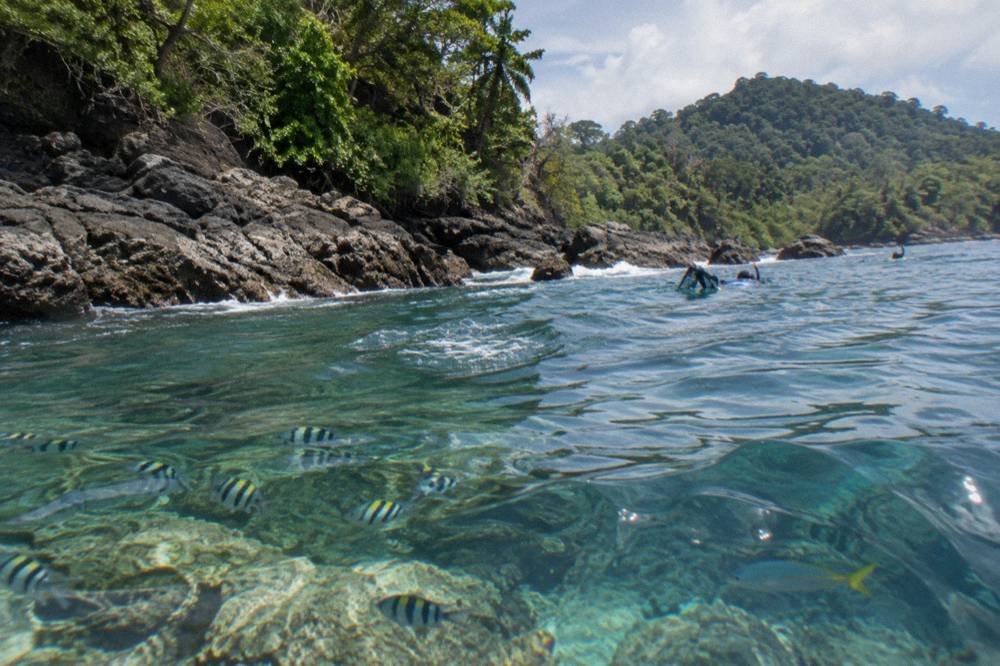
Yes, with conditions attached: Marino Ballena has coral reef along the left of the tombolo and at Isla Ballena where the park itself names snorkeling as an activity, water runs 78 to 84 F year-round according to one local operator, and visibility is best January to April. Lifeguards are not something to assume on these beaches, so treat swimming as an at-your-own-judgment activity and check conditions on the day.
The whale-and-snorkel combos make the easiest introduction: the 3-hour combo at from $84.42, 4.3 from 136 reviews, pairs whale and dolphin watching with a snorkel stop and includes gear, park entry for the day, fruit and snacks. A guest review of that trip describes guides with excellent communication between boats, reaching a spotted whale quickly. The morning tour's guest review reports a vote among passengers, choosing to snorkel at the Whale Tail over more whale searching, with a guide named Raymond praised for making it fun.
For a bigger day, Caño Island lies a boat ride of roughly 50 to 80 minutes from Uvita according to one local operator, inside a biological reserve where SINAC permits the marine part only, no landing, visiting hours 8:00 to 15:00, and prior reservation is required. Foreign adults pay USD 16.95 entry, children 2 to 12 pay USD 5.65, and there is no drinking water on the island. The Caño trips run 6 to 8 hours and from $150 to $185 per person, all with lunch included; the pastries-and-lunch listing at from $160 holds 4.7 from 135 reviews. One caution: Caño trips are snorkel days, not whale trips, and no listing promises whales on them, so do not book one expecting the same experience as the 3-hour whale boats. The differences are laid out in Caño Island versus Marino Ballena as a day trip. If the boat-only rules around Caño Island leave you curious about wilder stretches of this coast, our answer to Is The Osa Peninsula Worth It? weighs it against staying based in Uvita.
South of town, the sea caves at Playa Ventanas near Ojochal are tide-dependent and safe to explore only at low tide; a rising tide can trap visitors, and there is no guarantee of entry even on a tour. Snorkel gear comes with several whale listings but not all: the drinks-and-snacks boat explicitly excludes it, so check each listing's inclusion list rather than assuming.
How Do You Get To Uvita?
Uvita is about 222 km from San Jose via Route 34, the Costanera Sur, roughly 3 hours 28 minutes of driving by one route estimate, with other sources ranging 3 to 4 hours; Dominical is only about 18 km and 15 minutes north, so Uvita pairs naturally with a southern Pacific route. Tracopa runs buses from San Jose on the Costanera route, and flights serve Quepos to the north.
Treat the drive figures as planning ranges rather than promises; road works on Route 34 bridges, including a provisional passage opened at the Rio Coronado in June 2026, can add time. Bus travelers must make sure the service runs via Costanera and stops in Uvita, a detail the park's own page flags, and should check Tracopa for fares and times rather than relying on third-party figures. Domestic flights land at Quepos, still a drive north.
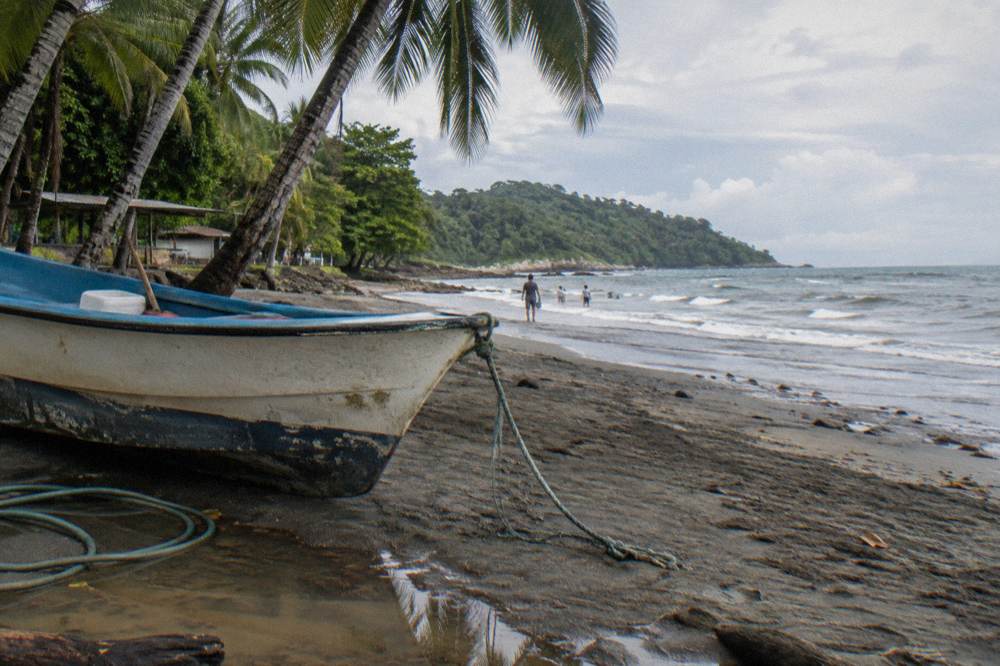
Once in town, the practical base is simple: supermarkets, BCR and Banco Nacional ATMs, and clinics cluster near the highway, and there is no hospital, so travel insurance matters for remote-coast itineraries. Several Uvita boats launch directly from the sand with no dock, and guests wade to the boat, a fact one listing states outright. Wear shorts and sandals you do not mind getting wet, and check the listing for where to meet, since hotel pickup is explicitly not included on some trips and simply not stated on others. The logistics, including where staying near the departure points helps, are covered in our guide to Where To Stay In Uvita For Whale Watching.
Is Uvita Better As A Base Or A Day Trip?
Uvita works as a day trip from Dominical, about 15 minutes away, or Ojochal, but it rewards two to three nights as a base: the tide window rules the whale tail, boats run morning departures, Caño Island is a full day, and rushing means choosing between the sandbar and the sea. Travelers fitting one experience into a Pacific route should pick the boat trip and give it a full morning.
The tide constraint is the deciding factor. The whale tail is walkable only around low tide, within roughly the six-hour low-water window SINAC describes, and that window rarely cooperates with a drive-in, see-everything, drive-out schedule. Add a morning whale departure, with one operator asking guests to arrive by 8:30, and the case for an overnight stay makes itself. Two nights let you do the boat one morning, the tombolo at the next suitable tide, and still leave room for a combo snorkel stop or a drive to Dominical, which is known for its surf scene and lies just 15 minutes north.
For travelers building a wider southern loop, our guide to Things To Do In Uvita Costa Rica Beyond The Boat covers the shore-side options, and our guide to Whale Watching Uvita Vs Manuel Antonio Vs Drake Bay helps if you are choosing just one coastal base. The short version: Manuel Antonio offers a classic national park and more infrastructure, Drake Bay is wilder and farther, and Uvita splits the difference with the marine park on its doorstep and easy highway access.
What Do Guests Say About The Boat Tours?
Reviews across the whale listings are consistently strong where the review pools are large: 4.8 from 210 reviews on the morning tour, 4.8 from 183 on the Pacific Expeditions watch, 4.5 from 775 on the most reviewed trip, and 4.6 from 107 on the 3-to-4-hour infocenter tour. Recurring themes are knowledgeable guides, mother-and-calf sightings and a swim stop, with mother-calf encounters mentioned in several verbatim guest reviews.
One guest, Rosemarie, described observing a mother and baby humpback for at least 20 minutes, plus sea turtles and a swim in the sea, calling it a great trip overall and praising the guide and captain by name. Another, Tessa, reported a mother whale and her calf, then a bull with dolphins at a second spot, with a guide who told the group a lot about the whales. Julie_B's review of the morning tour notes it was an excellent small tour with a choice between more whale searching and snorkeling at the Whale Tail. These are individual experiences, not guarantees; whales are wild and boats reroute for sea state.
The way boats behave around whales is regulated, which is worth knowing when you read reviews praising close encounters. Decreto Ejecutivo 32495 sets a 100 m minimum approach to whales and 50 m to dolphins with the engine on, 30 m engine off, at most two boats around a group, 4 knots maximum in observation areas, 30 minutes maximum with a group, and no swimming near cetaceans. Trips that run closer than that are breaking the rules, not offering better value; the ethics and the full conduct framework are explained in Costa Rica's whale watching rules and ethics.
So, is it worth it? The honest verdict: Uvita rewards travelers who want ocean wildlife as a headline rather than a sideshow, who can work around a tide table, and who will spend $75 to $129 for the experience that defines the place. It underdelivers for travelers who want nightlife, resort amenities or guaranteed sightings. If a 3-hour boat trip with a 4.8 rating, park entry and tropical fruit sounds like a good morning, the town has done its job.
Common Questions About Visiting Uvita
Is Uvita Worth Visiting In Costa Rica?
For most wildlife- and coast-focused travelers, yes. Marino Ballena National Park gives a small town an outsized attraction list: a tide-dependent whale tail sandbar, reef snorkeling, and whale and dolphin boats from $75 per person with ratings up to 4.8. It is not a resort or nightlife destination, so match it to your priorities.
How Many Days Do You Need In Uvita?
Two to three nights is the sweet spot. One morning for a whale boat trip, one low-tide window for the whale tail sandbar, and a spare half day for a combo snorkel stop or a drive to Dominical, 15 minutes north. A single rushed day usually means choosing between the boat and the sandbar.
Can You See Whales From Shore In Uvita?
Sometimes, in season, with binoculars and luck, but the park's design is for boat viewing: the whale watching trips run 2.5 to 4 hours and cover the offshore areas where humpbacks gather. Book a boat if whales are the priority.
Is The Whale Tail Sandbar Always Accessible?
No. SINAC states access to the Cola de Ballena is only during low tide, within roughly the six-hour low-water window. Check a tide table for the day of your visit; arriving at mid or high tide means seeing the tail from the beach only.
Do Uvita Whale Tours Include The Park Entrance Fee?
Most do: fourteen of the eighteen shared whale and combo listings here include Marino Ballena entry in the price, including the Pacific Expeditions watch at from $80 and the drinks-and-snacks trip at from $95. A few do not, so read each listing's inclusions before comparing prices.
Is Uvita Good For Budget Travelers?
Reasonably. The lowest-priced boat listing is from $75 per person, park entry is USD 6.78 for non-resident adults, and the bus from San Jose on the Costanera route keeps transport costs low, though you should check Tracopa for current fares. Lodging and food are the main variables.