Is Uvita Costa Rica Expensive?
An honest cost breakdown of visiting Uvita and Bahía Ballena: park fees, tour prices from the listed tours, food, transport and where the money actually goes.
No, Uvita is moderately priced by Costa Rica standards. Shared whale watching starts at $75 per person, most 3-hour whale trips run $80 to $105, a full Caño Island snorkel day runs $150 to $185, and Marino Ballena park entry is $6.78 for a non-resident adult per SINAC. Lodging and food span a wide range, but the core experiences are not luxury-priced.
That answer surprises people who assume everything on the southern Pacific coast costs like Manuel Antonio or a beach resort. Marino Ballena National Park, a protected area of 5,160 marine hectares and 171 land hectares, is what SINAC describes as the first park in the country created specifically for marine resources.
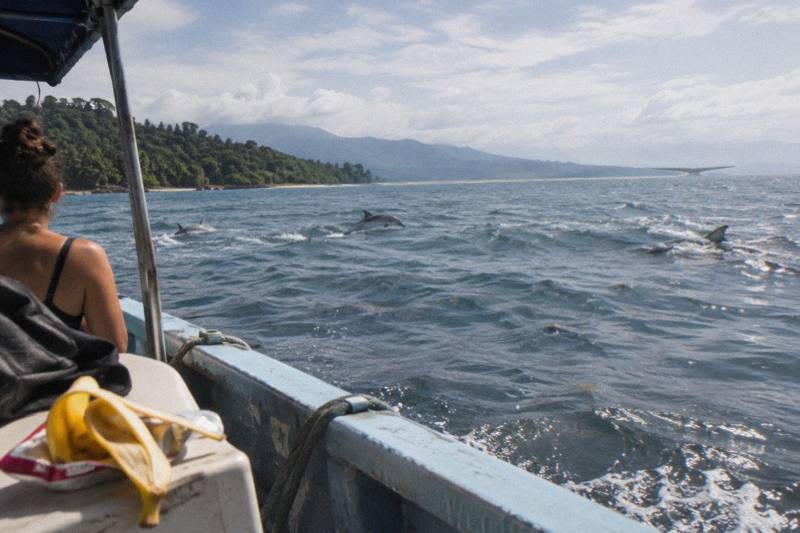
The honest comparison is between what things cost here and what the same things cost elsewhere on the coast. A shared 3-hour whale watching trip from Uvita starts at $75 per person listed here, with the most reviewed option, the whale and dolphin boat trip with drinks and snacks, at $95 per person for 3.5 hours with a 4.5 rating across 775 reviews. That buys a half-day on a coast where two humpback populations from opposite hemispheres both come to breed. If you're still weighing whether the town justifies the trip, our answer to Is Uvita Worth Visiting In Costa Rica? covers whale seasons, park fees, and snorkeling costs to help you decide.
This article breaks the question into the pieces a real trip involves: tours, the park fee, food, lodging, transport and the small extras that quietly add up.
How Much Do Whale Watching Tours In Uvita Cost?
Shared whale watching tours from Uvita cost between $75 and $129 per person, with most trips clustered between $80 and $105 for about 3 hours on the water. The lowest-priced listing here is $75, the most reviewed is $95, and the premium wildlife-focused trip with a biologist expedition leader is $129. Private options run from $95 per person for a private charter up to $1,120 per group for a private cruise with lunch.
The pricing bands are tight enough that the choice is less about money and more about what the ticket includes. The morning whale and dolphin tour from Bahía Ballena, rated 4.8 from 210 reviews, runs from $75 per person for 2.5 to 3 hours and includes snacks, bottled water, snorkel equipment and free on-site parking. Twenty dollars more buys the most reviewed trip here, the drinks-and-snacks boat from Uvita: $95 per person, 3.5 hours, up to 80 guests, with park entry, pastries, bananas, juice, coffee, tropical fruit and parking all listed as included. The deeper dive into that comparison lives in our guide to How Much Does Whale Watching Cost In Uvita.
Above those sit two genuine premium tiers. The humpback and wildlife watching trip at $129 per person includes a donation to a humpback whale research project, a biologist expedition leader and travel insurance, which is a different product from the standard shared boat. And the private Marino Ballena boat cruise runs from $1,120 per group for 3.5 hours with lunch, drinks and park entry included, which is a different budget conversation entirely. The trade-offs between those formats are laid out in our guide to Private Vs Group Whale Watching Boat: Which To Book.
| Tour | Price from | Duration | Rating | Park entry included |
|---|---|---|---|---|
| Morning Whale and Dolphin Tour | $75 per person | 2.5 to 3 hours | ★ 4.8 · 210 reviews | Not stated on the listing |
| Pacific Expeditions Whale Watch | $80 per person | 3 hours | ★ 4.8 · 183 reviews | Yes |
| Drinks and Snacks Included | $95 per person | 3.5 hours | ★ 4.5 · 775 reviews | Yes |
| Snorkel Gear, Accessible Boat | $95 per person | 3 to 4 hours | ★ 4.4 · 153 reviews | Yes |
| Marino Ballena Tours Whale Watch | $105 per person | 3 hours | ★ 4.5 · 110 reviews | Yes |
| Humpback and Wildlife Focus | $129 per person | 3 hours | ★ 4.2 · 10 reviews | Not stated on the listing |
One line worth reading closely on any listing is what the price bundles. Park entry alone is $6.78 for a non-resident adult, so a ticket that includes it is quietly discounting the total day. Several listings also include parking, fruit and water. A guest review on the morning tour, Julie_B, captures the value angle: "This was an excellent small tour. We saw whales and dolphins. We were given the choice of finding more whales or snorkeling at the Whale’s Tail."
Is Marino Ballena National Park Entry Expensive For What You Get?
No. SINAC's published entry fee is $6.78 per non-resident adult and $5.65 per non-resident child, tax included, card payment only, and the ticket is valid for the whole day of the visit. That is a full day of beach and reef access inside a national park.
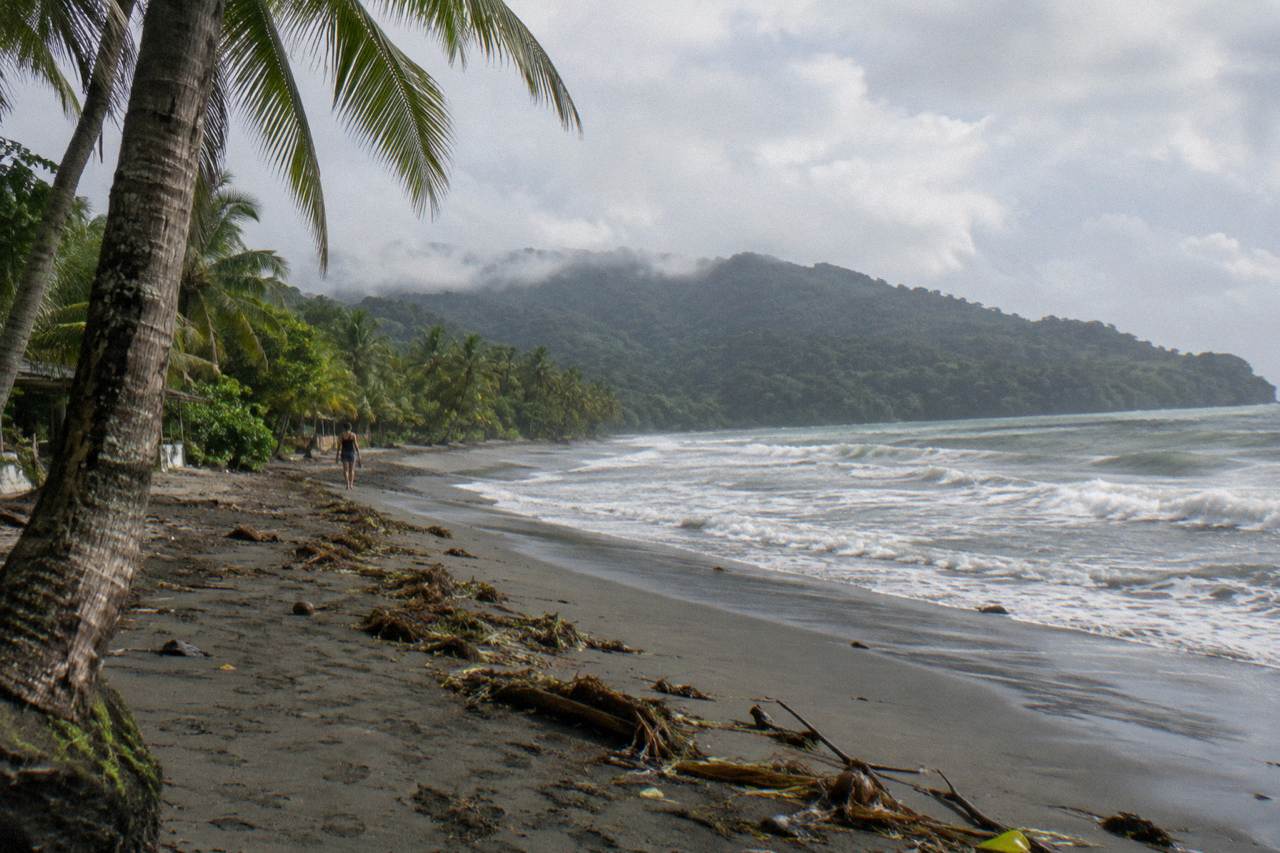
The park is the anchor of the whole region, and its fee schedule is set by the national system rather than by local operators, so it does not swing with tourist demand. SINAC lists four sectors, Uvita, Colonia, Ballena and Pinuela, open every day of the year with hours that vary by sector. The famous Whale Tail sandbar, a tombolo, is accessible only at low tide, and SINAC advises checking the tide table before visiting, which is a planning detail rather than a cost.
There are two honest caveats. First, payment is by credit or debit card only, no cash, which catches visitors who arrive with only notes after a day at markets. Second, the fee covers land-side access to the beaches and trails; the marine tours are separate products booked with operators, and whether a tour ticket bundles park entry depends on that listing's own inclusions. Fourteen of the eighteen shared whale and combo tours listed here include the entry fee, so in practice most tour tickets already cover it. The details are collected in our guide to Marino Ballena National Park Entrance Fee And Tours.
For residents and nationals the picture is even cheaper, and national or resident adults over 65 with ID enter free. The fee schedule is published on SINAC's official Marino Ballena page, which is also where any change would first appear.
Is Food And Drink Expensive In Uvita?
Moderately. Small local sodas, mid-range kitchens and a few upscale spots give a wide spread, and the many listings that include fruit, snacks and drinks on board reduce the food bill on tour days.
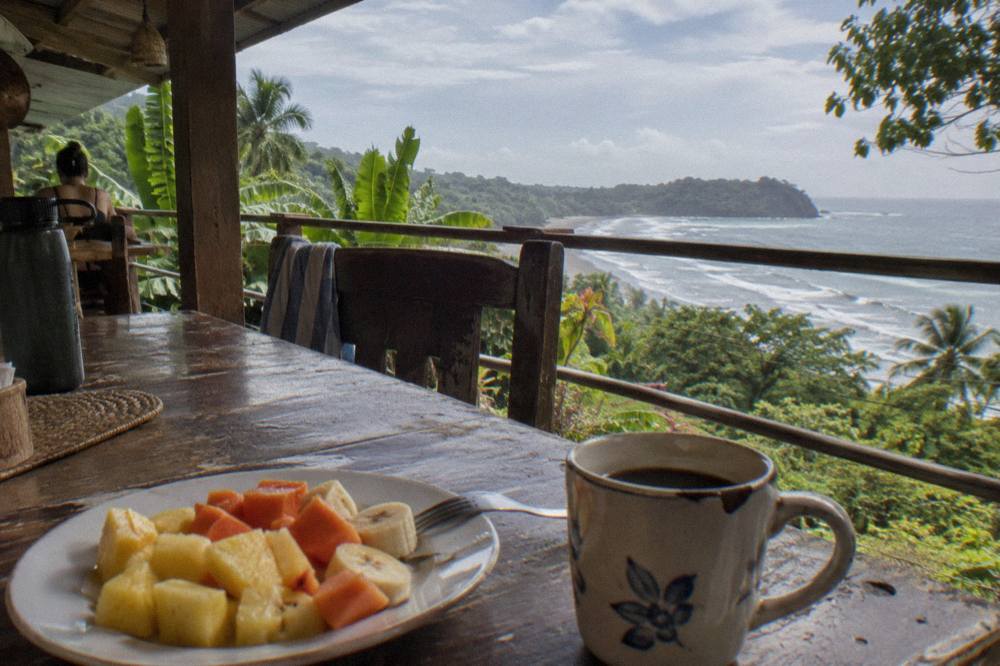
Uvita's food scene runs from sodas, the family-run Costa Rican lunch counters, through mid-range international kitchens to a handful of upscale spots, and the spread is wide enough to eat cheaply or expensively by choice rather than by force.
The tour day itself often covers a surprising amount of food. The drinks-and-snacks boat includes pastries, bananas, juice, coffee and tropical fruit. The Ballena Aventura combo includes watermelon and pineapple plus a cookie, with a coffee station before boarding. The 3 to 4 hour Ballena Infocenter trip includes a coffee station before departure, tropical fruits and water on board. On Caño Island days the inclusions get bigger: the 8-hour pastries-and-lunch trip at $160 per person includes a full lunch of rice, pasta, salad, chips and chicken or vegetables, and the Wonders of Caño Island trip describes lunch as a typical Costa Rican dish with fresh fruit.
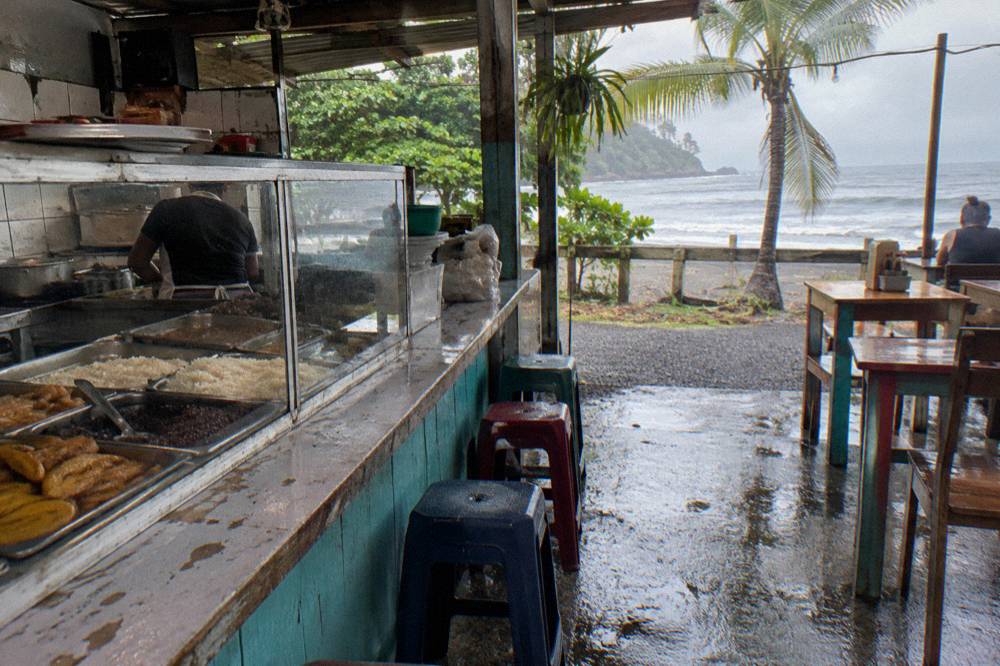
A budgeting rule of thumb that holds up: on days built around boat tours, plan for one restaurant meal rather than three, because the ticket usually carries the snacks and often the lunch. Visitors comparing Uvita against other stops can read our guide to Things To Do In Uvita Costa Rica Beyond The Boat for how the days stack up.
Is Getting To Uvita Expensive?
Getting there is the biggest single cost for most visitors, and it varies more than anything else in town. Driving from San Jose via Route 34 covers about 222 km in roughly 3 hours 28 minutes by one map reading, other sources say 3 to 4 hours, and public buses run several times daily. Bus fares should be checked with Tracopa directly rather than assumed.
The distance figure is about 222 km and about 3 hours 28 minutes via the Costanera Sur, Route 34, by one route estimate, with other sources ranging from 3 hours to 4 hours 7 minutes for slightly different routings. From Dominical, Uvita is about 18 km and 15 minutes down the same highway. Quepos and Manuel Antonio sit roughly 40 to 62 km north depending on the source, making Uvita an easy add-on to that stretch of coast. More of these guides are collected on Uvita Whale Watching.
Buses run from San Jose's Tracopa terminal on the Costanera route, several departures a day, taking about 3 hours 22 minutes to 4 hours 31 minutes. Check Tracopa for the current fare and schedule. SINAC's own park page names Tracopa as the bus option and notes to confirm the route goes via Costanera and stops in Uvita.
Two practical notes affect the cost picture. Fuel and, if driving, a rental car add up over 200-plus km each way, so a bus plus local taxis can undercut a one-way rental for a short stay. The full logistics picture is in our guide to San Jose To Uvita: Getting There For A Whale Trip.
Is Lodging In Uvita Expensive Compared To Other Beach Towns?
Uvita lodging spans a wide band, from budget hostels and cabins to boutique eco-lodges.
The town offers hostels and simple cabins at the budget end, small hotels and guesthouses in the middle, and eco-lodges in the hills above the bay at the top, plus vacation rentals that swing with season.
Location matters for the budget too: staying within walking distance of the Uvita sector entrance removes the need for a taxi or rental car on boat days, since tours depart from the beach. The trade-offs by neighborhood are laid out in our guide to Where To Stay In Uvita For Whale Watching.
Seasonality is the quiet multiplier. The southern humpback season, July to mid-November with an August to September peak for mother-calf pairs per operator pages, and the dry season, mid-December to mid-April per SINAC, are the two seasonal windows to plan around. The Whale and Dolphin Festival, held again in Bahía Ballena in early September 2026, offered tours at special prices for nationals. The IWC's Costa Rica profile notes the festival reduces tour prices and brings out boat owners who do not normally run commercial trips, which is a genuine savings window if the timing fits, documented on the IWC Whale Watching Handbook page.
The morning whale and dolphin tour at $75 is the budget anchor of the listed tours, and it earns its price honestly.
What Are The Cheap And Free Things To Do Around Uvita?
The beaches and the Whale Tail sandbar are the headline free experiences, though the park's land sectors charge the SINAC entry fee, so free means free of tour costs rather than free of entry. The sandbar is tide-dependent. Every boat trip listed here is a paid product, with the lowest-priced listing at $75 per person.
The honest framing, laid out fully in our guide to Free Things To Do In Uvita And Marino Ballena On A Budget, is that the coast itself is the free part. Watching the Whale Tail form from the shore at low tide costs nothing beyond park entry. Walking the long Uvita beach, birding the mangrove edges and simply sitting where the forest meets the sand are all unpriced. What carries a price tag is getting on the water, and there is no free boat.
For visitors weighting the budget toward one paid day, the natural upsell is the cheapest listing: the $75 morning tour, which includes snorkel gear and snacks, so it doubles as a swim stop and a wildlife trip in one ticket. A step up in spend, the whale and snorkel combo at $84.42 per person pairs whale watching with a snorkel stop in 3 hours, rated 4.3 from 136 reviews, and one guest, Mira_S, described the crew's skill: "The guides really know what they are doing."
The Playa Ventanas caves near Ojochal are documented as tide-dependent and explorable only at low tide, with no guarantee of entry, so timing is the main risk there.
Does A Caño Island Day Trip Blow The Budget?
A Caño Island snorkel day is the most expensive standard product from Uvita, $150 to $185 per person for 6 to 8 hours, but it is a full-day product with lunch and gear included. Whether it blows the budget depends on treating it as the day's entire cost rather than one item beside others.
The listed Caño Island tours run from $150 for the Wonders of Caño Island trip, rated 4.9 from 92 reviews over 8 hours, through $160 for the pastries-and-lunch trip at 4.7 from 135 reviews, to $185 for the picnic-lunch trip with vegan, vegetarian and gluten-free options. All of these include lunch, snorkel equipment and, on most listings, the reserve entry. SINAC's fee for the island itself is $16.95 for a foreign adult, marine access only, visiting hours 8:00 a.m. to 3:00 p.m., with prior reservation required, all published on the official SINAC reserve page.
Two structural points make the price easier to read. The boat ride alone is about 50 to 80 minutes each way according to one local operator, so the day is genuinely long. And landing is not permitted: SINAC's page states only the marine part is open for snorkel and diving, so the product is water time, not island time. Guests comparing the two big water days can use our guide to Caño Island Vs Marino Ballena: Which Boat Day To Pick to decide whether the extra $60 to $90 over a whale trip is worth it for their trip.
A reasonable budget structure for a three-day Uvita stay is one whale trip at $75 to $95, one cheaper beach and sandbar day at park-entry cost only, and one splurge day at Caño if the budget stretches, which keeps the activity total under $300 per person including park fees. Swapping the splurge for a second whale trip or a combo drops it near $200.
So Is Uvita Worth The Money?
On the evidence, yes. The core experience, a 3-hour shared whale trip, costs $75 to $105 with 4.4 to 4.8 ratings from hundreds of reviews, park entry is single-digit dollars, and the free coastline carries most of the downtime. The expensive parts are getting there and where you sleep.
The value case rests on what is being bought. Marino Ballena is, per SINAC, the first park in Costa Rica created exclusively for marine resources, and the IWC handbook notes the southern Pacific communities of Dominical, Uvita, Drake Bay and Caño Island are where Costa Rican whale watching originally developed. The conduct rules that keep the experience sustainable, 100 m minimum from whales, at most two boats per group, 30 minutes maximum with a group, come from Decreto Ejecutivo 32495, summarized in our guide to Whale Watching Boat Rules And Ethics In Costa Rica. If you're still weighing the price, our answer to Is Whale Watching In Costa Rica Worth It? covers season windows and typical tour costs.
Sighting economics deserve a plain sentence. One operator states on its own listing that December to March carries a 50 percent chance of sightings and July to October a 90 percent chance; that is that operator's claim, not a coast-wide rate, and no whale trip anywhere guarantees an encounter. What the reviews consistently describe is a competent, well-run half day on the water, which is the part of the purchase a listing can actually promise. For the fuller discussion of that trade, see our answer to Is Whale Watching In Costa Rica Worth It?
Uvita is not a cheap destination in absolute terms. It is a fairly priced one, where the largest costs are transport and beds, the mid-size costs are excellent, and the small costs, park entry, fruit on the boat, a coffee station before departure, are close to nothing.
Common Questions About Uvita Costs
Is Uvita Costa Rica Expensive?
No, not by Costa Rica travel standards. Shared whale tours run $75 to $129 per person, park entry is $6.78 for a non-resident adult, and the coastline itself is free to walk. The major costs are getting there and lodging, not the experiences.
How Much Does A Whale Watching Tour From Uvita Cost?
Most shared 3-hour trips cost between $80 and $105 per person. The lowest-priced listing here is $75, the most reviewed trip is $95 for 3.5 hours, and the biologist-led wildlife trip is $129. Private options run from $95 per person for a private charter to $1,120 per group for a private cruise.
Do Tour Prices Include The National Park Fee?
Most do. Fourteen of the eighteen shared whale and combo tours listed here include Marino Ballena park entry in the ticket price. Check the inclusions on the specific listing before booking, since a few do not state it.
What Is The Cheapest Way To Experience Uvita's Coast?
Walk the beach and view the Whale Tail sandbar from the shore at low tide; park sectors charge the SINAC entry fee but no tour is needed. The cheapest boat option is the $75 morning whale and dolphin tour, which includes snorkel gear and snacks.
Is A Caño Island Snorkel Trip Worth The Price?
At $150 to $185 per person it is the most expensive standard day trip from Uvita, but it runs 6 to 8 hours and includes lunch, gear and, on most listings, reserve entry. Treat it as the day's single big spend rather than one item among several.