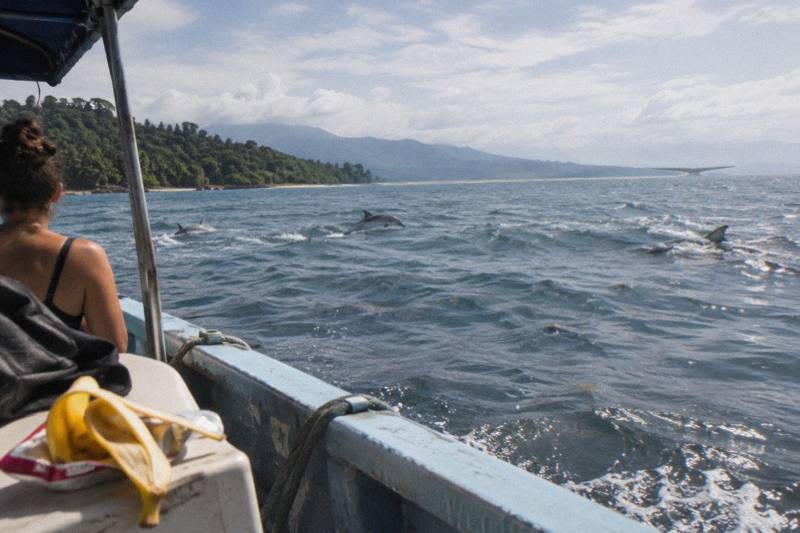
Where To Stay In Uvita For Whale Watching
Most whale boats in Marino Ballena leave from the beach at Uvita or Bahía Ballena in the morning, and one listing has its crew brief guests 15 minutes before departure. Where you sleep decides whether that start is a short walk or a drive down Route 34.
Short answer
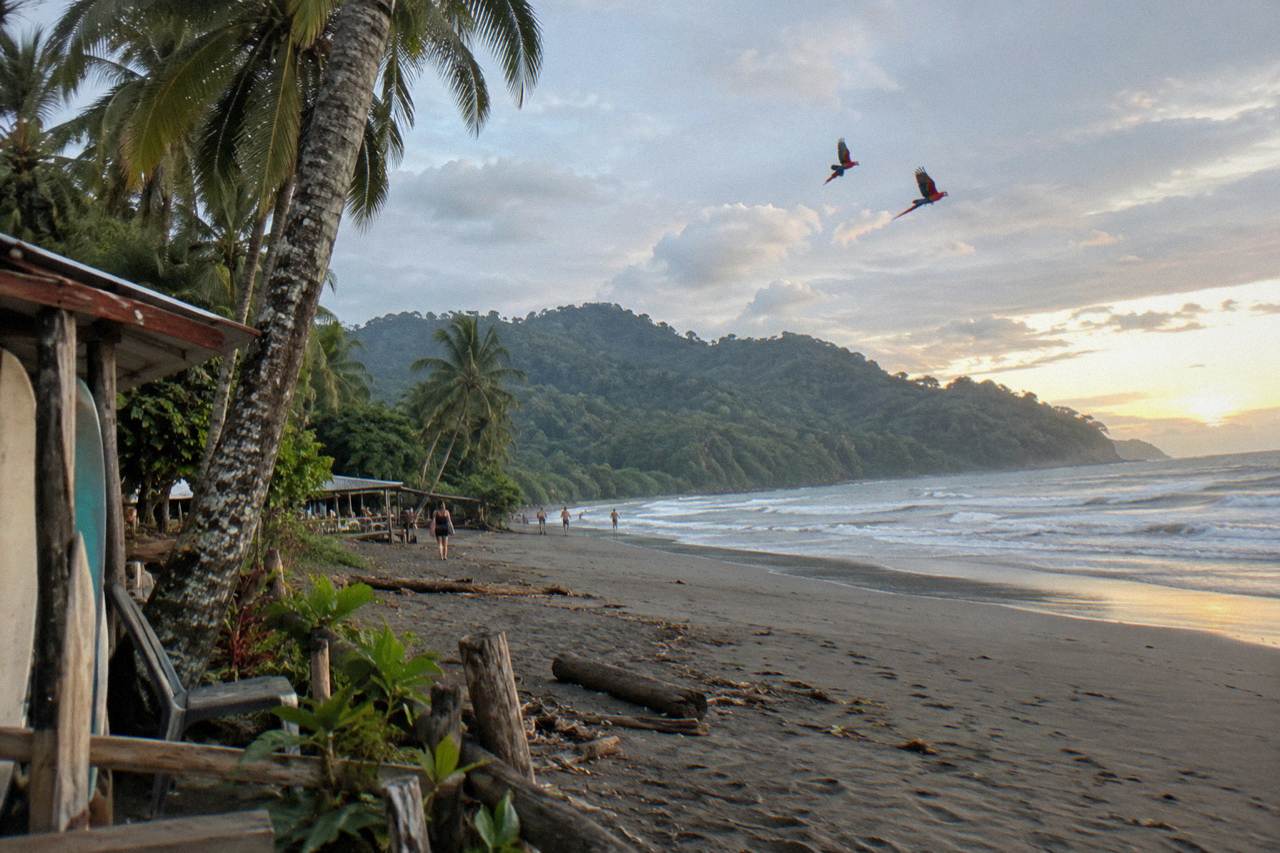
Stay in Uvita town or Bahía Ballena if you want to be minutes from the boat departure points, which launch from the beach sectors of Marino Ballena National Park. Dominical is about 18 km and 15 minutes away by road. Marino Ballena entry costs USD 6.78 for non-resident adults per SINAC, and most whale tours run about 3 hours.
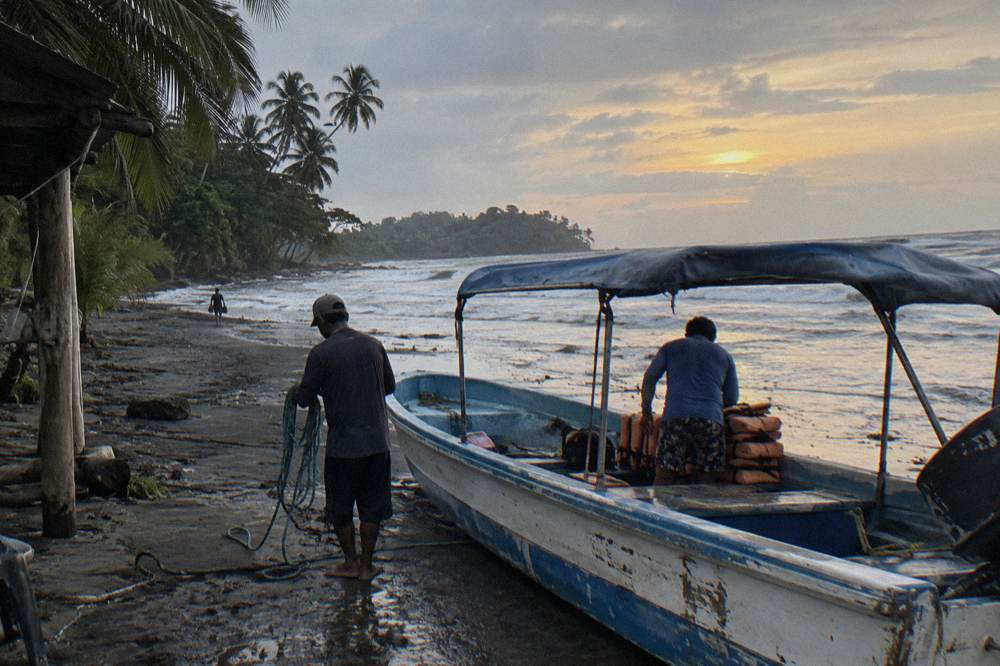
Whale boats in the Marino Ballena area do not leave from a marina. They push off the sand, and guests wade out to board them, which one listing states plainly: there is no dock and boarding happens directly from the beach. That single fact shapes every lodging decision in this guide, because the difference between an early meeting time that is a five minute walk and one that is a 40 minute drive down the coast is the difference between a relaxed morning and a stressed one. This guide walks through the areas, the distances, and how each one pairs with the boat trips listed here, including the most reviewed whale trip from Uvita, at 4.5 from 775 reviews, from $95 per person. If you would rather widen your lodging options beyond walking distance of the sand, our guide to Car Rental In Uvita Costa Rica: Do You Need One covers drive times, bus alternatives, and where to park near the beach departures.
Which Area Of Uvita Should You Stay In For A Whale Tour?
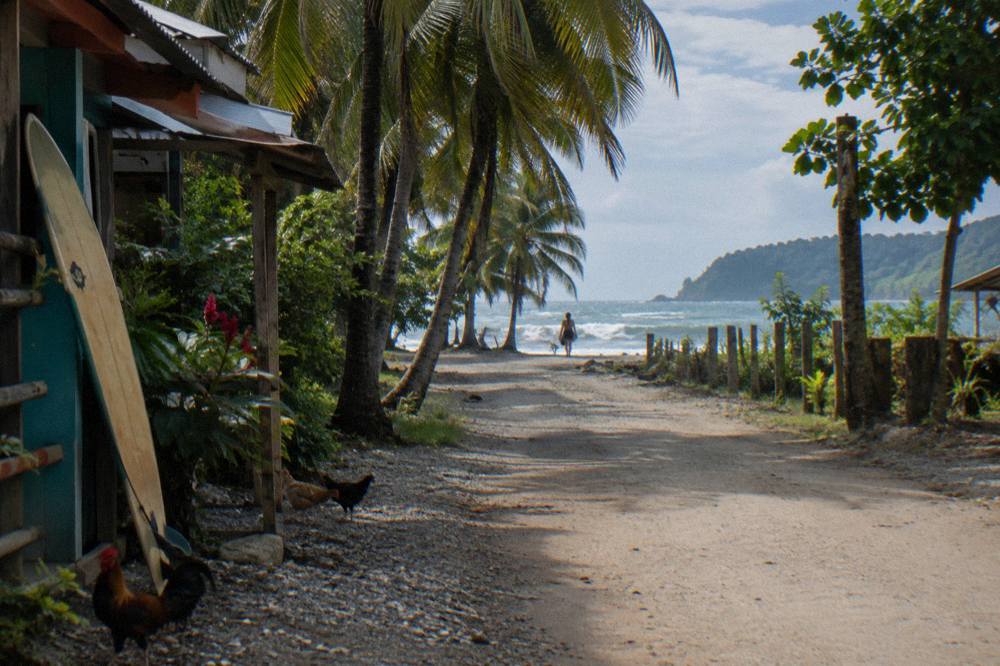
Stay in Uvita town or along the Bahía Ballena beach road if the whale tour is the anchor of your trip, because both put you within a short drive or walk of the beach departure points used by the shared boats listed here. Uvita town, near the highway, has the supermarkets, banks and clinics. Bahía Ballena, the community just south, is the one that gives the park its name.
Uvita is a small town. What matters for a visitor is the layout: the town center hugs Route 34, the Costanera Sur highway, while the beach and the park's Uvita sector sit a few minutes west of it. Lodging spreads across three rough zones: the town center itself, the Bahía Ballena beach road running south, and the hills inland where the views get wider and the drives get longer.
The town center is the practical choice. Guests staying near the highway are close to the supermarkets, the ATMs at BCR and Banco Nacional, and the clinics, which is comforting in a town with no hospital. The trade-off is that a beach departure still means a short drive or a long walk in the dark if your boat meets early. The Bahía Ballena stretch, by contrast, trades some convenience for proximity: this is the community that gives the national park its name, and it is the area from which the morning whale and dolphin tour from Bahía Ballena, rated 4.8 from 210 reviews and from $75 per person, departs.
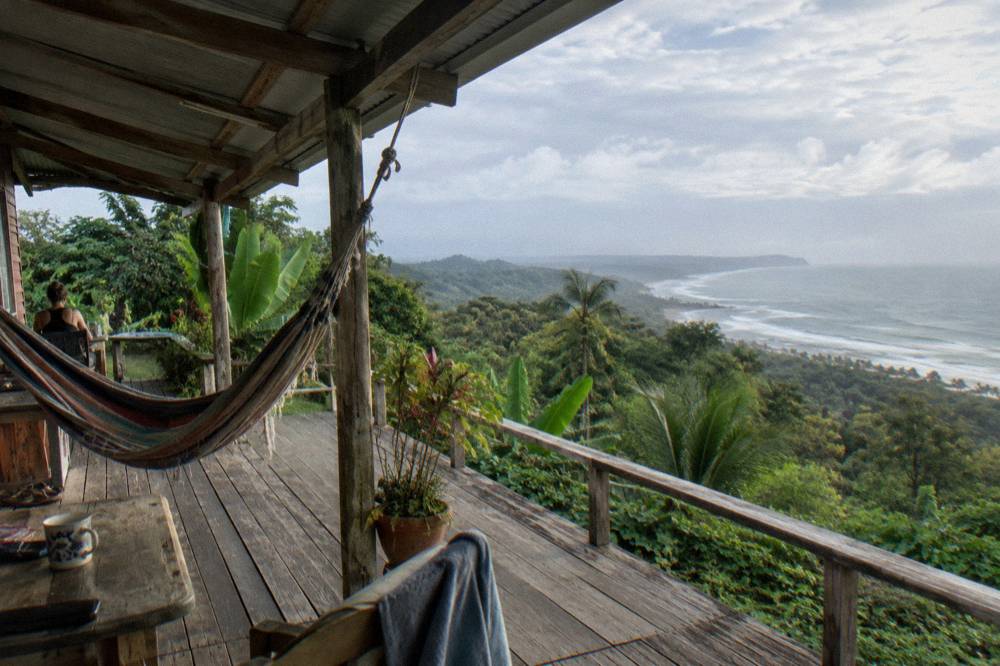
The hills above town are the third option. Views over the whales' own bay are spectacular from up there, and lodging types run from small guesthouses to villas with pools. But every departure, every restaurant run, and every supermarket trip becomes a drive down winding roads, which is a real cost when boats commonly meet in the morning, with one operator asking guests to be at its office by 8:30 AM.
| Area | Character | Distance To Departure Points | Best For |
|---|---|---|---|
| Uvita town center | Practical, shops, banks, clinics | Short drive or walk to beach sectors | First-time visitors, no car hassles |
| Bahía Ballena beach road | Quiet, residential, closest to the water | Walkable for many departures | Whale-focused trips, early meetings |
| Inland hills | Views, villas, guesthouses | A drive down each way | Longer stays, scenery over logistics |
| Dominical | Surf town north on Route 34 | About 18 km, roughly 15 minutes | Surfers combining both towns |
How Far Is Each Neighbourhood From The Boat Departure Point?
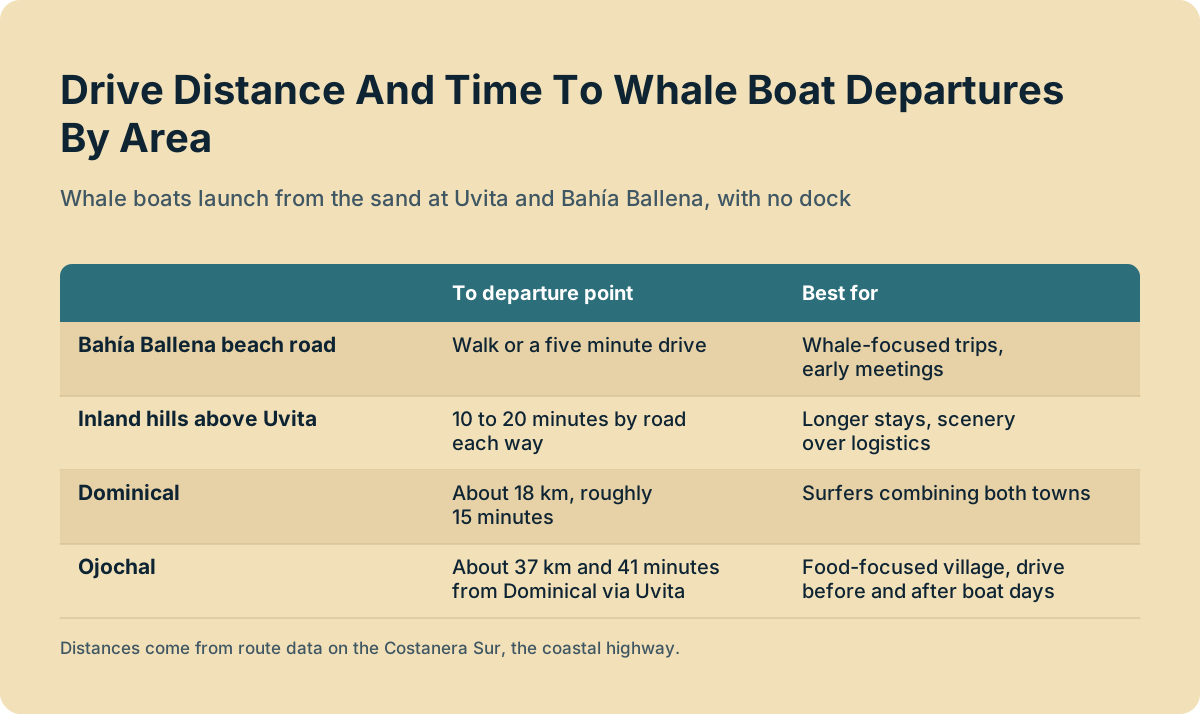
Bahía Ballena is the closest area to the marine departure points, Uvita town is minutes away by car, Dominical is about 18 km and roughly 15 minutes north on Route 34, and Ojochal sits about 37 km and 41 minutes from Dominical via Uvita.
The departure geography is simple once you see it. Whale and dolphin trips listed here leave from Uvita or Bahía Ballena, with several boats launching straight off the beach rather than from a pier. That means your real distance is measured to a stretch of sand, not to a harbor, and meeting points are confirmed at booking rather than assumed. One listing for a Marino Ballena whale watch from $90 per person even notes that transportation to the operator's office is an extra cost, so the last kilometre to the sand is worth checking before you book a far-flung hotel.
Distances along the coast are short. Dominical to Uvita is about 18 km and 15 minutes via Highway 34, which makes Dominical a genuinely workable base for whale tours. Ojochal, the village to the south, is about 37 km and 41 minutes from Dominical when routed through Uvita. Staying there means committing to a drive before and after every boat day. Our guide to Whale Watching Pickup From Dominical, Ojochal And Uvita works through the transport question in detail, including which listings say pickup is not included and guests meet at the departure point.
The featured listing on this site, the drinks and snacks whale trip at 4.5 from 775 reviews from $95 per person, states clearly that hotel pickup is not included and guests meet at the departure point. The fast-boat Marino Ballena adventure from $122 and the full-day Caño Island snorkel from $160 both list transportation to the meeting point as excluded. In other words, listed here, assume you are getting yourself to the beach unless a listing says otherwise.
What Time Do Whale Boats Leave, And Why Does That Shape Lodging?
Most whale boats in the area meet in the morning, with one operator asking guests to be at its office by 8:30 AM, and the trips themselves run about 3 hours, sometimes 3 to 4. Lodging choice is tied to early departures: the further you sleep from the departure point, the earlier your alarm and the longer your dark drive down Route 34.
Morning is the standard pattern, and the lineup reflects it. The morning whale and dolphin tour from Bahía Ballena is named for exactly this, a 2.5 to 3 hour trip from $75 with a 4.8 rating from 210 reviews. Midday options exist too, including a midday whale combo from $84.42 per person with a 4.3 rating from 35 reviews, which suits travellers who would rather not race a sunrise after a late arrival the night before. Trip lengths cluster around 3 hours for whale watching in the park, while the Caño Island snorkel days run 6 to 8 hours.
This is where the beach-launch reality bites. If your boat meets at 8:30 and boarding means wading into the shallows, you want to have eaten, applied sunscreen, and arrived with time to spare. Guests staying in Bahía Ballena can often walk or make a five minute drive. Guests staying in the hills above Uvita are descending switchbacks in low light. Guests in Ojochal are on the highway before 8:00. None of these are dealbreakers, but they are the honest arithmetic of lodging here, and it is the reason this guide keeps repeating one idea: for a whale-focused stay, proximity beats a pool.
| Trip type | Typical meeting pattern | Trip length | Earliest-start pressure |
|---|---|---|---|
| Park whale watch (shared) | Morning meeting at the beach | About 3 hours | Moderate |
| Morning whale and dolphin tour | Morning departure from Bahía Ballena | 2.5 to 3 hours | Moderate |
| Midday whale combo | Midday departure | About 3 hours | Low |
| Caño Island snorkel | Full-day departure | 6 to 8 hours | High |
| Private charter | Confirmed at booking | 3 to 3.5 hours | Varies |
For a fuller treatment of how the day unfolds, our guide to What To Wear And Bring Whale Watching In Uvita, Seasickness Included covers the morning-of checklist, and it pairs well with booking the smaller-boat option: the Marino Ballena whale watch capped at 20 guests, 4.5 from 110 reviews from $105, suits travellers who want a capped group on an early start.
Is It Better To Stay Near The Park Sectors Or In Town?
Stay near the park sectors if your days revolve around the beach and boat, and stay in town if you want restaurants, banks and supermarkets within an easy walk. The park's Uvita sector opens at 7:00 am and closes at 5:00 pm, Colonia runs 7:00 am to 6:00 pm, and Ballena and Pinuela run 8:00 am to 4:00 pm, every day of the year, per SINAC.
Marino Ballena National Park has four official entrance sectors: Uvita, Colonia, Ballena and Pinuela, spread along a coastal strip SINAC measures at 15 km. The hours above come straight from the park's official page, as do the entry fees: non-resident adults pay USD 6.78 and non-resident children USD 5.65, tax included, paid by card only, with the ticket valid for the whole day of the visit.
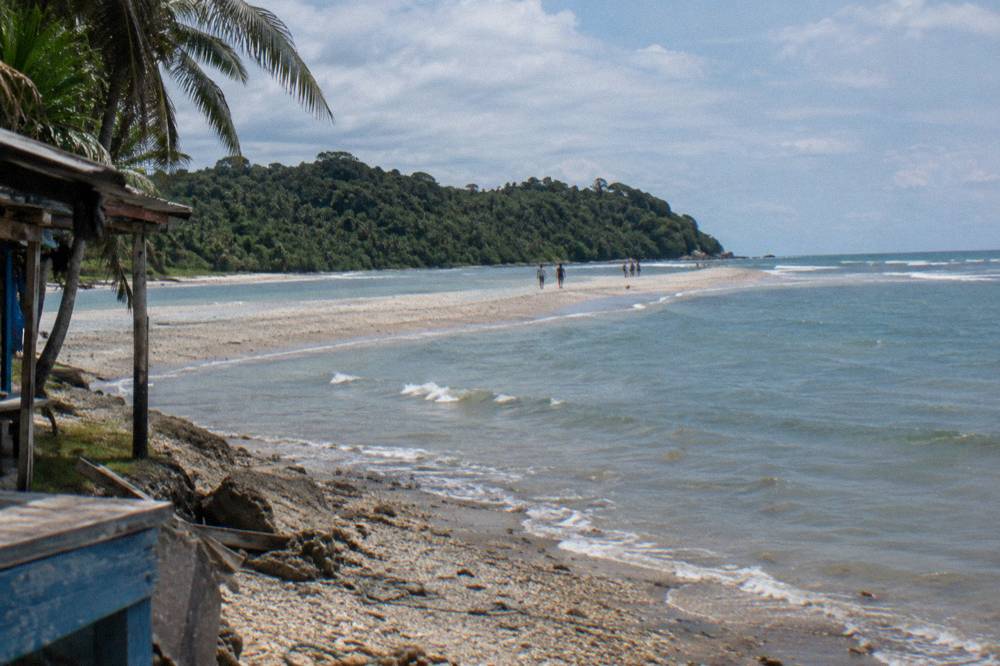
The choice, then, is a lifestyle choice. Near-sector lodging means you walk to the sand, watch the tide, and time your visit to the tombolo, which SINAC says is accessible only during the six hours of low tide. Town lodging means you walk to dinner, to the ATM, to the bakery, and you drive to the beach.
Note the distinction between land entry and the boat. Many whale tours listed here include the park entry fee in the ticket, as the Pacific Expeditions whale watch from $80 does, along with snacks and a guide. Whether your specific trip includes entry comes only from that listing's inclusions, so check before assuming. Our guide to Marino Ballena National Park Entrance Fee And Tours untangles which listings bundle what.
Where Should You Stay If You Are Coming From San Jose?
Budget a drive of roughly 222 km and about 3 hours 28 minutes from San Jose to Uvita via Route 34 by one route estimate, with other estimates ranging from 3 hours to 4 hours 7 minutes, or take a Tracopa bus on the Costanera route, which takes about 3 hours 22 minutes to 4 hours 31 minutes. Plan to sleep one night in or near Uvita before their first boat day rather than arriving at dawn.
The drive south is the classic pattern. Route 34, the Costanera Sur, runs down the coast, and estimates vary: Google Maps gives about 222 km and 3 hours 28 minutes, other sources land between 3 hours and 4 hours 7 minutes. Road works are a live factor on this highway, with the transport ministry reporting provisional passage and bridge works on the Rio Coronado in the Osa stretch. None of this argues against the drive, it argues for not scheduling a boat meeting two hours after you leave San Jose. More of these guides are collected on Uvita Whale Watching.
The bus is the budget option. SINAC itself directs visitors to Tracopa, with the instruction to make sure the route is via the Costanera and stops in Uvita, and current schedules show several daily departures from the Tracopa terminal taking 3 hours 22 minutes to 4 hours 31 minutes. Fares quoted in third-party sources fall in a band, but treat the fare as something to confirm with Tracopa directly. Domestic flights are another angle, with SANSA serving Quepos near Manuel Antonio and Palmar Sur listed as a southern option, both of which still leave a final ground leg to Uvita.
| Route | Distance | Time | Notes |
|---|---|---|---|
| San Jose to Uvita via Route 34 | About 222 km | About 3 h 28 min | One map reading; other estimates 3 h to 4 h 7 min |
| San Jose to Uvita by Tracopa bus | Route via Costanera | 3 h 22 min to 4 h 31 min | Confirm the route stops in Uvita; check Tracopa for fares |
| Dominical to Uvita | About 18 km | About 15 min | Highway 34 |
| Ojochal to Dominical via Uvita | About 37 km | About 41 min | Passes through Uvita |
The lodging implication is simple: book your first night somewhere you can reach by early evening. Uvita town is the least stressful arrival base, with groceries and restaurants close at hand. Our guide to San Jose To Uvita: Getting There For A Whale Trip covers the drive, the bus and the flight legs in one place.
Does The Whale Season Change Where You Should Book?
Yes, mainly through timing. Southern hemisphere humpbacks visit roughly July to mid-November with an August to September peak for mother-calf pairs per operator pages, northern hemisphere humpbacks come December to March or April, and early September is when the community holds its annual whale and dolphin festival.
Two humpback populations from opposite hemispheres visit this coast, which is why the area is described as having whale presence for much of the year. The IWC's country profile notes that the southern animals make the longest recorded migration of any humpback population to breed in Costa Rican waters, arriving from the Antarctic Peninsula and southern Chile between July and mid-November. Operator pages sharpen that to an August to September peak for mother-calf pairs. The northern population follows December to March or April, peaking January to February.
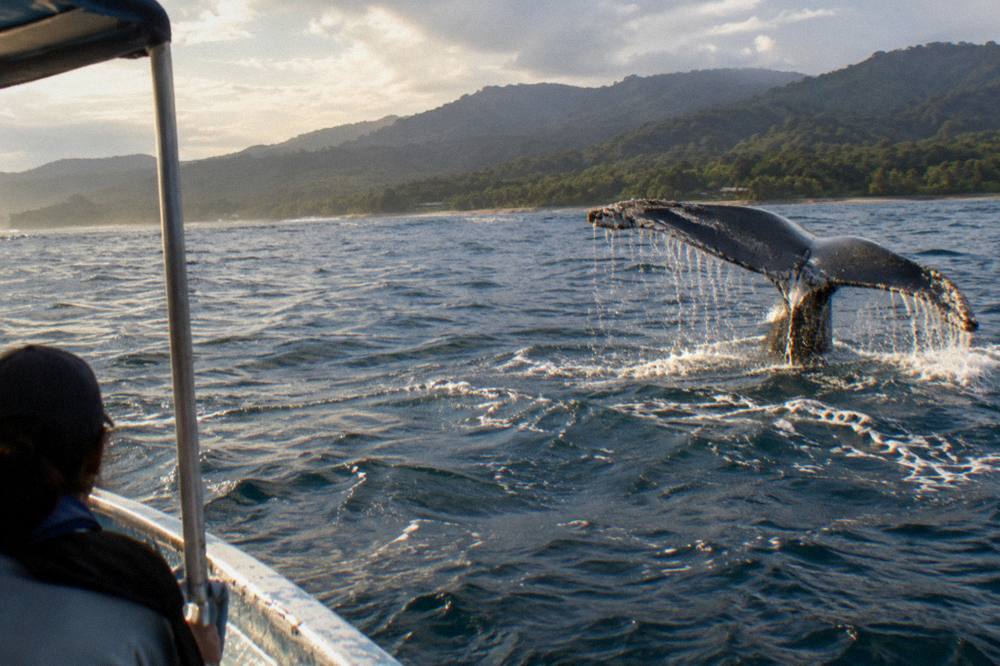
The lodging wrinkle is the festival. Each early September, the community of Bahía Ballena organizes a whale and dolphin festival; local reports covered the 16th edition on 4 to 6 September 2026, complete with concerts, an artisan fair, and whale-watching tours at special prices for nationals. The IWC handbook describes the same event and notes that many boat owners who do not normally run commercial tours join in during the festival. If your dates coincide with the first weekend of September, book lodging early, and treat the festival as a yearly event rather than a fixed guarantee of any single tour's price.
Weather is the other seasonal input. SINAC defines the dry season as mid-December to mid-April and the rainy season as mid-April to mid-December, and long-term averages point to February and March as the lowest-rainfall months. One operator states Marino Ballena snorkel visibility is best January to April. For lodging, the rainy season means greener hills and a real chance of rain, which is a fair argument for a room with a covered terrace. The month-by-month breakdown lives in our guide to Best Time For Whale Watching In Uvita By Month.
| Window | What is happening | Lodging implication |
|---|---|---|
| December to March or April | Northern humpbacks, peak January to February | Dry season, book ahead |
| Mid-December to mid-April | SINAC dry season, best snorkel visibility per one operator | Driest months, book ahead |
| August to September | Southern mother-calf peak per operator pages | Peak calf season, book ahead |
| Early September | Yearly whale and dolphin festival in Bahía Ballena | Festival weekend, book early |
| May to mid-December (excluding festival) | SINAC rainy season | Greener hills, pack for rain |
What Kind Of Lodging Can You Actually Get In Uvita?
Expect small-scale lodging: family-run cabinas and guesthouses, mid-range hotels with pools, hostels for the surf crowd, and a spread of villas and rental homes in the hills above town. Treat any nightly rate you see online as something to confirm directly, and choose by area and walkability rather than by brand.
The town center and the highway strip carry the practical end of the market, including the hostels and simple cabinas that serve surfers and backpackers moving down the Costanera. The Bahía Ballena beach road holds smaller hotels and guesthouses a short distance from the sand. The hills inland, meanwhile, are where the views and the villas are, and where rental homes with kitchens suit families and longer stays. For a broader area-by-area comparison, including the two-town question, see our answer to Is It Better To Stay In Manuel Antonio Or Uvita?
A few honest cautions. Confirm rates directly with the property. Bookings around early September deserve extra lead time. And if your stay is built around a specific boat, check that boat's cancellation policy first: most trips listed here list free cancellation, which pairs well with a flexible room. The humpback-focused wildlife watching trip from $129, which includes a donation to a humpback research project and a biologist expedition leader, is the most research-flavoured option for a stay built entirely around the southern season.
| Lodging type | Where it sits | Who it suits |
|---|---|---|
| Hostels and simple cabinas | Uvita town and highway strip | Surfers, backpackers, short stays |
| Family-run guesthouses | Bahía Ballena beach road | Whale-focused couples, early departures |
| Mid-range hotels with pools | Town edge and beach road | Families wanting facilities |
| Villas and rental homes | Inland hills | Groups, longer stays, kitchen self-catering |
How Do You Match A Hotel To A Specific Whale Trip?
Match by meeting point and start time, not by star rating. Read your chosen listing's departure details first, note whether it says guests meet at the departure point, then book lodging within a comfortable reach of that departure for the meeting time given. Every shared trip listed here departs from Uvita or Bahía Ballena, so lodging in either area works; the question is only how early you want to wake up.
Work backwards from the boat. If you book the most reviewed trip, the drinks and snacks boat at 4.5 from 775 reviews from $95, its listing says hotel pickup is not included and guests meet at the departure point, up to 80 guests on board. That argues for Uvita town or the Bahía Ballena road. If you book the midday whale combo instead, from $84.42 with a 4.3 rating from 35 reviews, a morning start pressure disappears and a Dominical or hillside base becomes painless. If you book a Caño Island day, a 6 to 8 hour commitment from $150 to $185 across the listed tours, proximity starts to matter most of all, because the boat ride alone to the island runs about 50 to 80 minutes according to one local operator, before the day even begins.
A stay matched to the boat also lets you double up. The combo tours pair whale watching with a snorkel stop in about 3 hours, which our guide to Whale Watching And Snorkeling Combo From Uvita covers, and guests staying near the park can add the whale tail walk at low tide on the same day ticket. That is the quiet argument for Bahía Ballena over everywhere else: one well-placed room turns a 3-hour tour into a full coastal day.
| If you book | Duration | From | Lodging that pairs well |
|---|---|---|---|
| Drinks and snacks whale trip, 4.5 from 775 reviews | 3.5 hours | $95 per person | Uvita town or Bahía Ballena, meet at the departure point |
| Morning whale and dolphin tour, 4.8 from 210 reviews | 2.5 to 3 hours | $75 per person | Bahía Ballena beach road |
| Pacific Expeditions whale watch, 4.8 from 183 reviews | 3 hours | $80 per person | Uvita town, short drive to the beach |
| Midday whale combo, 4.3 from 35 reviews | 3 hours | $84.42 per person | Anywhere within 30 minutes, including Dominical |
| Caño Island snorkel day | 6 to 8 hours | $150 per person | As close to the departure beach as possible |
One review from the morning tour captures why the pairing works, in a guest's own words: "This was an excellent small tour. We saw whales and dolphins. We were given the choice of finding more whales or snorkeling at the Whale’s Tail." That kind of flexible day is easiest when your bed is minutes from the sand.
Common Questions About Staying In Uvita For Whale Watching
Where To Stay In Uvita For Whale Watching?
Stay in Uvita town for shops and banks, on the Bahía Ballena beach road to be closest to the boat departure points, or in the inland hills for views if you accept a drive to every departure. Dominical, about 18 km and 15 minutes north, also works for whale tours.
How Far Is Dominical From The Uvita Boat Departures?
About 18 km and roughly 15 minutes via Highway 34, per route data. It is a realistic base for whale tours as long as you are happy driving to and from every departure.
Do Uvita Whale Tours Pick You Up From Your Hotel?
Among the tours listed here, most listings either do not state pickup or state that hotel pickup is not included and guests meet at the departure point. Check the specific listing's transport details before booking a far-away room.
Is It Worth Staying Near Marino Ballena National Park?
Yes, if the park is your focus. A day ticket, USD 6.78 for non-resident adults per SINAC, is valid for the day of the visit, and the whale tail sandbar is reachable only around low tide, so a nearby base lets you plan two visits around the tide table.
When Should I Book Lodging For The Whale Season?
Book well ahead for the August to September southern-season peak, especially the first weekend of September when the yearly whale and dolphin festival is held in Bahía Ballena, and for the dry-season months of January to March.