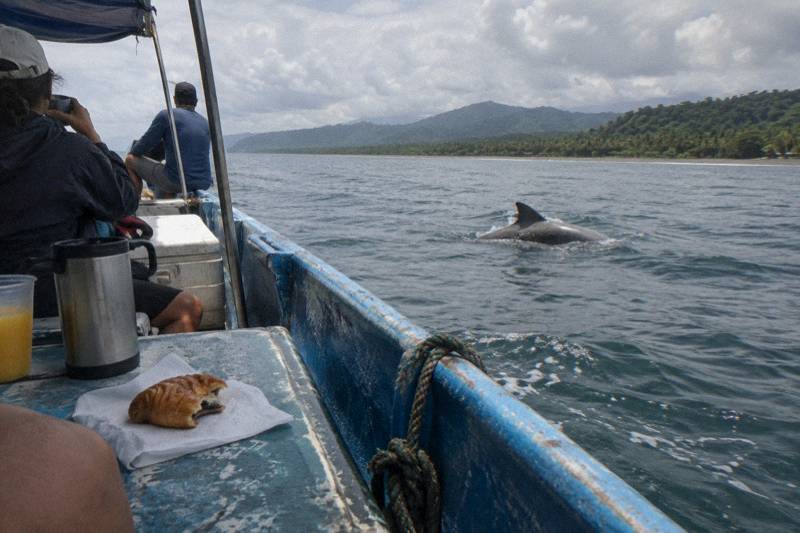
What To Wear And Bring Whale Watching In Uvita, Seasickness Included
A three hour shared boat trip from Uvita is short, exposed and saltier than most first timers expect. Here is what to wear, what to pack and how to handle seasickness, based on what the listings themselves include and leave out.
Short answer
Wear quick dry layers, swimwear under clothes, a sun hat with a strap, polarized sunglasses and reef safe sunscreen; bring a dry bag, water bottle, cash free payment card and motion sickness tablets taken before boarding. Most Uvita tours run about 3 hours, include fruit and water but rarely towels, and board straight off the beach.
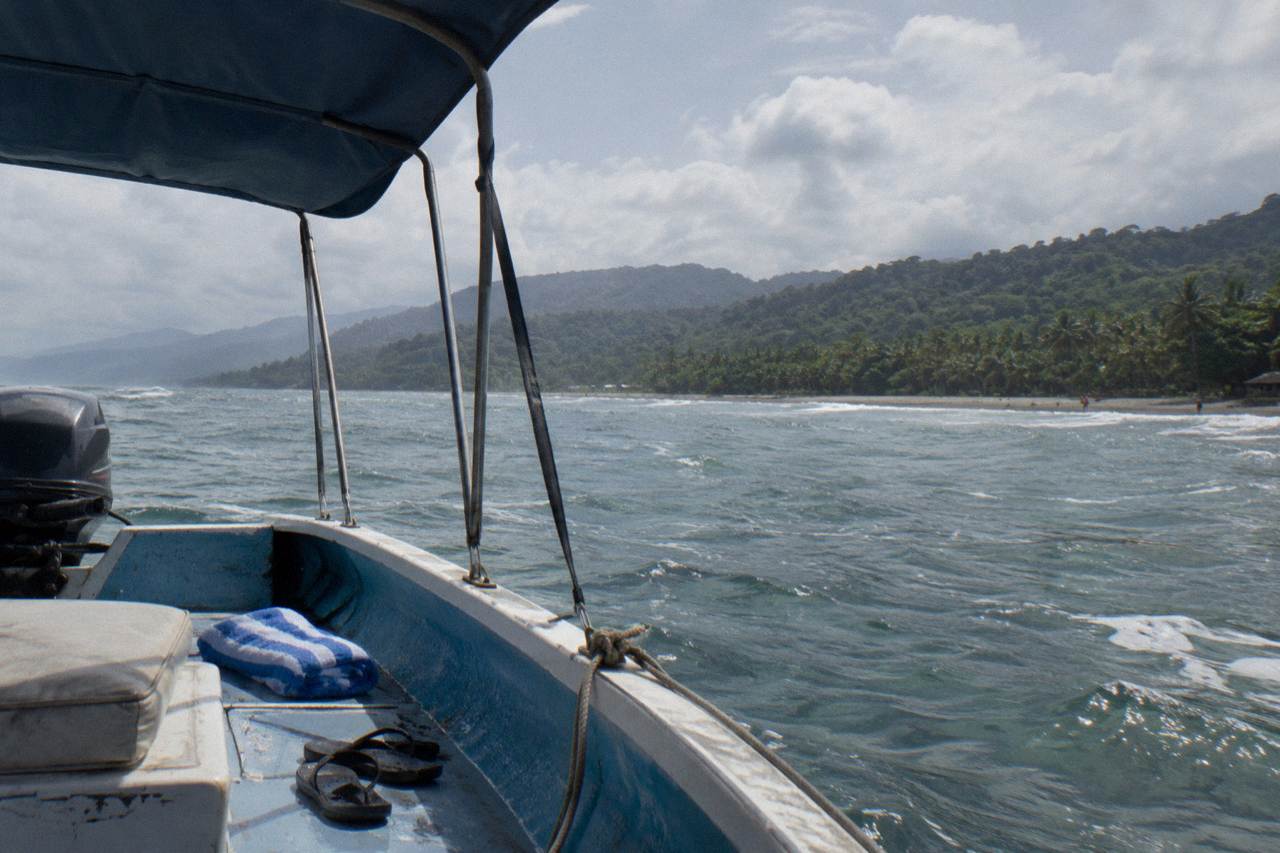
Most first mistakes on a Uvita whale boat are packing mistakes, not booking mistakes. The trips are short, about 3 hours on almost every listing in town, but they are open boats, they launch straight off the beach with no dock, and guests wade to the boat through shallow water to board. That single detail shapes everything on this page: what you wear on your feet, what stays dry, and what you leave in the car.
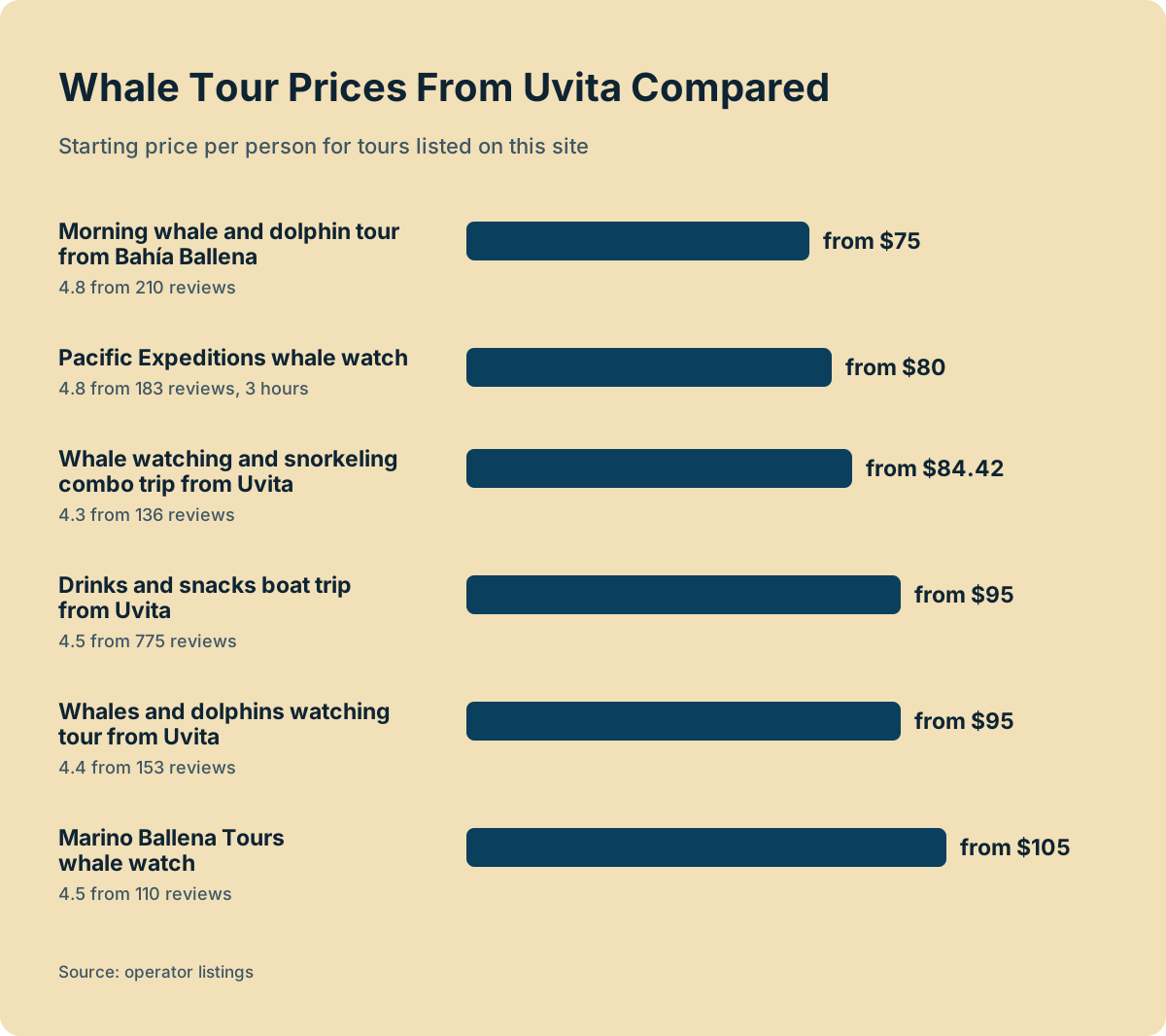
The packing math is also more forgiving than people expect. The most reviewed trip in town, the drinks and snacks boat trip from Uvita (4.5 from 775 reviews, from $95 per person), already includes pastries and bananas, juice and coffee, tropical fruits, lifejackets, the Marino Ballena National Park entry fee, parking and time to swim. It lists pickup, alcohol and snorkel gear as not included, and towels are not on its list. So the bag you carry can be small, as long as it covers the gaps your particular listing leaves open.
This guide walks through clothing, sun protection, cameras and dry bags, a plain spoken seasickness plan, seasonal adjustments and a few family specifics, all tied to what the Uvita and Bahía Ballena listings actually say. If you are still choosing between boats rather than packing for one, start with our guide to Whale Watching Tours From Uvita Compared: Group, Private And Combo and come back here once you have a date.
What Should You Wear On A Whale Watching Boat In Uvita?
Dress for three climates in one morning: a cool early launch, a hot mid morning sun and salt spray on an open deck. Quick dry layers, a long sleeve sun shirt, a hat with a chin strap and sandals or water shoes that can get wet cover all three. Almost every Uvita listing includes lifejackets, so you do not need to bring your own flotation.
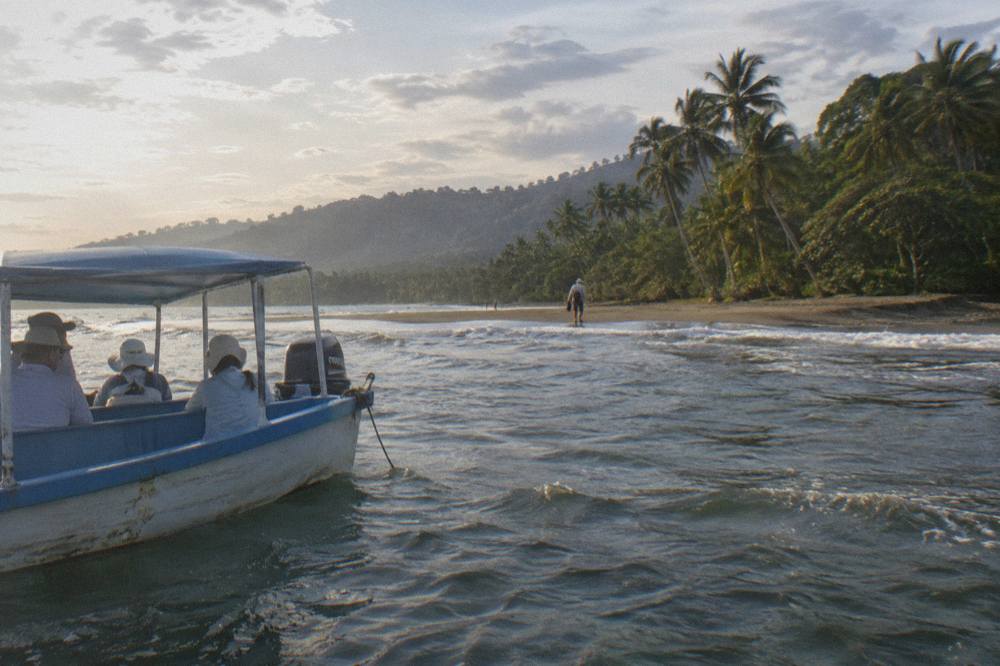
The beach launch is the part that catches people out. One operator states plainly on its listings that there is no dock and boarding happens directly from the beach, so feet get wet and hems get splashed. Closed sneakers you care about are the wrong call. Rubber sandals, sport sandals or cheap water shoes are the standard local answer, and they dry on the boat while you watch for dolphins.
Above the ankles, think in layers you can shed. The 8:30 am morning starts that operators list begin cool, then the Pacific sun climbs fast. A swimsuit under quick dry shorts and a light long sleeve shirt works in both the July to November southern humpback window and the December to April northern one, because the shirt does double duty as sun protection, which matters more than warmth on a three hour run.
| Body part | What works on an open Uvita boat | Why it matters here |
|---|---|---|
| Feet | Sport sandals, water shoes or rubber sandals | Beach launch means wading to board, no dock on several listings |
| Legs | Quick dry shorts or swim leggings over a swimsuit | Salt spray and possible swim stops on some tours |
| Torso | Quick dry tee plus a light long sleeve sun shirt | Cool launch turning into strong mid morning sun |
| Head | Wide brim hat with a chin strap | Wind on the outward run takes loose hats |
| Eyes | Polarized sunglasses with a retainer cord | Cuts glare for spotting, survives the ride |
Colors are a small but real consideration. Dark shirts absorb sun heat; plain light colors reflect it. On the whale watching and snorkeling combo trip from Uvita (4.3 from 136 reviews, from $84.42 per person) a snorkel stop is part of the format, so quick dry fabric pays off. A light rain shell earns its space from mid April to mid December, the rainy season SINAC describes for this coast, when a passing squall can soak an open deck even on a whale rich day.
What Do You Need To Bring For A Marino Ballena Tour?
Bring a small dry bag or zip bag with a phone, a card for park fees, sunscreen, a hat, a water bottle and any personal medication; add a towel only if your listing does not mention one, because most Uvita whale trips supply fruit, water and lifejackets but leave towels off the boat. Skip single use plastic, which Marino Ballena National Park does not allow. With your bag sorted, our guide to Uvita Waterfall And Whale Watching In One Day shows how to add a morning hike before your boat departs.
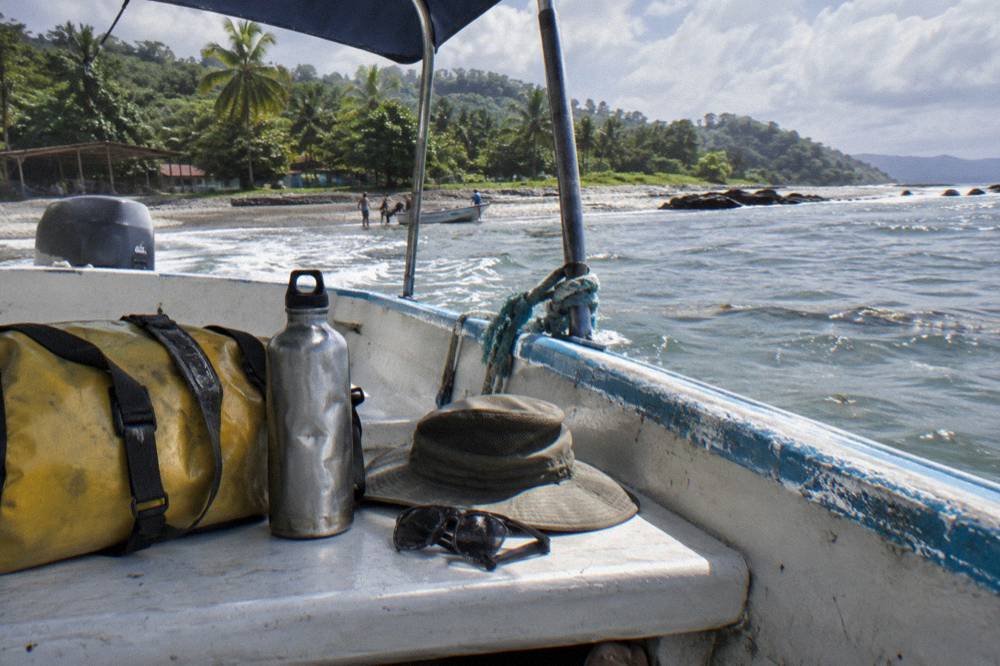
The right answer depends heavily on which listing you book, because the inclusion lists differ boat to boat even within the same operator family. The morning whale and dolphin tour from Bahía Ballena (4.8 from 210 reviews, from $75 per person, the lowest-priced listing in town) includes snacks, bottled water and snorkel equipment. The Marino Ballena Tours whale watch (4.5 from 110 reviews, from $105 per person, up to 20 guests) includes water and fruits but lists towels under exclusions. Reading the included and excluded blocks on your own listing before packing saves you carrying duplicates of what is already on board.
Park payment is one detail worth knowing in advance. SINAC, the national park system, sells Marino Ballena entry at USD 6.78 per non resident adult, card payment only, and the ticket is valid for the day of the visit.
| Item | Bring it? | The reason from the listings and park rules |
|---|---|---|
| Dry bag or zip lock bag | Yes | Open deck, spray, and possible swim stops |
| Towel | Check your listing | Several whale listings list towels as excluded |
| Sunscreen | Yes | Tropical sun for three exposed hours |
| Water bottle | Optional | Fruit and water are included on most listings |
| Card, no cash needed for park | Yes | SINAC posts take card payment only |
| Snorkel gear | Only if not listed | Included on some trips, excluded on others |
| Single use plastic | No | On SINAC's not allowed list for the park |
Two small omissions cause the most regret. One is a strap for glasses and hats, because wind on an open boat takes loose hats and glasses. The other is medication taken too late, which belongs to the seasickness section below, not to the packing list itself.
How Do You Keep A Camera Safe From Salt Spray In Bahía Ballena?
Keep the camera in a dry bag until a sighting is called, wipe salt off with a microfiber cloth rather than a damp one, and let a phone handle anything within arm's reach of spray. Whales surface without a schedule, boats move, and salt crust in buttons and ports is the slow damage to guard against.
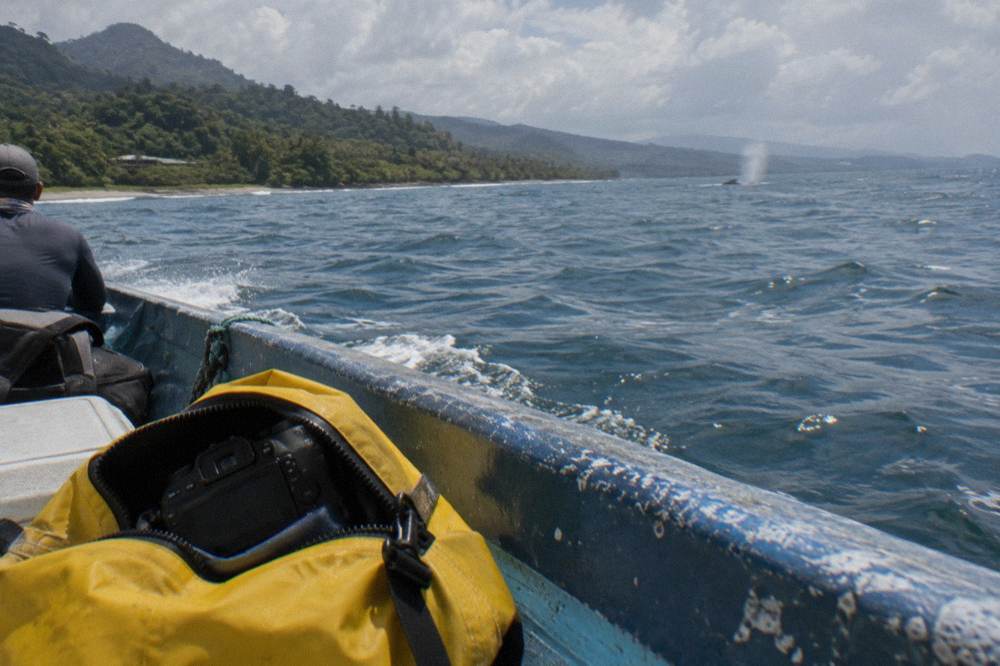
A zip top bag with a microfiber cloth inside costs almost nothing and does most of the work. Rinse or wipe gear after the trip with fresh water, and never change a lens on deck, since salt air finds sensor chambers fast. If your camera matters to you more than the photos do, the honest fallback is a phone in a waterproof pouch plus one short telephoto or zoom that lives in the dry bag until needed.
Behavior on the water matters as much as gear. Costa Rica's cetacean watching rules, Decreto Ejecutivo 32495, keep boats at least 100 metres from whales over 5 metres and 50 metres from dolphins with the engine on, with a 30 minute cap per group and at most two boats observing, per the official text of the decree. Practically, that means your best frames are distant ones, so a longer lens beats a wide angle, and patience beats burst mode.
The whales and dolphins watching tour from Uvita with snorkel gear (4.4 from 153 reviews, from $95 per person) is one example of a listing that includes both snorkeling equipment and fruit and water, useful if you want one bag to do double duty on a swim stop. For a deeper look at how sightings actually behave at distance and time of day, our guide to Will You See Whales: Sighting Odds And Best Departure Time covers it in full.
What Is A Plain Seasickness Plan For The Pacific?
Take motion sickness remedy before boarding, timed as the product label directs, rather than on the boat, eat a light breakfast, sit mid ship near the centerline where the boat rolls least, and watch the horizon rather than your phone. Operators can cancel or reroute for sea state, and listings with free cancellation let you move your day.
Seasickness on a three hour trip is usually a timing error, not a destiny. Remedies work best before the motion starts, which means on the beach or at breakfast, not after the first swell. Light food beforehand helps; heavy fried breakfasts and a rolling bay do not mix. Once under way, the middle of the boat, low and centered, moves less than the bow, and fresh air plus a fixed horizon point helps.
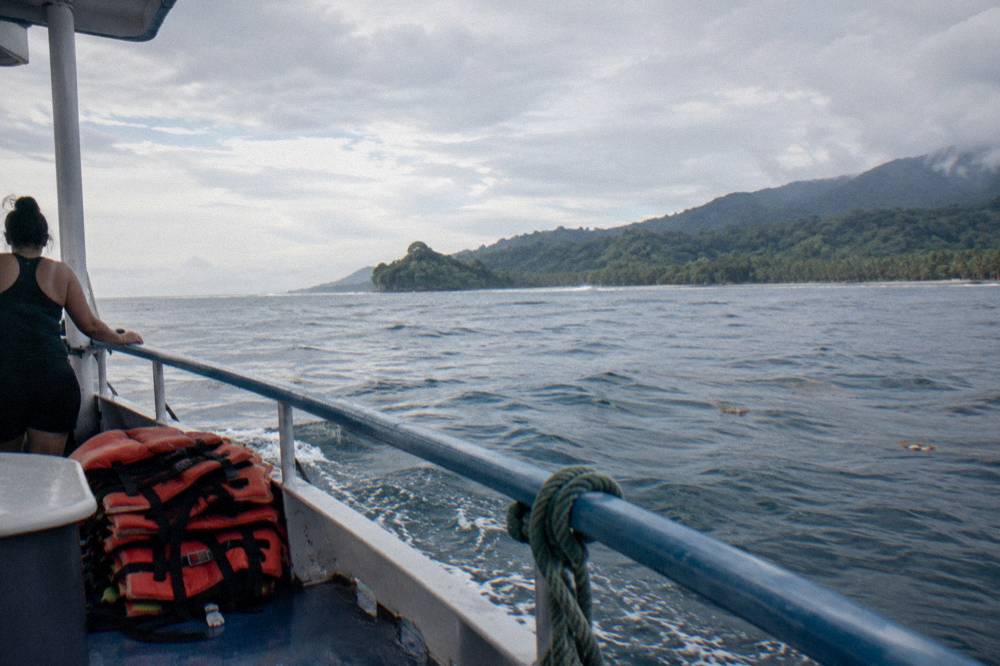
Know your escape route before you need it. The listing for the Pacific Expeditions whale watch (4.8 from 183 reviews, from $80 per person, 3 hours) states there is no restroom on board, and several Uvita boats share that layout, so plan accordingly rather than assuming a head below deck. If you are prone to motion sickness, mention it when checking in so the crew can seat you mid boat.
| Situation | Plain advice |
|---|---|
| Prone to motion sickness | Remedy before boarding, timed as the product label directs |
| Breakfast on trip morning | Light and plain, skip heavy or fried food |
| Best seat on a small boat | Mid ship, near the centerline, lower if possible |
| First symptoms | Horizon, fresh air, close your eyes or focus far out, not on a screen |
| Sea too rough | Operators cancel or reroute for sea state; listings with free cancellation allow rebooking |
The whale and dolphin tour at the marine park that runs 3 to 4 hours (4.6 from 107 reviews, from $92 per person) is a good example of a listing where trip length varies, and every extra hour on open water raises the stakes for sensitive stomachs. If you know your limits, a strict 3 hour listing is the safer format, and the shortest option is the 2.5 to 3 hour morning tour at from $75.
What Sun Protection Actually Matters In Costa Rica?
Sunscreen, a hat with a brim and a strap, polarized sunglasses and a long sleeve sun shirt do most of the protective work on a Uvita boat. Apply sunscreen before boarding and reapply once mid trip; a reef safe formula is the kinder choice in a marine park.
You are closer to the equator than most readers realize. The gaps people regret are the backs of hands holding a phone, the part in your hair under a hat you took off for photos, and knees facing forward into the sun all morning. A stick sunscreen for the face survives a dry bag better than a bottle, and it passes around a family faster.
The general logic holds: anything you wear reduces what you must reapply. That logic extends to the longer days too: Caño Island snorkel trips run 6 to 8 hours and include lunch, for example the pastries and lunch Caño trip (4.7 from 135 reviews, from $160 per person), and on a full day boat the sun protection question stops being comfort and becomes the difference between a good day and a painful one.
| Sun protection item | Why it earns space on a Uvita boat |
|---|---|
| SPF sunscreen, reef safe choice | Reapply once mid trip; reflections off water add exposure |
| Wide brim hat with chin strap | Strap survives the windier outbound run |
| Polarized sunglasses | Cuts glare for both spotting wildlife and eye comfort |
| Long sleeve light sun shirt | Covers shoulders for three exposed hours without reapplying |
| Lip balm with SPF | Salt wind dries lips fast on an open bow |
Timing helps as much as gear. Trips that start around 8:30 run into late morning, when the sun is climbing toward its peak. Guests on later midday formats, like the midday whale combo (4.3 from 35 reviews, from $84.42 per person), ride through the harshest hours of the day and should treat sun protection as the primary packing decision.
Does What You Wear Change With The Whale Season?
Yes, but less than you might think: the southern humpback season from July to mid November sits in the rainy season, so a light rain shell and quick dry everything matter more, while the December to April northern season is drier, favoring full sun coverage. Both windows are warm enough that insulation is never the issue on a Uvita boat.
SINAC defines the seasons for this coast plainly: dry from mid December to mid April, rainy from mid April to mid December, while long term averages put February and March as the lowest rainfall months. Marino Ballena snorkel visibility is best January to April according to one local operator, which is why two listings, including the fast boat adventure trip (from $122 per person), note snorkel equipment is only available in the dry season (January to April on the fast boat listing). Water temperature runs 78 to 84 F year round per the same operator reading.
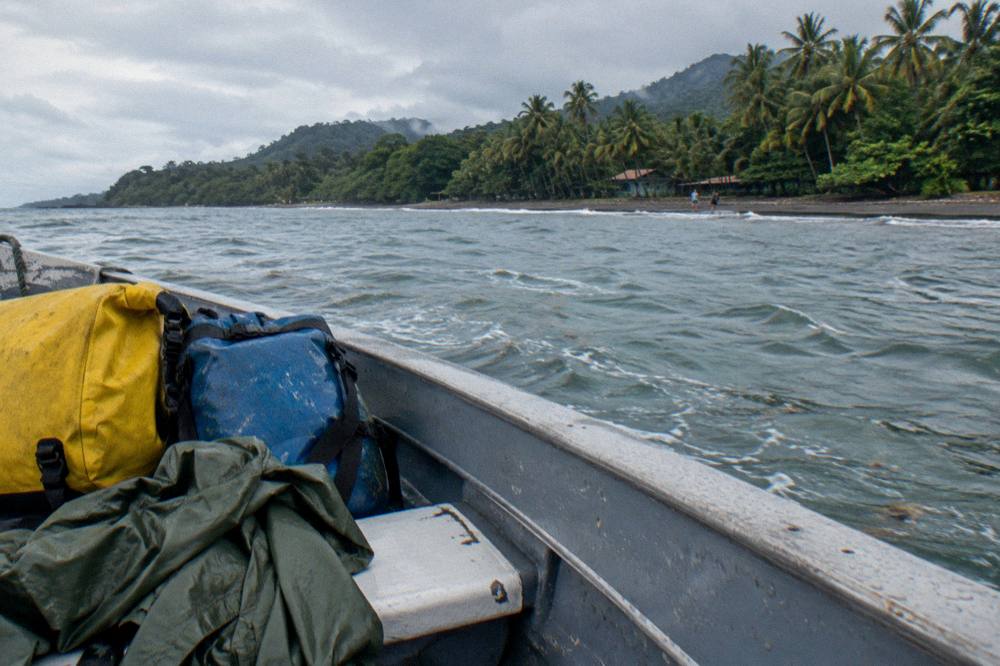
The rainy season version of this trip is not a washout plan, it is a layers plan. The whales do not read the forecast, and a shell that packs to fist size handles the difference. The month by month detail, including the two whale populations that make this coast unusual, lives in our guide to Best Time For Whale Watching In Uvita By Month.
| Season window | Whale context | Clothing shift |
|---|---|---|
| Mid December to mid April | Northern humpbacks, peak January to February per operator pages | Full sun coverage, no shell needed, swimwear ready |
| May to mid December | Southern humpbacks July to mid November, peak August to September for mother calf pairs | Add a light rain shell, quick dry everything |
| Either season, either window | Dolphins commonly seen on tours, per the IWC | Same beach launch footwear, same dry bag |
The humpback research trip (from $129 per person, 4.2 from 10 reviews) runs 3 hours and even includes a donation to a humpback whale research project, a reminder that the season changes your clothing, not the boat format. If you are weighing which month to book at all, our guide to Humpback Whales In Costa Rica: Two Migrations Explained covers why this coast hosts both populations.
What Should Families Pack For Whale Watching With Kids?
Pack for children exactly as for adults, one small bag per family rather than per child, with hats, strap sunglasses, snacks beyond the included fruit and any motion remedy dosed by the product label; minimum ages are not stated on the Uvita listings, so check the listing before booking rather than assuming an age cutoff.
Kids feel sun, spray and boredom faster than adults, and the fix is mostly pacing. The included fruit and water cover thirst, but a familiar snack from home buys quiet minutes during the search legs between sightings. A laminated card or a quick talk about what the boat rules are, stay seated when moving, hands inside, lifejacket stays on, sets expectations before the beach launch.
The kid specific questions that actually gate a booking, ages, strollers at the departure beach, and which listing suits a short attention span, are handled in our guide to Whale Watching With Kids In Uvita: Ages, Safety And Timing. From a pure packing view, the same dry bag logic applies, just doubled: one bag for gear, one small one for the child's extras, and nothing irreplaceable brought on board at all.
For families weighing the jump from a 3 hour whale trip to a full day on the water, the 8 hour Caño Island format with check-in pastries and a picnic lunch included (4.7 from 135 reviews, from $160 per person) is a different packing problem entirely, and our guide to Caño Island Snorkeling From Uvita: Trip Options And Conditions covers it. Private options change the calculus too, like the private cruise with lunch and drinks at from $1,120 per group, where the crew caters and your bag shrinks to personal items.
A guest on the 3 to 4 hour marine park tour described a mother and baby humpback observed for at least 20 minutes, plus sea turtles and a swim, which captures why the bag matters: the moments are long and close to the water, and dry, shaded, comfortable people enjoy them more.
Which Tour Inclusions Change Your Packing List Most?
The inclusion blocks decide your bag more than the weather does: trips that include snorkel gear or meals shrink your load, while listings that exclude restrooms, snorkeling or pickup change what you wear and how you get there. Compare the included and excluded lists on your own listing before packing anything, because near identical boat trips in Uvita differ on exactly these points.
Reading the fine print takes five minutes and prevents the two classic mistakes: bringing snorkel gear on a boat that lists no snorkeling, and expecting a towel on a boat that lists towels as excluded. Several whale listings explicitly exclude snorkeling, and the combo format exists precisely for swimmers, as explained in our guide to Whale Watching And Snorkeling Combo From Uvita.
| Tour | Price from | What it includes that shrinks your bag | What it excludes that grows it |
|---|---|---|---|
| Drinks and Snacks Included | $95 per person | Park entry, fruit, drinks, lifejackets, parking | Pickup, alcohol, snorkel gear |
| Morning Whale and Dolphin Tour | $75 per person | Snacks, bottled water, snorkel equipment, parking | No restroom on board |
| Marino Ballena Tours Whale Watch | $105 per person | Park ticket, water and fruits, parking, insurance | Towels, snorkeling, photos, lunch |
| Private Cruise, Meal Included | $1,120 per group | Lunch, drinks including beer and wine, snorkeling, park fee | None listed |
| Fast Boat, Park Tickets Included | $122 per person | Park tickets, fruit, water, snorkel gear in dry season | Tips, lunch, transport to meeting point |
The private charter priced per person (from $95, price varies by group size, confirm on the booking page) rounds out the picture: with snorkel equipment and parking fees included, a private group's packing list collapses to personal items. Whatever you book, the site's Uvita Whale Watching comparison pages pair each listing with its own inclusion list, and the operator's live listing is always the final word on what is aboard.
Common Questions About Packing For A Whale Watching Trip
What Shoes Should I Wear For Whale Watching In Uvita?
Sport sandals, water shoes or rubber sandals. Several Uvita boats launch directly from the beach with no dock, and guests wade through shallow water to board, so any shoe you would not mind getting wet and salty is the wrong choice.
Do I Need To Bring A Towel On The Boat?
Check your listing. Several Uvita whale watching and Caño Island listings list towels among exclusions, and none lists a towel as included. A packable microfiber towel weighs little either way.
Is Sunscreen Enough, Or Should I Cover Up?
Cover up as much as you can. A long sleeve sun shirt, wide brim hat with a strap and polarized sunglasses do more work over three reflected sun hours than reapplying sunscreen alone.
When Should I Take Seasickness Tablets For A Whale Tour?
Before boarding, timed as the product label directs, not after you feel unwell. Sit mid ship near the centerline, watch the horizon, and keep breakfast light. Note that several Uvita boats have no restroom on board.
Do Uvita Whale Tours Provide Snorkel Gear And Water?
Most provide fruit and water, and many include the Marino Ballena park entry fee, but snorkel gear varies by listing: some include it, some restrict it to the dry season, and some whale only trips exclude snorkeling entirely. Read your listing's inclusion block before packing.
Does The Season Change What I Should Wear?
Only modestly. The rainy season, mid April to mid December, adds a light rain shell; the dry season, mid December to mid April, demands fuller sun coverage. Both windows are warm, and water runs 78 to 84 F year round per one operator reading, so insulation is never the concern.