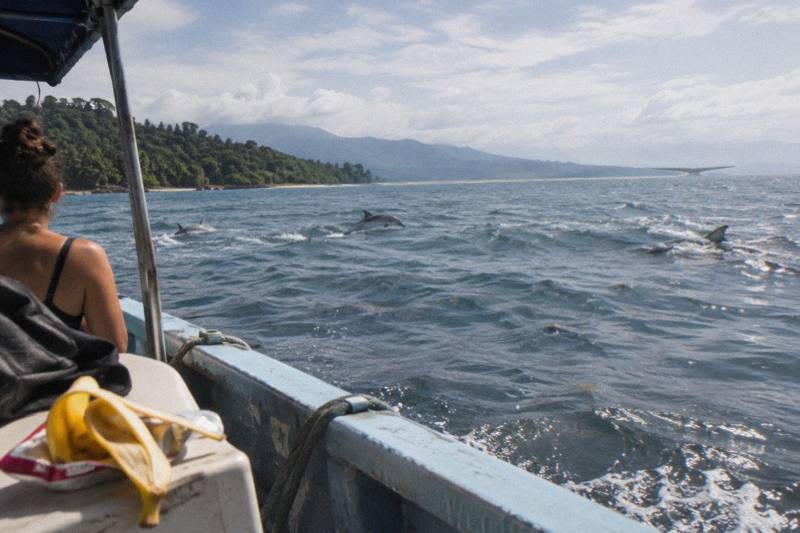
Uvita Waterfall And Whale Watching In One Day
Uvita offers two very different outings: the whales of Marino Ballena National Park and the waterfalls tucked into the hills behind town. Here is how the two fit into one long, satisfying day.
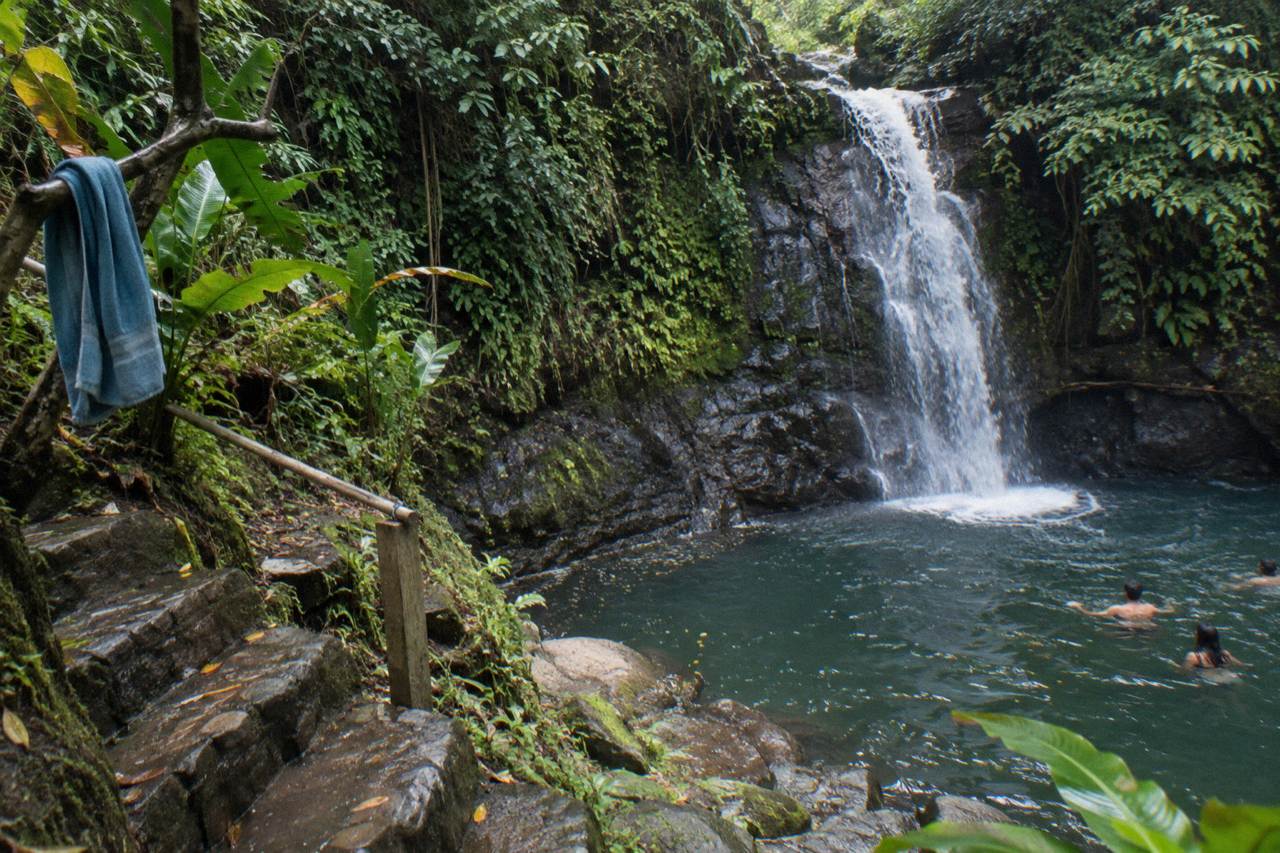
Short answer
Yes, and the boat comes first. Uvita whale tours run about 3 hours, typically morning departures from Bahía Ballena, from $75 to $129 per person. That leaves the afternoon for a waterfall visit. Check each listing for departure times and each waterfall for hours and entry fees.
Uvita sits between two kinds of water. In front of town, the Pacific swells of Marino Ballena National Park, where humpback whales arrive from two hemispheres and tours leave the beach on shared boats. Behind town, the foothills funnel rainwater into swimming holes and cascade falls that can be reached on a half-day hike. Pairing the two in a single day is the classic Uvita move, and it works because the boats are short: almost every whale trip listed here runs about three hours, while a waterfall visit is flexible enough to start whenever you get back on land.
The pairing rewards planning. The featured drinks-and-snacks boat trip runs 3.5 hours from Uvita at from $95 per person, and the Morning Whale and Dolphin Tour from Bahía Ballena runs 2.5 to 3 hours at from $75, so the shape of your afternoon depends on which departure you choose. This guide walks through the timing, the budget and the packing list for a combined day.
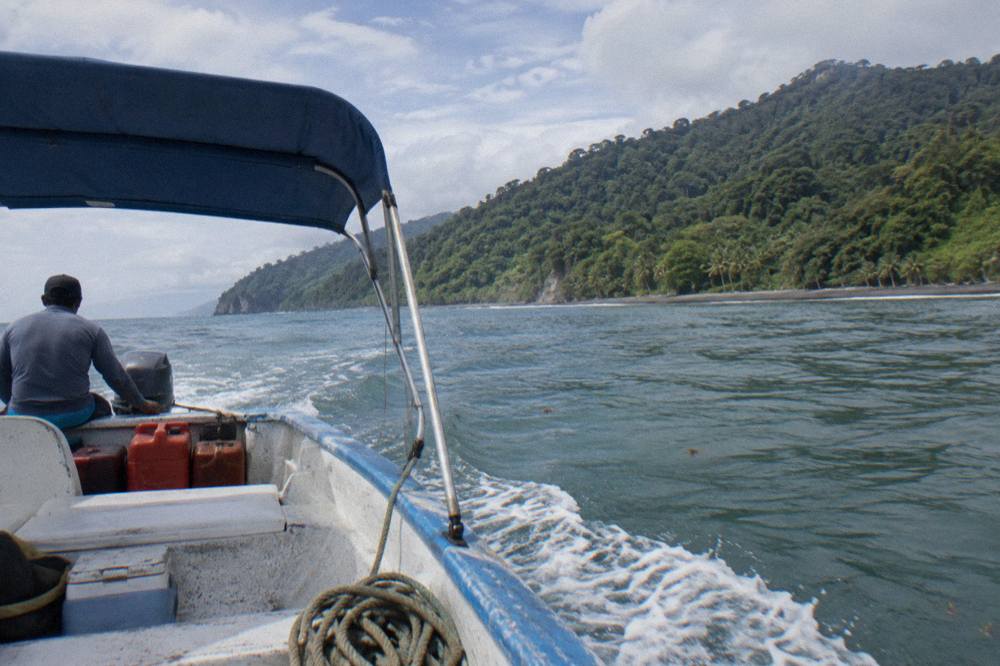
Can You Do A Waterfall Hike And A Whale Tour In One Day In Uvita?
Yes, comfortably, if the boat goes first. Uvita whale tours run roughly 2.5 to 4 hours door to dock and back, with most departing in the morning, so a morning departure has you ashore by early afternoon. Waterfall visits near Uvita are generally half-day activities, and Dominical is roughly 15 minutes from Uvita by road.
The order matters more than the ambition. Whales run on the operators' schedules and the tide; waterfalls run on yours. Several Uvita boats launch straight off the beach with no dock, and guests wade to the boat, so you want dry shoes and a readiness to get wet before the tour even starts. Flip that around, hike first, and you arrive at the departure point tired, muddy and racing the boat.
There is also a seasonal wrinkle. The southern-hemisphere humpbacks pass through July to mid-November, the northern population December to March or April, so whale trips run almost year-round here, which our guide to Humpback Whales In Costa Rica: Two Migrations Explained covers in detail. Waterfalls, by contrast, are at their fullest in the rainy season, mid-April to mid-December per the park service's climate description.
One caution that applies to every waterfall in this region: treat any trail distance, entry fee or opening hours you read anywhere as something to confirm locally on the day. Check conditions, confirm fees on arrival, and never swim at the base of a fall after heavy rain.
Because the two halves of the day run on different clocks, it helps to see the season trade-offs side by side before you pick a date.
| Season window | Whale side of the day | Waterfall side of the day | Verdict for a combined day |
|---|---|---|---|
| Mid-December to mid-April (dry, per SINAC) | Northern humpbacks December to March or April, peak January to February; calmer seas; best snorkel visibility January to April | Lower flows but clearer trails and less rain | Easiest pairing of the year |
| February and March | Whale season continues; lowest-rainfall months on long-term averages | Driest trails, modest water volume | Best for a longer hike |
| May to mid-December (rainy, per SINAC) | Southern humpbacks July to mid-November, peak August to September for mother-calf pairs | Falls at their fullest; more rain and mud | Best waterfalls, keep the hike short and start it early |
| Early September | Southern-season peak plus the yearly Whale and Dolphin Festival in Bahía Ballena | Full falls, wet trails | Festival brings extra boats; book the boat ahead |
Which Boat Departure Pairs Best With A Waterfall Hike?
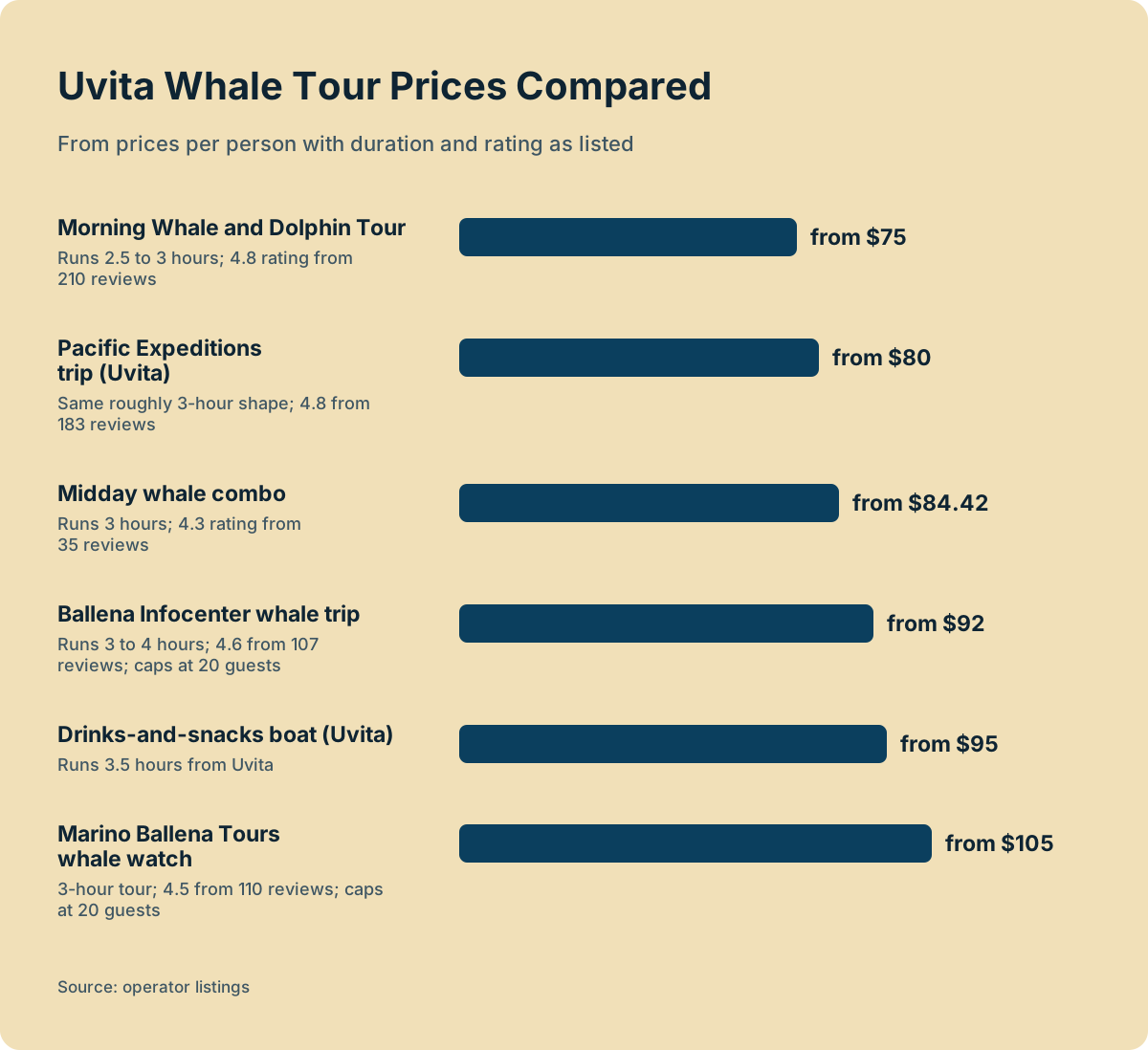
The Morning Whale and Dolphin Tour, from $75 per person, is the natural pairing: it runs 2.5 to 3 hours, carries a 4.8 rating from 210 reviews, and lists free cancellation. Uvita-departed boats like the Pacific Expeditions trip, from $80 and 4.8 from 183 reviews, keep the same roughly 3-hour shape. The longer 3-to-4-hour Ballena Infocenter trip, from $92, squeezes the afternoon tighter.
With a waterfall afternoon in mind, three listings stand out for different reasons. The morning Bahía Ballena tour is the shortest and cheapest of the well-reviewed options, and its listing includes snacks, bottled water, snorkel gear and free on-site parking, so you can leave a car at the office and drive to the trailhead straight from the return. The featured drinks-and-snacks boat, from $95 with a 4.5 rating from 775 reviews, takes up to 80 guests and includes park entry, parking, fruit, pastries, juice and coffee, but no hotel pickup and no snorkel gear. The humpback-and-wildlife-focused trip, from $129 with a biologist expedition leader, runs 3 hours and includes a donation to a humpback research project, a good pick if the waterfall is a quick stop and the whales are the day's centerpiece.
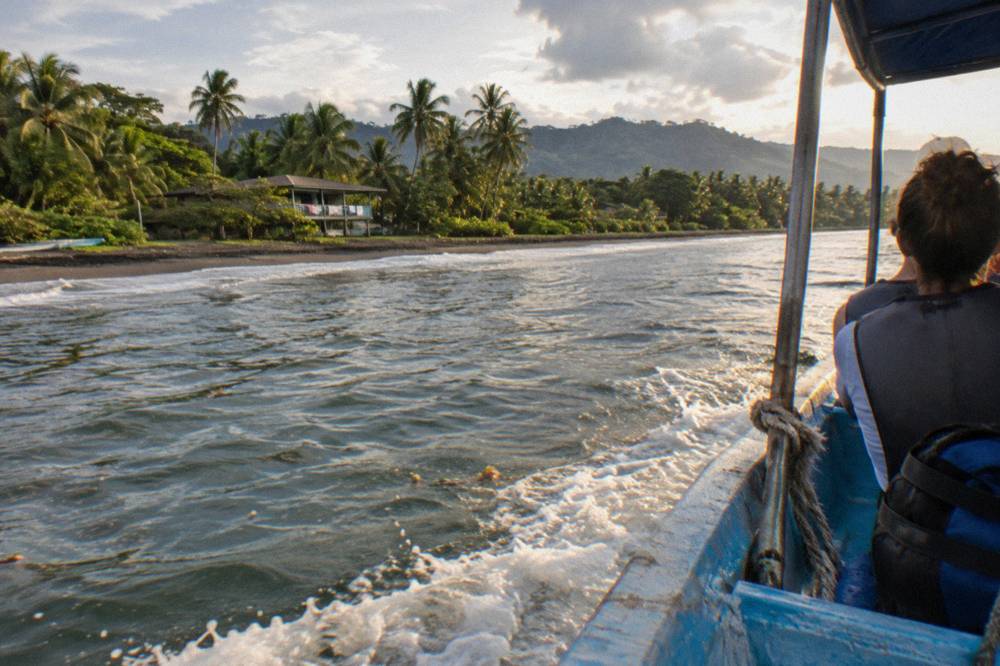
Timing around the departure window is where itineraries wobble. Meeting times are confirmed at booking, and one listing asks guests to be at its office by 8:30 a.m. Before you commit to a waterfall plan, confirm the meeting time on the live listing and build backward from it: an 8:30 a.m. start plus 3 hours plus a stop for lunch puts you at a trailhead around 1 p.m., which is workable but leaves no room for a long drive.
A word on the Whale Tail, since it often gets bundled into these days. The tombolo sandbar inside Marino Ballena National Park is accessible only at low tide, per the SINAC park page, and the ticket, USD 6.78 for a non-resident adult, card payment only, is valid for the whole day of the visit. If the tide cooperates, you can walk the tail after the boat lands and still make a waterfall by mid-afternoon. If it does not, skip it; the whales and the falls are the day.
A reviewer named Julie_B left a useful picture of how flexible these morning boats are: "This was an excellent small tour. We saw whales and dolphins. We were given the choice of finding more whales or snorkeling at the Whale’s Tail. The boat voted for snorkeling. Raymond was a fun guide." The boat itself adapts, which means your afternoon plan should too.
What Time Do Uvita Whale Boats Leave And Return?
Most shared boats depart Uvita or Bahía Ballena in the morning and return within about 3 hours, around midday. Some listings run 3.5 to 4 hours, pushing the return to early afternoon. Confirm the exact meeting time on your listing, and plan your own transport, since no listing includes hotel pickup.
The 3-hour Marino Ballena Tours whale watch, 4.5 from 110 reviews and from $105, caps at 20 guests and includes park entry, parking, water, fruit and insurance. The Ballena Infocenter watching-whales-and-dolphins trip, 4.6 from 107 reviews and from $92, also caps at 20 guests but runs 3 to 4 hours and adds a visit to Whale's Rock or Ventanas Cave plus swimming or, in dry season, snorkeling. The trips differ, do not merge them in your head: one is a tight three hours, the other is a half-day with a cave stop.
Booking the morning slot is the one decision that makes or breaks the whole day. Midday combos exist, the midday whale combo runs 3 hours at from $84.42 with a 4.3 rating from 35 reviews, but a midday boat eats the waterfall window entirely. If the morning boats are full, the honest answer is to split the day across two dates rather than run a fall in the dark.
Meeting logistics deserve one more line. Where the listing says pickup is not included, guests meet at the departure point; where pickup is not stated, check the listing for transport. The IWC whale watching handbook profile for Costa Rica notes whale watching developed in these Pacific communities, Uvita among them. Departures are beach-and-office based, not hotel-based.
How Much Time Does A Waterfall Hike Near Uvita Really Take?
Treat a waterfall visit as a half-day block. Confirm distance, hours and entry fees for the waterfalls near Uvita with your lodging or the property itself before committing, and never rely on a number quoted in a blog.
What can be said firmly: Dominical to Uvita is about 18 km and 15 minutes on Route 34, so falls in that direction are close to the departure beach; Ojochal to Dominical via Uvita is 37 km and about 41 minutes, so anything south adds real drive time. Falls in the Dominical direction are the natural fit for a post-boat afternoon precisely because the drive is short. The wider set of guides lives on Uvita Whale Watching.
Laid out hour by hour, a standard combined day looks like this. The boat is fixed; everything after it flexes.
| Time | Activity | Notes |
|---|---|---|
| 8:00 a.m. | Arrive at the departure beach or office | Several boats launch off the beach with no dock; expect to wade |
| 8:30 a.m. | Meet the crew, the arrival time one listing asks for | Confirm the exact time on your listing |
| Morning to midday | Whale and dolphin boat | Most tours run about 3 hours; longer listings run to 1 p.m. |
| Noon to 1:30 p.m. | Lunch and drive to the trailhead | Dominical itself is about 15 minutes from Uvita |
| 1:30 to 4:00 p.m. | Waterfall hike and swim | Keep the hike modest, watch the sky in rainy season |
| 4:00 p.m. onward | Drive back, beach or Whale Tail at low tide if time allows | Park tickets are valid for the whole day |
Some falls near Uvita are reached on horseback or with an entry fee, some involve river crossings, some have pools you can swim in and some do not. Ask at your hotel, check recent guest reviews for the specific property, and go early in your trip rather than on your last day, so rain or a closure does not delete the plan.
What can be planned firmly is the road between the two halves of the day, and our guide to San Jose To Uvita: Getting There For A Whale Trip covers the wider region. If you are staying in town itself, the departure beach is within a short drive, and Uvita's town center has supermarkets, ATMs and clinics, though no hospital, per recent traveler-oriented sources.
What Should A Combined Boat And Waterfall Day Cost?
Budget roughly $75 to $129 per adult for the boat, plus USD 6.78 for Marino Ballena park entry if your listing does not include it, plus a local fee at the waterfall and lunch. The cheapest well-reviewed boat listed here is from $75; the wildlife-research trip tops the range at from $129. Waterfall fees vary by property, so confirm on arrival.
The table below compares the listings most suited to a combined day. Whether park entry is included comes only from each listing's own inclusions; where it is, that USD 6.78 does not come out of your pocket separately.
| Tour | Price | Rating | Duration | Park entry included | Fits a waterfall afternoon? |
|---|---|---|---|---|---|
| Morning Whale and Dolphin Tour (Bahía Ballena) | from $75 per person | ★ 4.8 · 210 reviews | 2.5 to 3 hours | No, not listed among inclusions | Best fit, earliest return |
| Pacific Expeditions Whale Watch | from $80 per person | ★ 4.8 · 183 reviews | 3 hours | Yes, entrance fee included | Good fit |
| Drinks and Snacks Included (featured) | from $95 per person | ★ 4.5 · 775 reviews | 3.5 hours | Yes, entry fee included | Tight but workable |
| Marino Ballena Tours Whale Watch | from $105 per person | ★ 4.5 · 110 reviews | 3 hours | Yes, entrance ticket included | Good fit, 20-guest cap |
| Ballena Infocenter, 3 to 4 Hours | from $92 per person | ★ 4.6 · 107 reviews | 3 to 4 hours | Yes, entrance included | Tight, cave stop adds time |
| Humpback and Wildlife Focus | from $129 per person | ★ 4.2 · 10 reviews | 3 hours | Not listed among inclusions | Good fit if whales are the priority |
Notice what the table does not say: nothing about sighting guarantees, and nothing about hotel pickup, because no listing makes either claim. One operator's own listing states sighting chances of 50 percent December to March and 90 percent July to October, and that figure belongs to that operator alone, not to the coast. Our guide to Will You See Whales: Sighting Odds And Best Departure Time unpacks what you can honestly expect.
The whale and snorkel combos deserve a mention because they look efficient on paper. The 3-hour combo, from $84.42 with a 4.3 rating from 136 reviews, pairs whale watching with a snorkel stop and includes gear and park ticket. But a combo already spends your swimming time on the boat, and pairing it with a waterfall swim on the same day turns the schedule brittle. Save the combo for a no-waterfall day.
A reviewer named Rosemarie described the pace of a longer listing well: "We observed a mother and baby humpback whale for at least 20 minutes. In addition we saw some sea turtles and had the chance to swim in the sea. It was overall a great trip!" Costa Rica's cetacean watching rules cap time with any group at 30 minutes.
Is One Day Enough, Or Should You Split The Trip In Two?
One day works for most travelers if the boat is short and the fall is close, but two days is the better plan in rainy season, when rain is more frequent and trails turn slick. Mid-December to mid-April is the dry season per SINAC, with calmer seas and the best snorkel visibility January to April, so a combined day is easiest then. February and March are the lowest-rainfall months.
The case for splitting: you lose nothing by slowing down. A split day lets you take a 6 to 8 hour Caño Island snorkel, from $150 to $185 across the listed tours with lunch included, which cannot coexist with any waterfall the same day. The boat ride to Caño alone runs about 50 to 80 minutes each way, and the reserve is marine-access only, no landing, with prior reservation required per SINAC's Caño Island page. That is a full day by design.
The case for one day: your time is short, the whale season you hit may be brief, and a 3-hour morning boat plus a 2-hour waterfall afternoon is a genuinely full but not frantic schedule. If that is your situation, book the morning boat first, since it is the fixed constraint, and keep the waterfall flexible.
Between the two anchor activities, our guide to Things To Do In Uvita Costa Rica Beyond The Boat fills the gaps: the Whale Tail at low tide, the beach sectors, and the yearly whale festival, held each early September in Bahía Ballena, which brings special tour pricing for nationals, concerts and a community race. If your combined day falls on a festival weekend, book the boat early.
For travelers weighing the two-activity question against where to sleep, our guide to Where To Stay In Uvita For Whale Watching maps lodging areas against drive times to both the departure beach and the inland trailheads, which is the same decision you are making here, seen from the other side.
What Should You Pack For A Boat-Then-Waterfall Day?
Pack two sets of footwear thinking: sandals or wet shoes for the beach launch, real shoes for the trail, plus a dry bag, swimsuit, towel, rain layer, water and cash for waterfall fees. Several boats here have no dock, so you wade to board, and Marino Ballena entry is card-only while waterfall properties may want cash. Bring reef-safe sunscreen; no official rule mandates it.
The dual morning makes packing unusual. You get wet twice before lunch: once wading to the boat, once at the fall. A small dry bag for phone and passport solves the boat half; a change of clothes left in the car solves the waterfall half. Our guide to What To Wear And Bring Whale Watching In Uvita, Seasickness Included has the complete list.
Because the day splits in half at lunch, the packing list splits the same way, and the same item often serves both halves if you choose it well.
| Item | Boat half of the day | Waterfall half of the day | Notes |
|---|---|---|---|
| Wet shoes or sandals | Wading to the boat at launch | Crossing wet rocks near the pool | Several listings state no dock, boarding from the beach |
| Trail shoes | Spare, kept dry in the car | Muddy and steep stretches | Rainy season makes these non-negotiable |
| Dry bag | Phone and documents on board | Same, at the fall | Spray on fast boats, splash at the pool |
| Swimsuit and towel | Swim stops where the listing includes one | Swimming where the property allows | Check inclusions; not every boat stops |
| Rain layer | Wind and spray offshore | Afternoon showers, mid-April to mid-December | Foldable shell is enough |
| Cash and card | Park entry is card-only where not prepaid | Waterfall properties may want cash | Card-only applies to SINAC posts |
| Reef-safe sunscreen | Standard on boats | Standard on trails | No official mandate |
On the water side, conditions matter. Water temperature off Uvita runs 78 to 84 F year-round per one operator's reading, so no wetsuit is needed, but spray jackets help on fast boats. Several listings state plainly that there is no restroom on board, and several exclude snorkel gear, so if a swim stop matters to you, choose a listing whose inclusions list it, like the morning Bahía Ballena tour with its snorkel equipment, or the Ballena Infocenter trip, which includes snorkeling in dry season only, late December through April.
On the trail side, the rainy season, mid-April to mid-December, means mud. Start the fall as early as your boat allows, keep the hike modest, and turn back rather than push a wet crossing. Check conditions on the day and with whoever runs the property.
A last practical note on the rules that shape the boat half of your day. Costa Rica's Decreto Ejecutivo 32495 sets a 100 m minimum distance from whales, 50 m from dolphins with the engine on, a 4-knot speed limit in observation areas and a 30-minute cap with any group, with no swimming near cetaceans at all. Choosing an operator that respects these limits, which you can read more about in our guide to Whale Watching Boat Rules And Ethics In Costa Rica, is part of planning a day you can feel good about, waterfall or not.
The combined day, in one line: book the shortest morning boat that carries a rating you trust, from $75 at the lowest listed price, keep lunch quick, and reach a waterfall by early afternoon with dry shoes and no schedule behind you. If the pieces will not fit, split them, the whales and the falls are both here nearly all year.
Common Questions About A Waterfall And Whale Day In Uvita
Can You Do A Waterfall Hike And A Whale Tour In One Day In Uvita?
Yes. Book a morning whale boat, most run about 3 hours and return by early afternoon, then drive to a nearby waterfall for the second half of the day. The shortest well-reviewed option, the Morning Whale and Dolphin Tour from Bahía Ballena, runs 2.5 to 3 hours at from $75 per person.
What Time Do Whale Watching Boats Leave From Uvita?
Most shared boats meet in the morning, with one listing asking guests to arrive by 8:30 a.m., and return about three hours later. Confirm the exact time on your listing, since departures vary by operator and tide.
Which Whale Tour Pairs Best With A Waterfall Hike?
The Morning Whale and Dolphin Tour, from $75 per person with a 4.8 rating from 210 reviews and free cancellation, pairs best because it is the shortest of the well-reviewed boats. The Pacific Expeditions trip, from $80 and 4.8 from 183 reviews, is a close second at 3 hours.
Is The Marino Ballena Park Entry Fee Included In The Tour Price?
It depends on the listing. Some, like the featured drinks-and-snacks boat and the Marino Ballena Tours whale watch, include the park entry fee; others do not list it. Where it is not included, non-resident adults pay USD 6.78 per day, card payment only, per SINAC.
How Long Does A Waterfall Hike Near Uvita Take?
Treat it as a half-day block. Confirm hours, distance and fees for the falls near Uvita with your lodging or at the property.
What Is The Best Season For A Combined Waterfall And Whale Day?
Dry season, mid-December to mid-April per SINAC, gives calmer seas and the best underwater visibility January to April, while rainy season fills the waterfalls. Whales visit almost year-round in two seasons, so the trade-off is seas versus falls, not whales versus none.