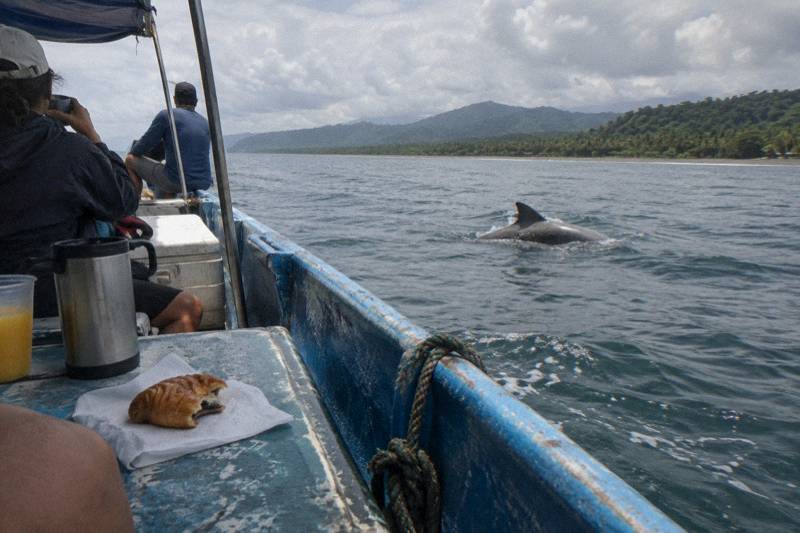
What Is Dominical Costa Rica Known For?
Dominical is known for its surf beach, its laid-back village feel, and its position 18 km north of the Uvita whale-watching boats in Marino Ballena National Park.
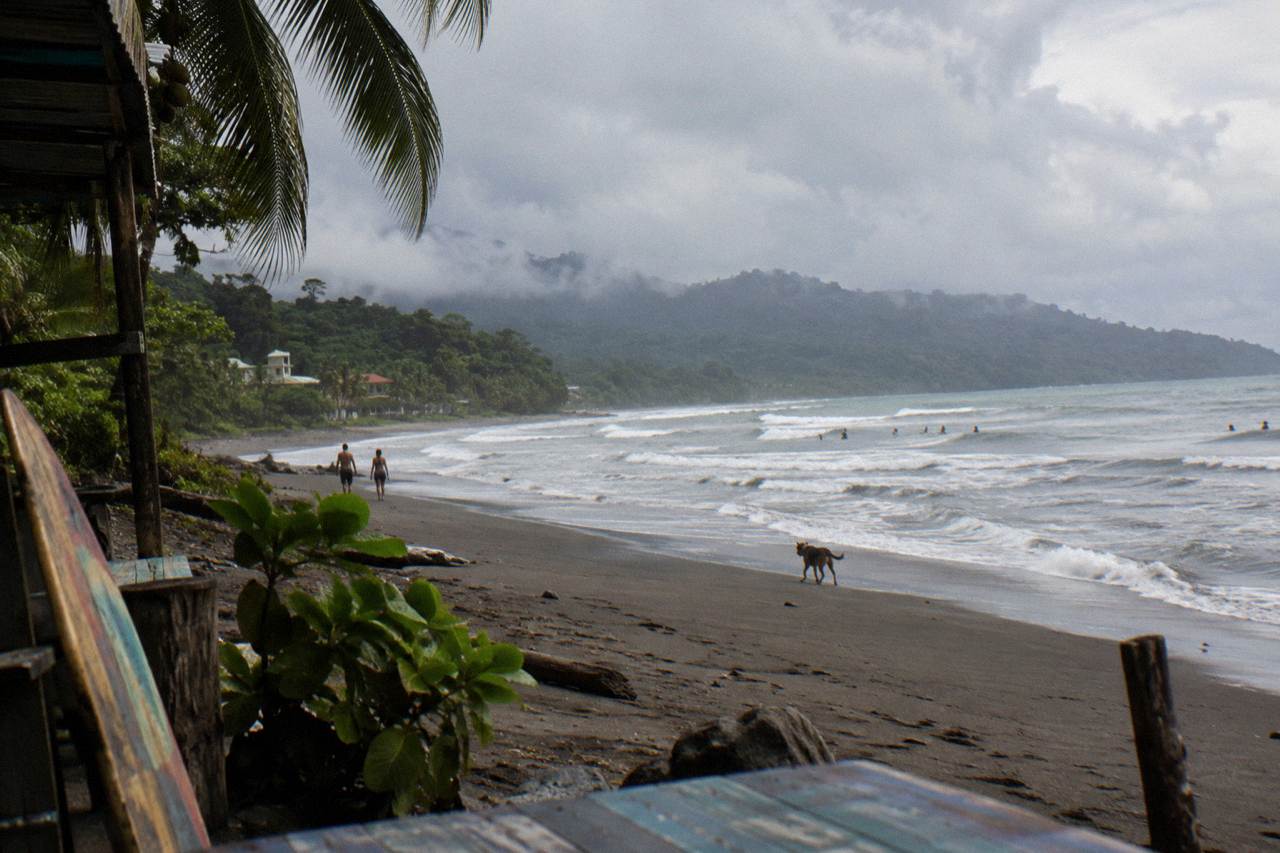
Dominical is known for three things: a beach-break surf scene on the southern Pacific coast, a small and unhurried village atmosphere, and a location that puts visitors about 18 km, or roughly 15 minutes by road on Highway 34, from the whale-watching boats that depart Uvita and Bahía Ballena for Marino Ballena National Park. The town's identity is surf-first, but its practical pull for most travellers is proximity. The same stretch of coast that produces Dominical's waves is the southern Pacific zone the International Whaling Commission's whale watching handbook names as the cradle of Costa Rica's whale watching, listing Dominical alongside Uvita, Drake Bay, Caño Island and Golfo Dulce as the communities where the activity first developed. That dual identity, surf town plus gateway to the whale coast, is the short answer. For the bigger picture, our guide to Whale Watching In Costa Rica: Where Uvita Fits explains why Uvita makes the most sense as a base.
The town also carries a competitive surf pedigree that is verifiable: the Circuito Nacional de Surf Banco LAFISE 2026 calendar includes a 1,500-point event in Dominical, held 12 to 14 June 2026, bringing national-level competition to the break.
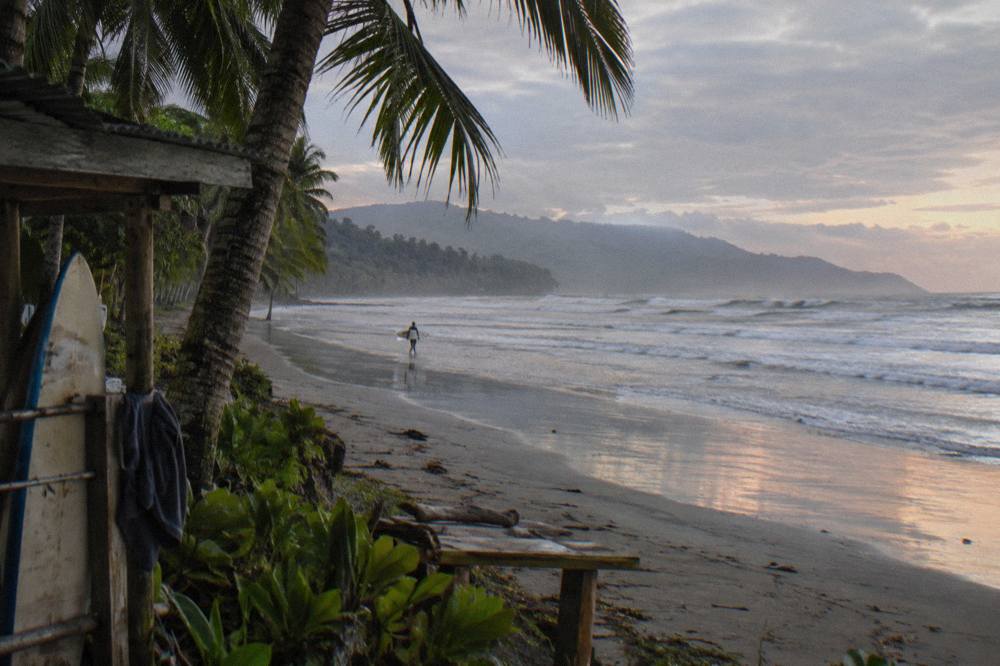
For visitors basing themselves in Dominical, the practical question is rarely whether to surf. It is whether to spend a morning on the water watching humpback whales, and the answer depends on the season. Marino Ballena National Park sits directly south, and boats leave from Uvita and Bahía Ballena. The morning whale and dolphin tour from Bahía Ballena is the natural fit for a Dominical base: from $75 per person, 2 hours 30 minutes to 3 hours, rated 4.8 from 210 reviews, with free cancellation listed. One guest review on that listing describes it plainly: "This was an excellent small tour. We saw whales and dolphins. We were given the choice of finding more whales or snorkeling at the Whale’s Tail. The boat voted for snorkeling. Raymond was a fun guide." If dolphins are the part of that boat trip you care about most, our guide to Dolphin Watching From Uvita: Spotted And Bottlenose Pods explains which pods live in these waters year round and which departures give you the strongest chance of finding them.
Dominical is best known as a surfing destination on Costa Rica's southern Pacific coast, a reputation backed by a 2026 stop on the national surf circuit, and as a quiet base within a short drive of Marino Ballena National Park, where humpback whales visit in two seasons each year. The International Whaling Commission's handbook on whale watching names Dominical as one of the Pacific communities where Costa Rica's whale watching originally developed, together with Uvita, Drake Bay, Caño Island and Golfo Dulce.
The surf reputation rests on the beach break itself, which faces open Pacific swell. The competitive footprint is on record: the national surf circuit's 2026 calendar, announced in December 2025, included a 1,500-point event in Dominical on 12 to 14 June 2026, a scheduling decision that signals the break's standing in the domestic scene.
The second identity is quieter. Dominical sits on Highway 34, the Costanera Sur, roughly 18 km and about 15 minutes north of Uvita. That single road fact shapes most travel plans made in Dominical, because Uvita is the operational heart of the whale coast: the park's main entrance sector, the boat departures, the supermarkets and the ATMs of the regional service hub. A traveller who sleeps in Dominical and sails from Uvita gets both towns' advantages in one day.
There is a third, softer reputation: Dominical is known for being small and unhurried.
Why Is Dominical So Close To The Whale Watching?
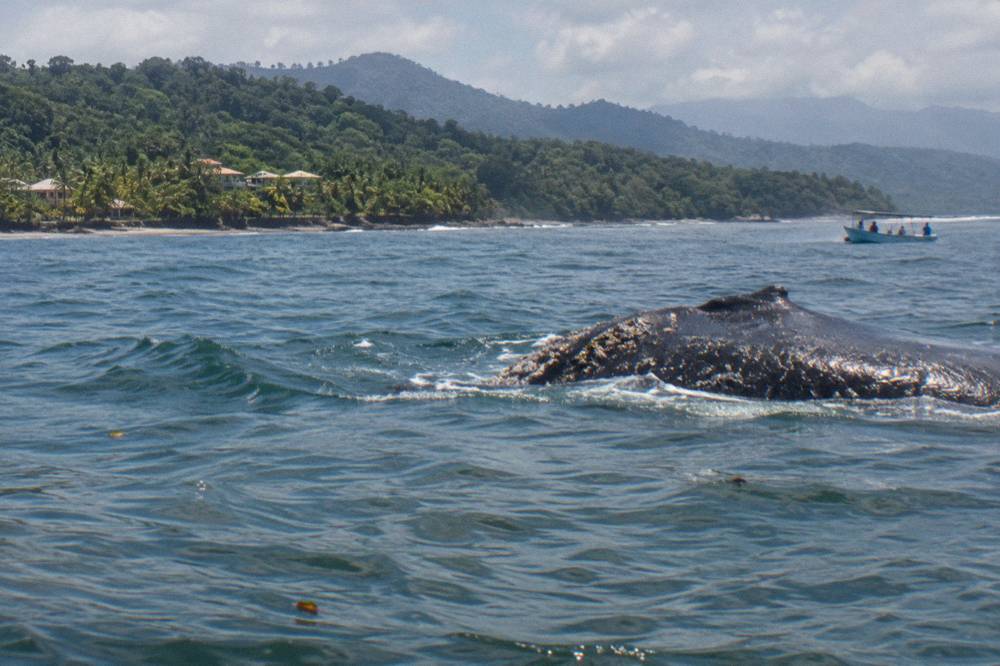
Dominical lies about 18 km north of Uvita on Highway 34, a drive of roughly 15 minutes, which puts it inside the easy morning range of the boat tours that depart Uvita and Bahía Ballena into Marino Ballena National Park. The park itself is the reason the boats are there: it was the first protected area in Costa Rica created exclusively for marine resources, covering 5,160 marine hectares and 171 land hectares along a 15 km coastal strip from the mouth of the Rio Morete to Punta Pinuela, per the national park system's own page.
The geography is simple and it matters. The park's four entrance sectors, Uvita, Colonia, Ballena and Pinuelas, are open every day of the year, and the whale boats work the marine section of the same park. Someone staying in Dominical does not need to relocate to join a tour. Meeting points are confirmed at booking, and one operator asks guests to be at its office by 8:30 am, so a 15-minute drive south with a margin for parking is the entire commute.
The connection runs deeper than convenience. The IWC handbook's Costa Rica profile records that whale watching in the country "originally developed in the Pacific coastal communities in the South of the country (Dominical, Uvita, Drake Bay, Caño Island, Golfo Dulce)". Dominical is not a latecomer to the whale economy; it is one of the places where it began. The town's surf fame and its whale heritage are two faces of the same stretch of water.
For Dominical-based travellers weighing the options, the comparison on Uvita Whale Watching covers the lineup of boat trips, prices and group sizes. The short version for this audience: the morning whale and dolphin tour from Bahía Ballena, from $75 per person, is the lowest price listed here. The featured drinks-and-snacks boat trip, 3.5 hours from $95 per person and rated 4.5 from 775 reviews, carries the largest group, up to 80 guests, and includes the park entry fee, pastries, fruit, juice and coffee. A smaller alternative, the Marino Ballena watching whales and dolphins tour from $92, rated 4.6 from 107 reviews, caps the boat at 20 guests and adds a visit to Whale's Rock or Ventanas Cave plus swimming or snorkeling time during the dry season from late December through April.
When Should You Chase Whales From Dominical?
Southern-hemisphere humpbacks visit the coast from July to mid-November, with operator pages pointing to August and September as the peak for mother-calf pairs, while northern-hemisphere humpbacks arrive December to March or April, peaking January to February per the same operator sources. Having two populations from opposite hemispheres is why the region is described as having whale presence much of the year, as the IWC handbook records for Costa Rica's Pacific waters.
For a Dominical visitor, the practical read is this. Book in August or September and the operators commonly report mother-and-calf pairs in the protected bay; one guest review of a Marino Ballena tour describes observing "a mother and baby humpback whale for at least 20 minutes", alongside sea turtles and a swim stop. Book in January or February and you are in the northern-hemisphere peak in the dry season. February and March are the lowest-rainfall months in the long-term averages, and the park's dry season runs mid-December to mid-April per the national park system.
| Season window | Population | What operator and official pages say |
|---|---|---|
| July to mid-November | Southern-hemisphere humpbacks | IWC handbook: Antarctic-feeding whales make the longest recorded migration to breed here; operators report August-September peak for mother-calf pairs |
| December to March or April | Northern-hemisphere humpbacks | IWC handbook: whales from the northwest US coast mate, give birth and nurse; operators report January-February peak |
| Mid-December to mid-April | Dry season | SINAC park page: park's official dry season; one operator source notes best Marino Ballena snorkel visibility January to April |
| Early September each year | Whale and Dolphin Festival | IWC handbook and local reports: yearly festival in Bahía Ballena with reduced tour prices |
One sighting figure appears in the listings, and it must be quoted with its full attribution. The featured drinks-and-snacks listing's own Know-before-you-go section states, as that operator's claim, "The season from December to March there is a 50% chance of sightings and the season from July to October 90%." That is one operator's statement on one listing, not a rate for the coast. Boats also cancel or reroute for weather and sea state; no operator promises a sighting.
The festival is worth timing a trip around. Each September the community of Bahía Ballena holds its whale festival; the IWC handbook notes that tour prices are reduced and many boat owners who do not normally offer commercial tours join in. The 16th edition ran 4 to 6 September 2026 with concerts, free surf classes, an artisan fair and a running race, per local reports. Dominical's own surf calendar had its moment earlier in the year with the June circuit stop, so the coast offers two genuinely eventful windows.
What Does Marino Ballena National Park Have To Do With Dominical?
Marino Ballena National Park is the marine protected area immediately south of Dominical, and its creation for marine resources is the legal foundation of the whale watching that Dominical visitors reach through Uvita; entry costs USD 6.78 per non-resident adult, card payment only, per the national park system. The park page records it as the first protected area in Costa Rica created exclusively for marine resources, and names humpback whales, spotted dolphins, bottlenose dolphins, manta rays, hammerhead sharks and parrotfish among its fauna.
The fee detail matters for Dominical travellers because many tours fold the park entry into the ticket. Among the tours listed here, listings state "Marino Ballena National Park entry fee" or equivalent as included on the majority of shared whale tours, including the featured 3.5-hour boat trip from $95 and the 20-guest Marino Ballena Tours whale watch from $105. Where a listing does not state it, budget the SINAC fee separately. Tickets are bought at the official posts, are valid for the whole day of the visit, and payment is by credit or debit card only.
Sector hours, per the park system's page, are Uvita 7:00 am to 5:00 pm, Colonia 7:00 am to 6:00 pm, Ballena 8:00 am to 4:00 pm and Pinuela 8:00 am to 4:00 pm. The famous Whale Tail sandbar, a tombolo, is accessible only at low tide, and the park page advises checking tide tables before a visit. Dominical visitors combining a beach morning with an afternoon boat trip should plan around both the tide and their tour's meeting time.
Which Boat Tour Suits A Dominical Base?
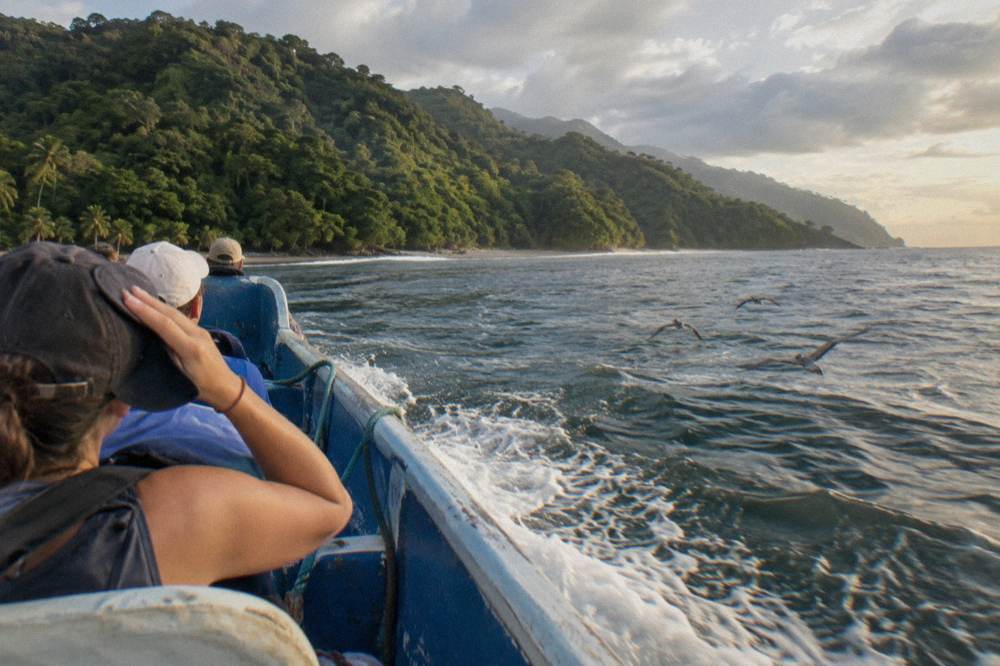
For a Dominical base, the lowest-priced option is the morning whale and dolphin tour from Bahía Ballena at from $75 per person, rated 4.8 from 210 reviews, while travellers wanting a wildlife-research angle can take the humpback-focused expedition from $129, which includes a donation to a humpback whale research project. Every tour listed here is a paid trip; there is no free option, and the $75 morning tour is the lowest listed price.
The morning Bahía Ballena tour runs 2 hours 30 minutes to 3 hours, includes snacks, bottled water, snorkel equipment and free on-site parking, and lists free cancellation. The featured drinks-and-snacks trip from Uvita, from $95, runs 3.5 hours with up to 80 guests, includes the park entry fee, parking, fruit, pastries, juice and coffee, and excludes hotel pickup, so guests meet at the departure point. The humpback wildlife watching tour from $129, 3 hours, is the research-flavoured option: a biologist expedition leader, an informative talk, a donation to the humpback whale research project, travel insurance and snorkeling when weather allows.
| Tour | Price | Rating and reviews | Duration | Notable inclusions |
|---|---|---|---|---|
| Morning Whale and Dolphin Tour (Bahía Ballena) | from $75 per person | ★ 4.8 · 210 reviews | 2.5 to 3 hours | Snacks, bottled water, snorkel gear, free parking |
| Watching Whales and Dolphins (Marino Ballena) | from $92 per person | ★ 4.6 · 107 reviews | 3 to 4 hours | Park entry, coffee station, Whale's Rock or Ventanas Cave, up to 20 guests |
| Humpback Whales Wildlife Watching | from $129 per person | ★ 4.2 · 10 reviews | 3 hours | Biologist leader, research donation, insurance, snorkel when weather allows |
| Drinks and Snacks boat trip (featured) | from $95 per person | ★ 4.5 · 775 reviews | 3.5 hours | Park entry, fruit, pastries, juice, coffee, up to 80 guests |
The 3-to-4-hour Marino Ballena watching whales and dolphins tour deserves a specific mention for Dominical travellers because it packs the most variety into one departure: a coffee station before boarding, the park entrance, a bilingual guide, whale and dolphin watching, tropical fruits and water, swimming or snorkeling in the dry season, and a visit to Whale's Rock or Ventanas Cave. A guest review from that listing sums up the day: "We observed a mother and baby humpback whale for at least 20 minutes. In addition we saw some sea turtles and had the chance to swim in the sea."
The humpback-focused expedition is the different animal. Where the shared boats optimise for sightings and scenery, the from-$129 expedition frames the morning as a research-aligned outing: an informative talk about whale watching, a biologist as expedition leader, and a donation to a humpback whale research project built into the price. It is rated 4.2 from 10 reviews, a small pool, so judge it on its format as much as its rating. Families with a serious interest in whales, or anyone who wants their ticket money to fund research, are the natural fit.
How Do The Whale Watching Rules Affect Your Trip?
Costa Rican rules under Decreto Ejecutivo 32495 require boats to keep at least 100 m from whales and at least 50 m from dolphins with the engine on, 30 m with it off, allow at most two boats around one group, and cap observation at 30 minutes, so Dominical visitors should expect brief, respectful encounters rather than extended close approaches. The decree also prohibits swimming near cetaceans and any touching or feeding, and boats must not come between a mother and her calf.
The conduct rules shape what a good tour looks like from the deck. Boats approach diagonally from the rear, and travel no faster than 4 knots in observation areas. Those limits explain why guest reviews prize guides who communicate with other boats: one review of the 3-hour whale combo notes the guides "had excellent communication with other boats so once one whale was spotted we were able to get there quickly". Coordination, not pursuit, is the skill.
For planning purposes, one more fact belongs here: minimum-age and infant rules are not stated on the listings, so check with the operator, and most listings include life jackets or safety gear. More on the framework is in our guide to Whale Watching Boat Rules And Ethics In Costa Rica.
Is Dominical A Good Place To Stay For Whale Watching?
Dominical works well as a whale-watching base if you value the surf-town atmosphere and do not mind the roughly 15-minute drive south to the Uvita and Bahía Ballena departure points, where every whale tour listed here begins; the trade-off is that no listed tour departs Dominical itself. All 28 bookable trips this site tracks leave from Uvita or Bahía Ballena, so Dominical visitors will always make the short Highway 34 run.
The drive is short: about 18 km, roughly 15 minutes. Road works on Route 34 bridges exist in the wider region, including provisional passage on the Rio Coronado bridge further south per the public works ministry in June 2026. Allow buffer time in rainy season regardless, as conditions change. Travellers coming from further afield can check our guide to San Jose To Uvita: Getting There For A Whale Trip, including bus routes and drive times.
Dominical offers the lodging types you would expect of a small surf destination, while Uvita, as the regional service hub with supermarkets and bank ATMs, carries the larger practical infrastructure. The choice between the two is really a choice of atmosphere, surf town versus service town, with the same boats reachable from either. Families weighing the logistics may find our guide to Whale Watching With Kids In Uvita: Ages, Safety And Timing useful for what a morning on the water involves.
Common Questions About Dominical
What Is Dominical Costa Rica Known For?
Dominical is known as a surf town on Costa Rica's southern Pacific coast, confirmed as a national-circuit venue in 2026, and as one of the communities where Costa Rican whale watching first developed. It sits about 18 km, roughly 15 minutes by road, from the whale boats departing Uvita and Bahía Ballena for Marino Ballena National Park.
How Far Is Dominical From The Whale Watching Boats?
About 18 km, roughly 15 minutes south on Highway 34 to Uvita and Bahía Ballena. All whale and dolphin tours depart from Uvita or Bahía Ballena, not Dominical, so the short drive is part of every whale-watching day from the town.
When Is The Best Time To See Whales From Dominical?
Southern-hemisphere humpbacks visit July to mid-November, with operator pages pointing to August and September as the mother-calf peak. Northern-hemisphere humpbacks come December to March or April, peaking January to February. Early September also brings the yearly Whale and Dolphin Festival in Bahía Ballena.
Can You Snorkel On A Whale Tour From Dominical?
Some listings include snorkel stops. The Marino Ballena watching whales and dolphins tour offers swimming or snorkeling only in dry season, from late December through April, and the morning Bahía Ballena tour lists snorkel equipment among its inclusions. Full-day Caño Island snorkel trips, 6 to 8 hours, are a separate product.
Does The Tour Price Include The Marino Ballena Park Entry Fee?
On many listings, yes: the majority of shared whale tours state the park entry fee as included, among them the featured drinks-and-snacks trip from $95. Where a listing does not state it, the separate fee per the national park system is USD 6.78 per non-resident adult, card payment only.
Is One Morning In Dominical Enough For A Whale Tour?
Yes. The typical whale tour runs 3 to 3.5 hours, and one operator asks guests to arrive by 8:30 am, so a Dominical visitor can drive 15 minutes, sail the morning, and be back in town by early afternoon with the day's second half free.